Introduction
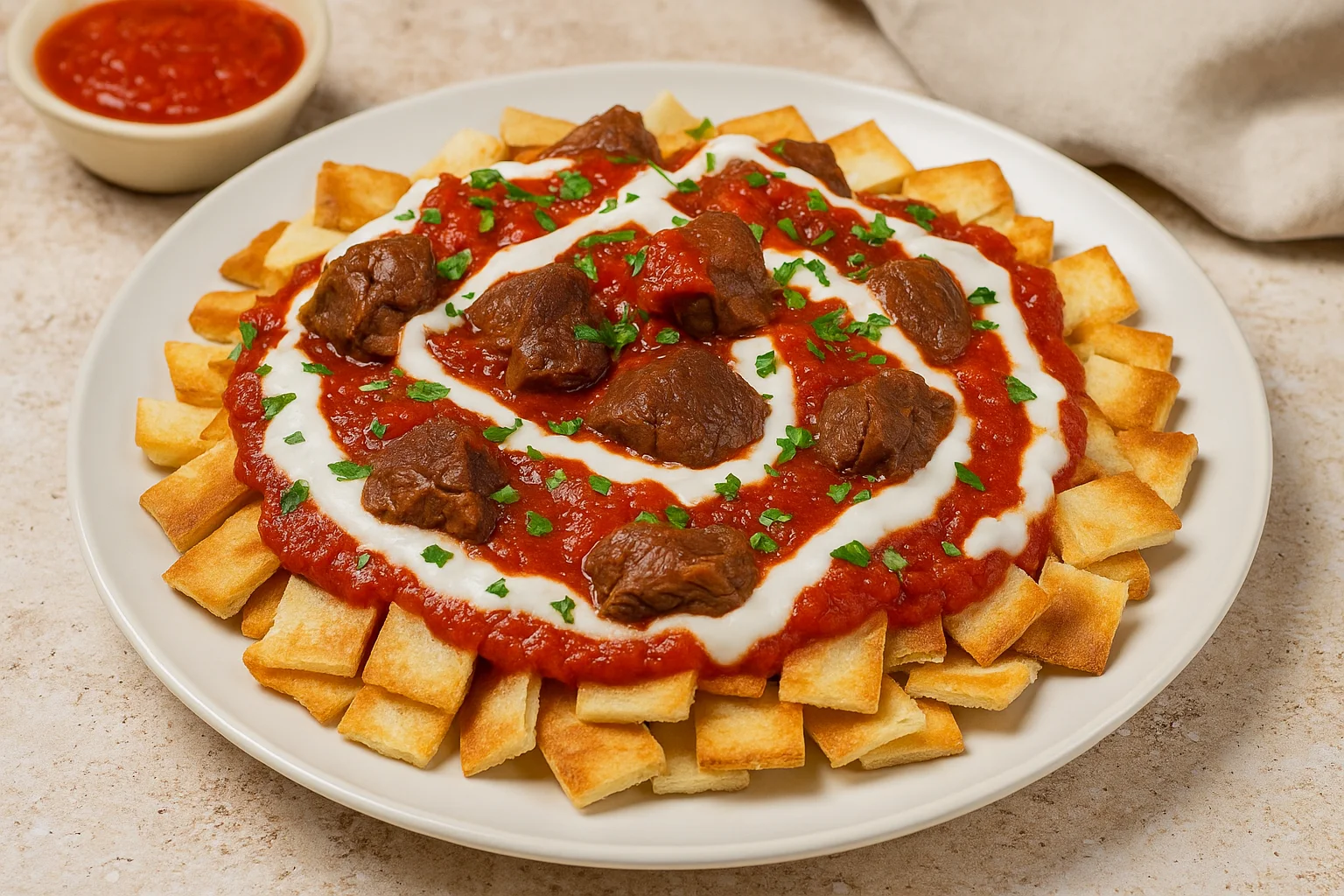
Egyptian fattah is one of the most iconic dishes served during Eid al-Adha and special occasions. It is a rich, hearty meal made of toasted bread, white rice, boiled meat, and a flavorful red tomato sauce infused with garlic and vinegar. This dish represents authentic Egyptian cuisine and showcases how simple ingredients can be transformed into a deeply satisfying and comforting meal.
First: What Is Fattah?
Fattah is a traditional dish passed down through generations and commonly prepared in Egyptian households during major celebrations.
It consists of three main layers:
- Toasted bread
- White rice
- Meat with red sauce
It is also finished with “daqqa”, a garlic-vinegar mixture that gives the dish its sharp, signature flavor.
Fattah is considered a complete meal that needs no side dishes.
Second: The Bread Layer – The Base of Texture and Flavor
Traditional Egyptian baladi bread is cut into small pieces and toasted in one of two ways:
- Baked in the oven with a little oil
- Fried until golden
After toasting, a small amount of meat broth is poured over the bread so it becomes slightly soft but not soggy.
This step is crucial—the bread should be crispy on top and tender underneath.
Third: Fluffy White Rice
The rice layer must be light and fluffy. It is prepared by:
- Washing the rice thoroughly
- Toasting vermicelli (optional)
- Cooking the rice with meat broth instead of water for deeper flavor
The rice forms the middle layer that connects bread and meat.
Fourth: The Meat – The Heart of the Dish
Lamb is traditionally used for fattah because of its rich flavor, though beef or chicken may also be used.
The meat is boiled with spices such as:
- Bay leaf
- Cardamom
- Cinnamon
- Black pepper
After boiling, the meat can be:
- Served as is, or
- Lightly browned in clarified butter for extra flavor
The meat is placed on top of the rice and covered with sauce.
Fifth: Red Tomato Sauce – The Soul of Fattah
The sauce is made from:
- Crushed tomatoes
- Minced garlic
- Vinegar
- Salt
- Black pepper
- Clarified butter or oil
It should be thick and well-cooked. This sauce gives fattah its signature red color and rich taste.
Sixth: Daqqa – The Bold Egyptian Touch
Daqqa is what makes fattah truly distinctive. It consists of:
- Minced garlic
- Vinegar
- Lemon juice
- Cumin
- Coriander
- Salt
- A little water
The mixture is heated for just one minute to blend flavors without losing the fresh garlic taste.
It is poured over the bread or on top, depending on preference.
Seventh: Assembling the Fattah
Traditional layering:
- Toasted bread at the bottom
- Hot daqqa poured over the bread
- Fluffy rice layer
- Meat arranged on top
- Red tomato sauce poured generously
Optional garnish: black pepper or parsley.
The result is a luxurious dish combining all elements of classic Egyptian flavor.
High Nutritional Value
Egyptian fattah provides:
- Protein from meat
- Carbohydrates from rice
- Fiber from bread
- Health benefits from garlic and tomatoes
It is very filling and energy-rich, making it ideal for celebrations.
A Dish Rooted in Egyptian Culture
No Eid al-Adha celebration is complete without fattah. It symbolizes generosity, family gatherings, and festive tradition. It is also commonly served at weddings and large family feasts.
Conclusion
Egyptian fattah is more than just a recipe—it is a celebration on a plate. Combining toasted bread, fluffy rice, tender meat, and rich red sauce, it stands as one of the most important and beloved dishes in Egyptian cuisine. It fully deserves its place as a cornerstone of the Egyptian kitchen.