Introduction
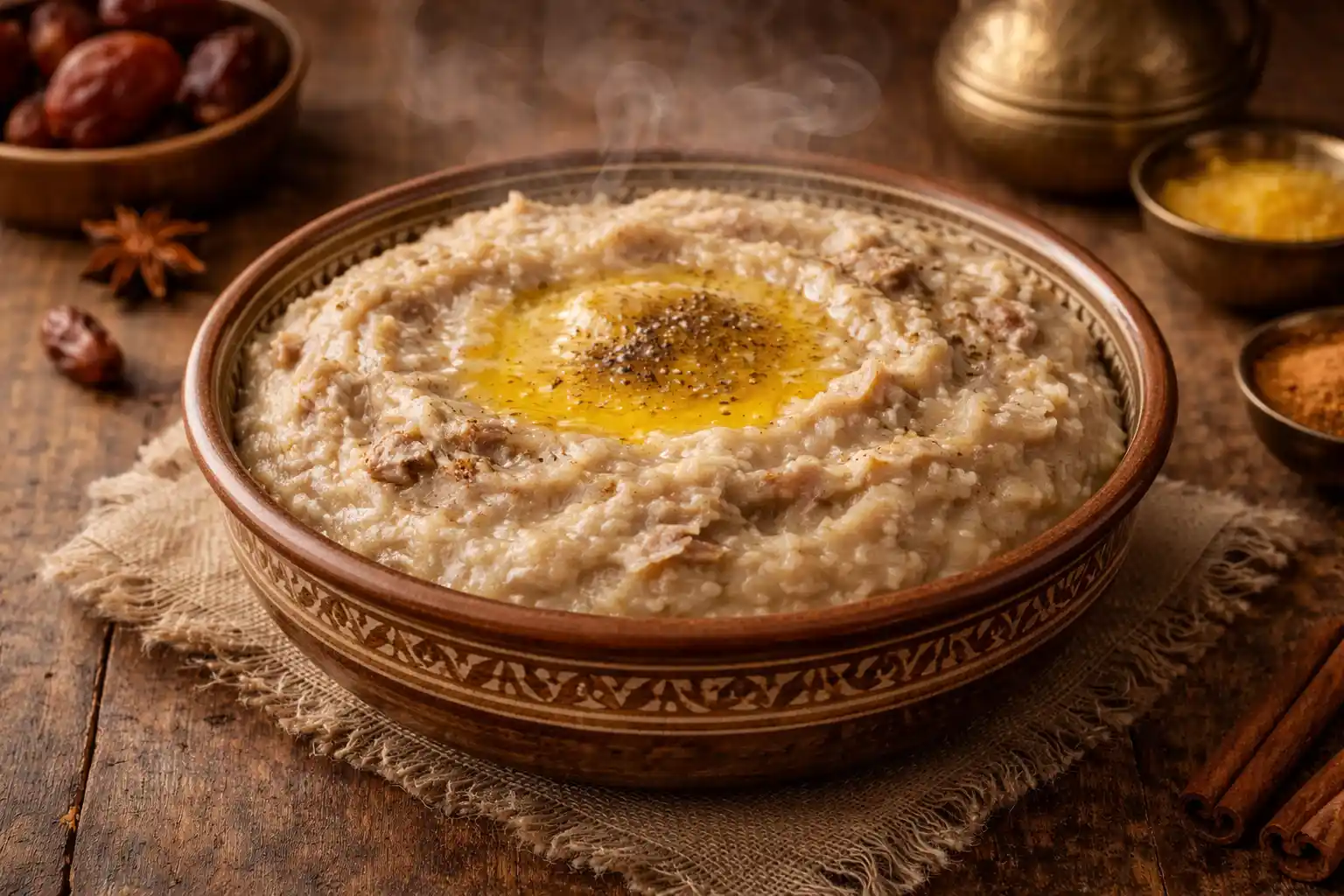
Najdi Jareesh is one of the oldest and most authentic traditional dishes of the Najd region in Saudi Arabia, perfectly balancing simplicity and richness at the same time.
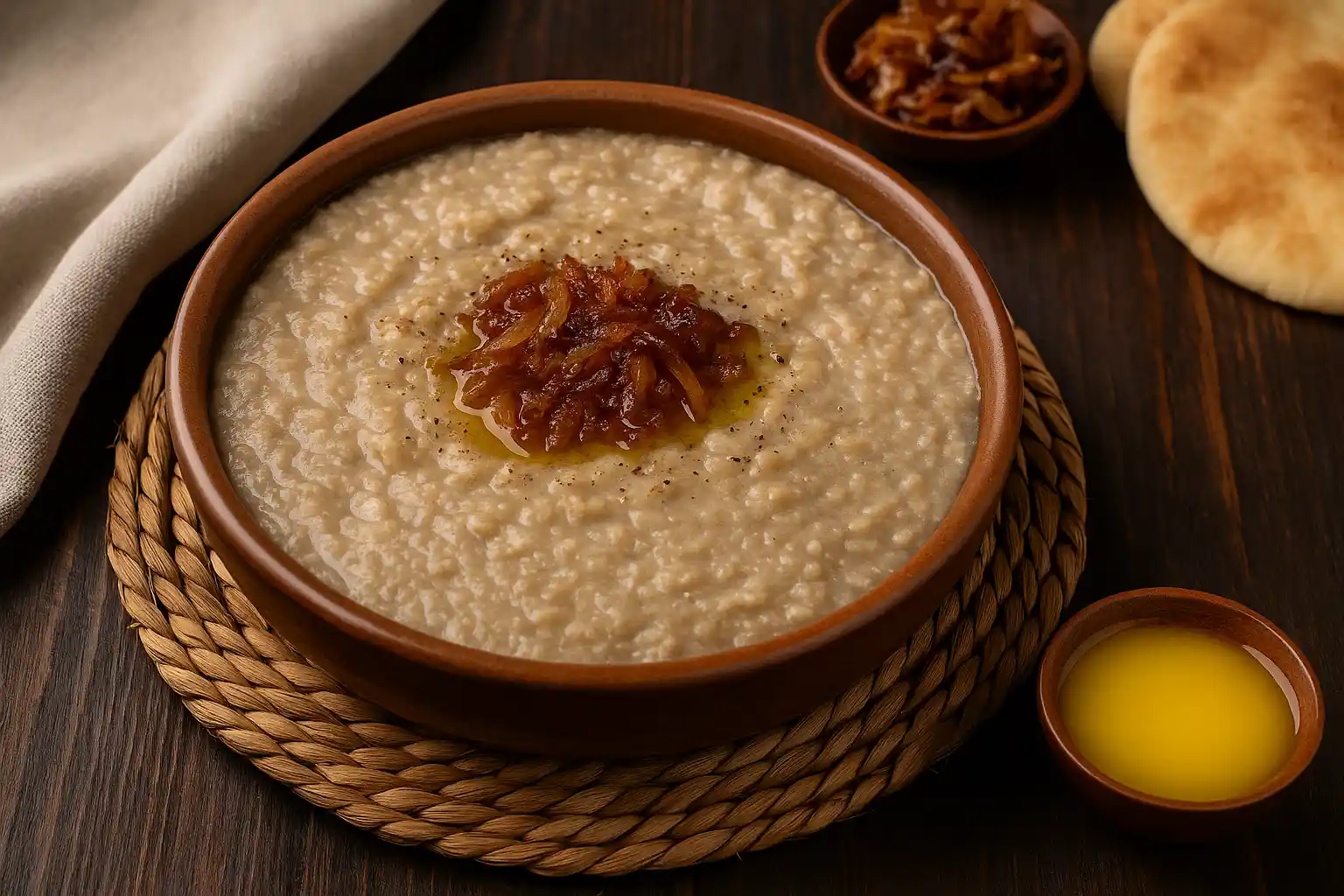
This dish is made from cracked wheat that is slowly cooked until it transforms into a creamy, velvety texture similar to a thick, comforting porridge. It is blended with milk or yogurt to create a warm, soothing flavor that defines Najdi comfort food.
Historically, jareesh has been a centerpiece at gatherings and celebrations, strongly associated with Najdi hospitality and heritage. Today, it has spread across the Gulf and the Arab world thanks to its distinctive taste and high nutritional value.
First: What Is Jareesh and the Secret Behind Its Creamy Texture?
1) Cracked Wheat as the Foundation
Jareesh is prepared using cracked wheat grains, which are cooked slowly until they soften, break down, and fully integrate with the liquid, creating a smooth, porridge-like consistency.
2) Slow Cooking Over Gentle Heat
The dish is traditionally cooked for an hour or more over very low heat, allowing the wheat to absorb the yogurt, milk, or broth completely. This slow process is the key to its signature creamy texture.
3) Yogurt or Milk for Rich Flavor
The addition of yogurt or milk creates a smooth, well-balanced mixture that distinguishes Najdi jareesh from other wheat-based dishes found across the Arab world.
4) Simple Spices with Deep Impact
Despite the simplicity of the spices—such as cumin, salt, and ghee—they deliver a deeply authentic flavor that reflects the essence of Najdi cuisine.
Second: Essential Ingredients for Najdi Jareesh
Traditional Ingredients:
- 2 cups cracked wheat (jareesh)
- 2 cups yogurt or milk
- 1 cup chicken broth or water
- 1 onion, finely chopped
- 1 tablespoon traditional ghee
- Salt to taste
- ½ teaspoon cumin
- 1 teaspoon white pepper
- Fried onions for garnish
- Extra ghee for serving
Third: Step-by-Step Preparation
1) Washing and Preparing the Wheat
Rinse the cracked wheat thoroughly and drain well. Place it in a deep pot with water or broth and cook over medium heat until it begins to soften and swell.
2) Adding Yogurt and Ghee
Once the wheat becomes tender, add the yogurt and stir continuously to prevent lumps.
Add a spoon of ghee to enrich the flavor and give the dish its signature richness.
3) Slow Cooking Until Creamy
Reduce the heat to the lowest setting and cook for 40–60 minutes, stirring occasionally, until the mixture reaches a smooth, creamy consistency.
4) Preparing the Signature Fried Onions
Fry the chopped onion in ghee until golden and crispy. Add part of it to the pot during cooking, reserving the rest for garnish.
5) Traditional Najdi Serving Style
Transfer the jareesh to a wide serving dish, garnish with fried onions and a light sprinkle of white pepper, and finish with a spoon of melted ghee on top.
Fourth: Why Jareesh Is a Core Dish of Najdi Heritage
1) A Warming Dish for Desert Evenings
Its creamy texture and rich flavor make jareesh ideal for cold desert nights and winter gatherings in Najd.
2) High Nutritional Value
Cracked wheat is rich in fiber, protein, and essential minerals such as iron and zinc, making jareesh both filling and nutritious.
3) Versatile as a Main or Side Dish
Jareesh can be served on its own as a complete meal or alongside dishes such as marqooq, qursan, or grilled meats.
4) Suitable for All Ages
Its soft texture and mild flavor make it ideal for children, elders, and anyone who prefers easy-to-digest meals.
Fifth: Tips for the Best Najdi Jareesh
1) Choose High-Quality Wheat
White jareesh gives a smoother texture, while red jareesh offers a deeper, earthier flavor.
2) Control the Consistency
For a thinner texture, add more yogurt or broth.
For a thicker result, allow it to cook longer over low heat.
3) Traditional Ghee Is Essential
Authentic ghee provides a true Najdi flavor that cannot be replicated with vegetable oils.
4) Fried Onions Are a Must
They add the final layer of aroma and taste that defines traditional jareesh.
Conclusion
Najdi jareesh remains one of the strongest symbols of Saudi heritage cuisine. It is a dish that connects past and present, offering a comforting flavor that carries the warmth of ancestral gatherings and traditional hospitality.
With simple steps and accessible ingredients, anyone can prepare authentic Najdi jareesh at home and enjoy a dish that brings genuine Saudi tradition to the table.