Introduction
Ful and Ta‘ameya are among the most iconic Egyptian dishes that form an essential part of Egypt’s popular food identity. They are not simply an ordinary breakfast, but a complete cultural experience that reflects simplicity, generosity, and reliance on filling, healthy plant-based ingredients.
Their popularity dates back hundreds of years, when they were prepared in rural homes and sold from street carts. Today, ful and ta‘ameya remain a daily staple on Egyptian tables—served for breakfast, suhoor, or as a satisfying meal at any time of day.
First: Egyptian Ful – The King of the Breakfast Table
1) High Nutritional Value and Long-Lasting Satiety
Ful is one of the richest legumes in plant-based protein and dietary fiber, making it a highly filling meal that provides long-lasting energy.
For this reason, ful has historically been the main food of workers and farmers in Egypt.
2) Many Ways to Serve Ful
Egyptian ful is prepared in several popular styles, including:
- Ful with oil and lemon
- Ful with tahini
- Ful with sausage
- Alexandrian-style ful
- Ful with butter or ghee
While recipes vary from one city to another, the authentic Egyptian flavor always relies on cumin, lemon, garlic, and oil.
3) The Secret Behind Authentic Egyptian Flavor
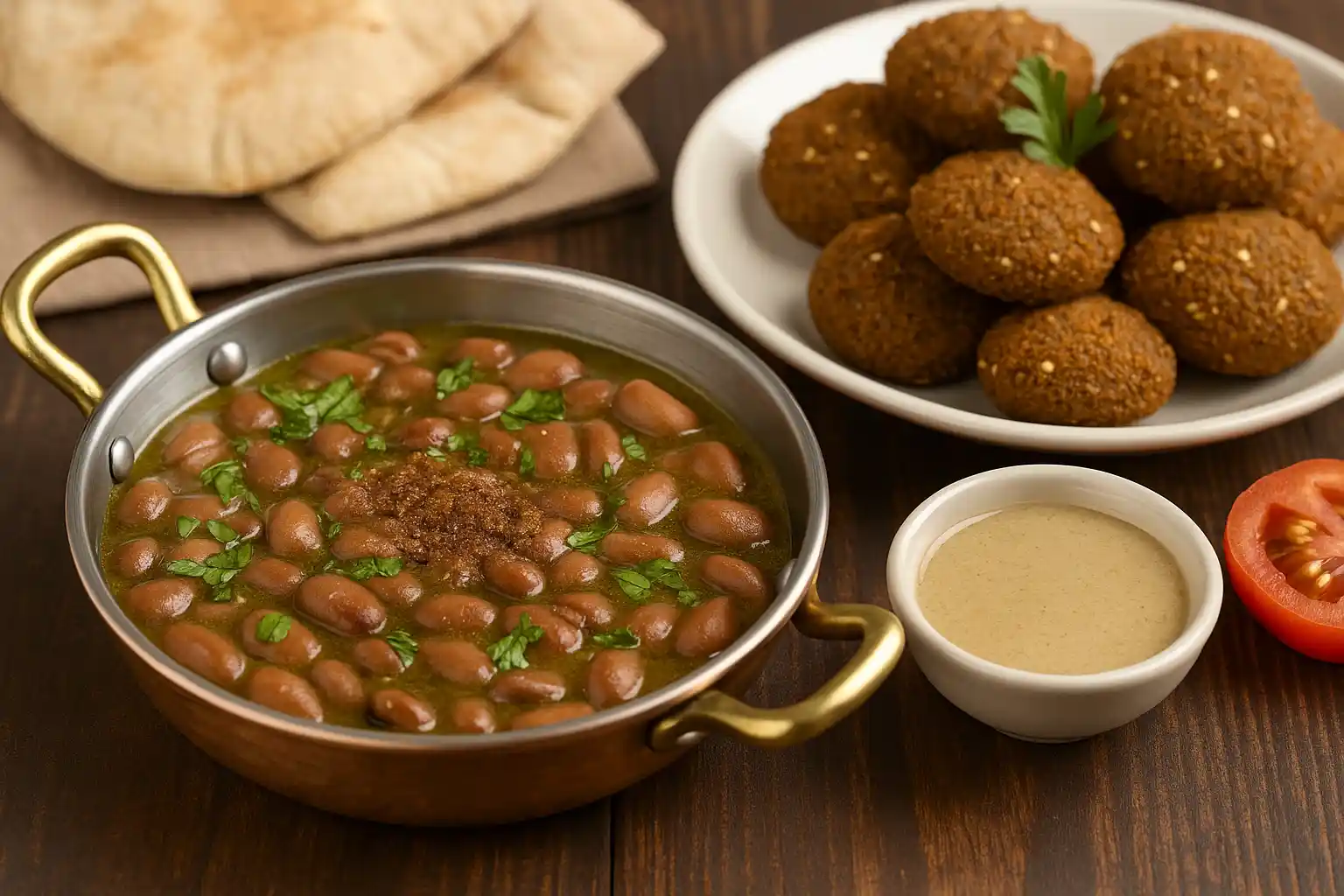
Ful is traditionally cooked for long hours in copper pots known as al-qidra, a method that gives it a creamy texture and deep flavor.
The addition of lemon, cumin, and tahini creates a perfectly balanced taste that makes ful truly irresistible.
Second: Egyptian Ta‘ameya – Golden Crispness Rooted in Tradition
1) Made from Crushed Fava Beans, Not Chickpeas
In Egypt, ta‘ameya is made from crushed fava beans rather than chickpeas, unlike falafel in many other countries.
This gives it its signature green interior and a distinct flavor based on coriander, leeks, garlic, and onions.
2) Fresh Green Herbs Are the Secret
Ta‘ameya batter includes celery, leeks, coriander, and parsley, giving it a fresh green color and bold herbal taste.
It is then fried in hot oil until golden and perfectly crispy on the outside.
3) Egyptian Ta‘ameya vs. Levantine Falafel
Although they appear similar, Egyptian ta‘ameya has a lighter texture and greener interior due to the use of fava beans instead of chickpeas, along with its fresh herb aroma.
Third: How Ful and Ta‘ameya Create the Perfect Breakfast
1) A Perfect Balance of Texture and Flavor
Creamy, hearty ful pairs beautifully with crispy, flavorful ta‘ameya, creating a breakfast combination that is deeply satisfying.
2) A Healthy and Balanced Meal
Ful provides protein and fiber, while ta‘ameya supplies carbohydrates and healthy fats when fried correctly—making the meal nutritionally complete.
3) Suitable for Every Taste
The meal is often served with:
- Fresh green salad
- Pickles
- Baba ghanoush
- Tahini
- Hot Egyptian flatbread (baladi bread)
Together, these elements create a truly authentic Egyptian breakfast.
Fourth: Ful and Ta‘ameya in Egyptian Culture
1) The People’s Everyday Meal
Almost every Egyptian street has a ful cart or a small shop selling ful and ta‘ameya, reflecting how deeply these dishes are rooted in daily life.
2) Affordable and Filling
Their low cost and high satiety made them the perfect choice for students, workers, and families for generations.
3) A Daily Ritual Egyptians Never Tire Of
Ful and ta‘ameya are more than food—they are a daily ritual that represents the warmth and familiarity of Egyptian mornings.
Fifth: Tips for Authentic Egyptian Ful and Ta‘ameya
1) Use Fresh Crushed Fava Beans for Ta‘ameya
Fresh beans ensure a smooth texture and vibrant green color.
2) Do Not Overuse Oil
Ta‘ameya needs hot oil, but in controlled amounts to remain light rather than greasy.
3) Cook Ful Slowly Over Low Heat
Slow cooking enhances flavor and creates the ideal creamy consistency.
4) Add Lemon and Cumin at the End
These ingredients give ful its signature sharp, beloved Egyptian taste.
Conclusion
Ful and ta‘ameya are far more than just a meal—they are a symbol of Egyptian heritage passed down through generations, combining simple flavors with exceptional nutritional value.
No matter how many modern recipes or global cuisines emerge, ful and ta‘ameya will always remain at the heart of Egyptian breakfast culture, representing warmth, family, and authentic identity.