Introduction
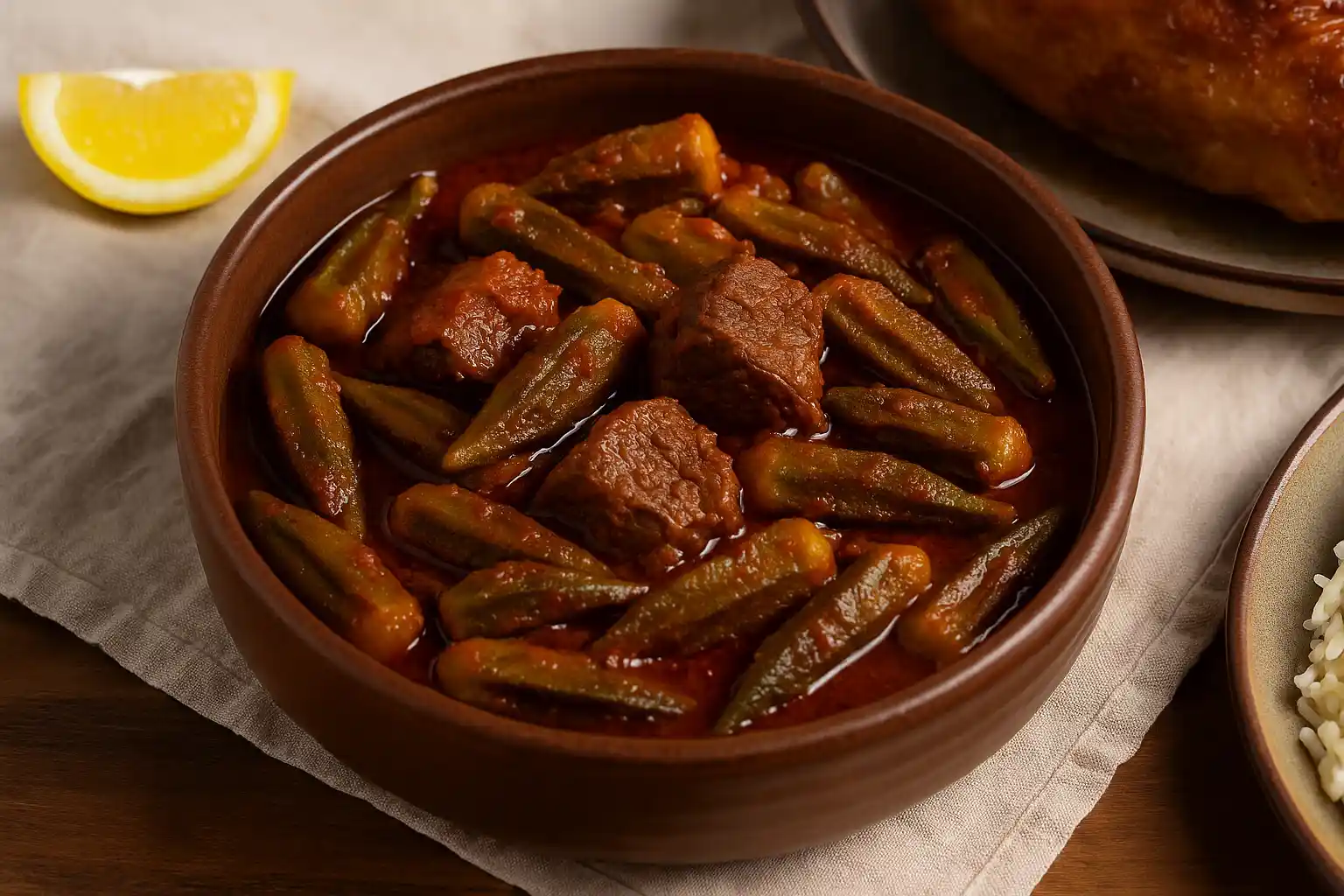
Egyptian okra with meat (Bamia bel Lahma) is one of the most beloved home-style dishes enjoyed across rural and urban areas of Egypt alike. It combines deep, comforting flavor with a strong sense of culinary heritage rooted in traditional farmhouse kitchens.
What truly defines this dish is its well-simmered tomato sauce, slow-cooked with tender meat and fresh okra until the flavors fully meld into a rich, hearty consistency—making it a favorite on Egyptian lunch tables.
Despite its simple ingredients, Egyptian okra with meat is both an everyday family meal and a respected dish suitable for guests and special gatherings.
First: What Makes Traditional Egyptian Okra with Meat Special
1) Authentic Egyptian Tomato Base (Tasbeeka)
The tomato base is the heart and soul of the dish.
It begins with sautéing onions and garlic in ghee or oil until aromatic, then adding grated tomatoes and tomato paste. The mixture is slowly cooked until thickened and glossy, with oil rising to the surface—this step is what gives Egyptian okra its signature flavor.
2) Slow Cooking with Meat
The meat is cooked until tender before being combined with the okra, allowing it to absorb the tomato sauce fully and create a deep, balanced taste.
3) Small, Fresh Okra
Young, tender okra is preferred because it is softer, less slimy, and holds its shape well in the sauce without falling apart.
4) Simple Steps, Big Flavor
Although easy to prepare, this dish depends on small details—such as the type of ghee used, proper seasoning, and perfect sauce consistency—which make a noticeable difference in the final result.
Second: Essential Ingredients for Egyptian Okra with Meat
Ingredients:
- 500 g beef or lamb, cut into cubes
- 500 g small okra
- 1 large onion, finely chopped
- 4 cloves garlic, minced
- 3 grated tomatoes
- 1 tablespoon tomato paste
- 2 cups meat stock
- 1 tablespoon ghee or oil
- ½ teaspoon cumin
- ½ teaspoon ground coriander
- Salt and black pepper
- Hot green chili (optional)
- Lemon juice for serving
Third: Step-by-Step Preparation
1) Preparing the Meat
Boil the meat with onion and basic spices until half cooked.
Reserve the stock for later use in the sauce.
2) Making the Traditional Tomato Base
Heat ghee or oil in a deep pot, add the chopped onion, and sauté until golden.
Add minced garlic and stir briefly, then add grated tomatoes and tomato paste.
Allow the mixture to simmer until thick and glossy, with oil separating on top.
3) Adding the Meat and Spices
Add the partially cooked meat along with cumin, coriander, salt, and pepper.
Stir gently, then add one to two cups of reserved stock and bring to a light boil.
4) Adding the Okra
Wash the okra well and gently add it to the pot without stirring aggressively.
Simmer over low heat for 20–30 minutes until the okra is tender and fully coated in sauce.
5) Final Egyptian Touch
Many Egyptians add a crushed garlic clove mixed with lemon juice during the last 5 minutes of cooking to brighten the flavor.
Fourth: Serving Egyptian Okra with Meat
1) With White Rice
Plain white rice is the classic accompaniment, balancing the acidity of the tomato sauce.
2) With Egyptian Flatbread
Fresh baladi bread is perfect for scooping up the rich sauce.
3) Spicy Garnish
Hot green peppers or chili flakes may be added for those who enjoy heat.
Fifth: Tips for Perfect Egyptian Okra
1) Avoid Excess Stirring
Okra is delicate and can break apart if stirred too much.
2) Use Ripe Tomatoes
High-quality ripe tomatoes are essential for a flavorful, well-balanced sauce.
3) Control the Amount of Stock
A thicker sauce results in a richer taste.
4) Choose the Right Cut of Meat
Shoulder or neck cuts work best, as they become tender with slow cooking.
Conclusion
Egyptian okra with meat remains a timeless home-cooked dish that perfectly balances simplicity with deep, comforting flavor. It reflects the spirit of traditional Egyptian farmhouse cooking, known for its rich tomato bases and patient, slow-cooked meals.
By following the right steps and using quality ingredients, anyone can recreate a pot of bamia that tastes just like the cherished recipes passed down from grandmothers—filling the home with warmth, aroma, and tradition.