Introduction
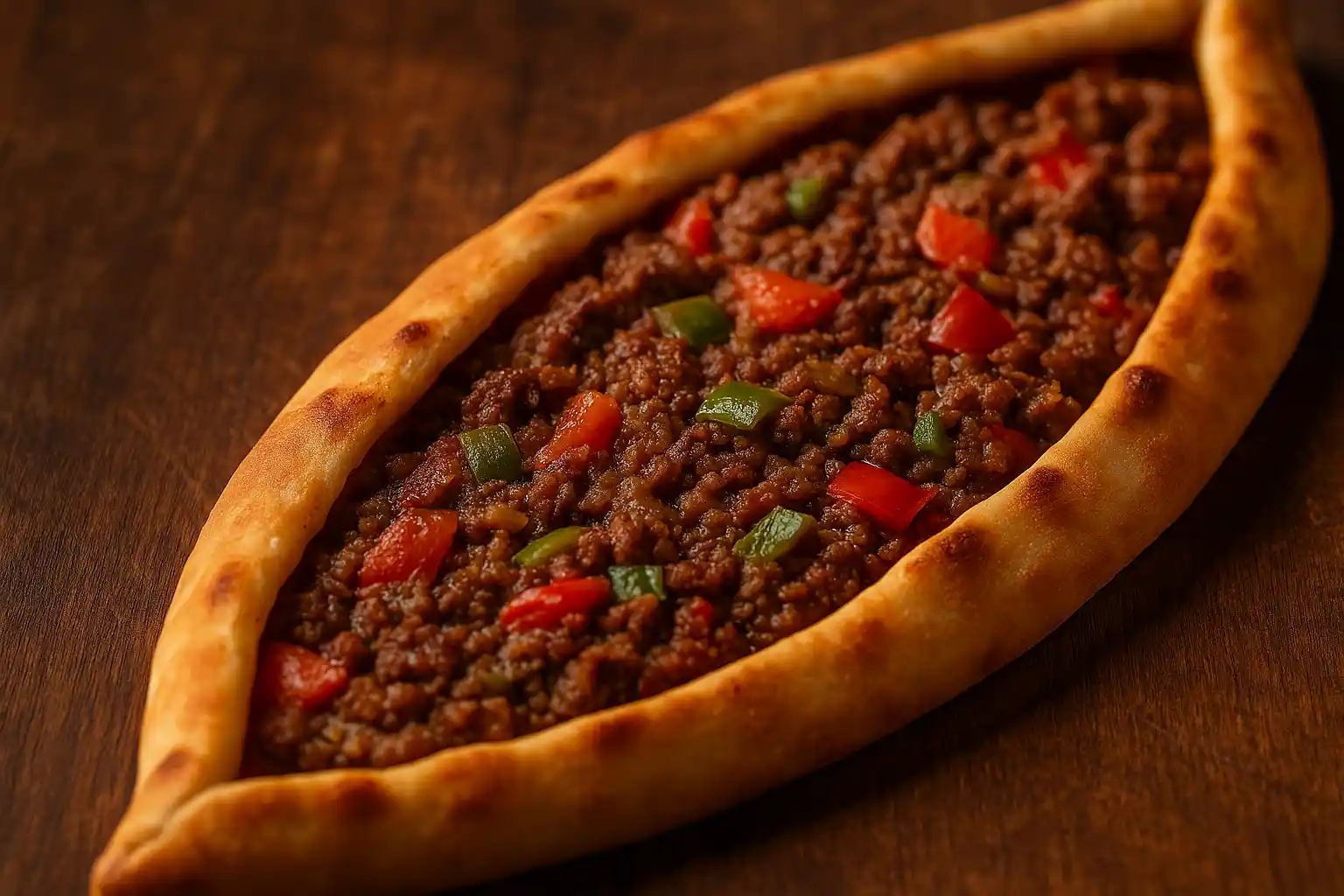
Turkish meat pide is one of the most famous baked dishes in Turkish cuisine, especially popular in the Black Sea region, Konya, and Istanbul. This dish is characterized by its thin, stretched dough shaped like a small boat, filled with a richly seasoned minced meat mixture, then baked in stone ovens or home ovens until the edges turn golden while the center remains soft and tender.
Despite its simplicity, pide perfectly combines ancient Eastern flavors with the craftsmanship of Turkish cuisine, which relies on fresh ingredients and light yet well-defined seasonings.
First: What Is Turkish Pide?
Pide is a traditional Turkish flatbread shaped into an oval or boat-like form and typically filled with minced meat, cheese, or vegetables. It is commonly served in restaurants as a quick and satisfying meal. While it may resemble manakish or Eastern-style pizza, pide differs in dough texture, shaping, and seasoning.
Its origins date back to the Ottoman era, when it was prepared as a convenient meal for soldiers and travelers due to its portability and variety of fillings.
Second: Ingredients for Turkish Meat Pide
Dough Ingredients:
- 3 cups all-purpose flour
- 1 tablespoon instant yeast
- ½ tablespoon sugar
- ½ tablespoon salt
- 2 tablespoons olive oil
- Warm water for kneading
Filling Ingredients:
- 300 g finely minced meat
- 1 onion, finely chopped
- 1 tomato, finely chopped
- 1 Turkish green pepper, finely chopped
- 1 teaspoon paprika
- ½ teaspoon cumin
- Salt and black pepper to taste
- 1 tablespoon olive oil
- Chopped parsley (optional)
Third: Step-by-Step Preparation
1) Preparing the Dough
In a deep bowl, mix the flour with yeast, salt, and sugar. Gradually add warm water while kneading until a soft, smooth dough forms. Add olive oil at the end and continue kneading. Cover the dough and let it rise for about one hour, or until doubled in size.
2) Preparing the Filling
Heat olive oil in a pan, add the onion, and sauté until softened. Add the minced meat and cook until it changes color. Stir in the tomato, green pepper, and spices, then cook until the mixture thickens. Parsley may be added at the end for a fresh flavor.
3) Shaping the Pide
Divide the dough into equal balls.
Roll each ball on a floured surface into an oval shape.
Spread a thin layer of filling in the center, then fold the edges inward to form a boat shape, leaving the middle exposed.
4) Baking
Bake the pides in a very hot oven at 250°C (480°F) for 12–15 minutes, or until golden and crisp around the edges.
For a glossy finish, brush the edges with a little oil or butter immediately after baking.
Fourth: Other Turkish Pide Varieties You May Enjoy
- Cheese Pide (Kaşar Pide): Filled with melted Turkish cheese.
- Spinach Pide: A healthy and flavorful vegetarian option.
- Egg Pide: A raw egg is cracked over the filling before baking and cooks inside the dough.
- Sucuk Pide: Made with spicy Turkish sausage for bold flavor lovers.
Fifth: Tips for Perfect Turkish Meat Pide
- Keep the dough thin; thick dough reduces the authentic flavor.
- Use lean minced meat for a firm, well-balanced filling.
- Avoid excess liquid in the filling to prevent soggy dough.
- Preheat the oven thoroughly—high heat is essential.
- Serve immediately with Turkish tea or yogurt for the best experience.
Conclusion
Turkish meat pide combines light dough with a rich, flavorful filling, making it one of the most beloved dishes in Turkey and across the Middle East. It is an ideal recipe for serving a complete meal with authentic Turkish character, whether for a family dinner or for guests eager to explore a different cuisine.
With its clear steps and simple ingredients, this recipe can easily be prepared at home, delivering a taste remarkably similar to what is served in Turkey’s most popular pide restaurants.