Introduction
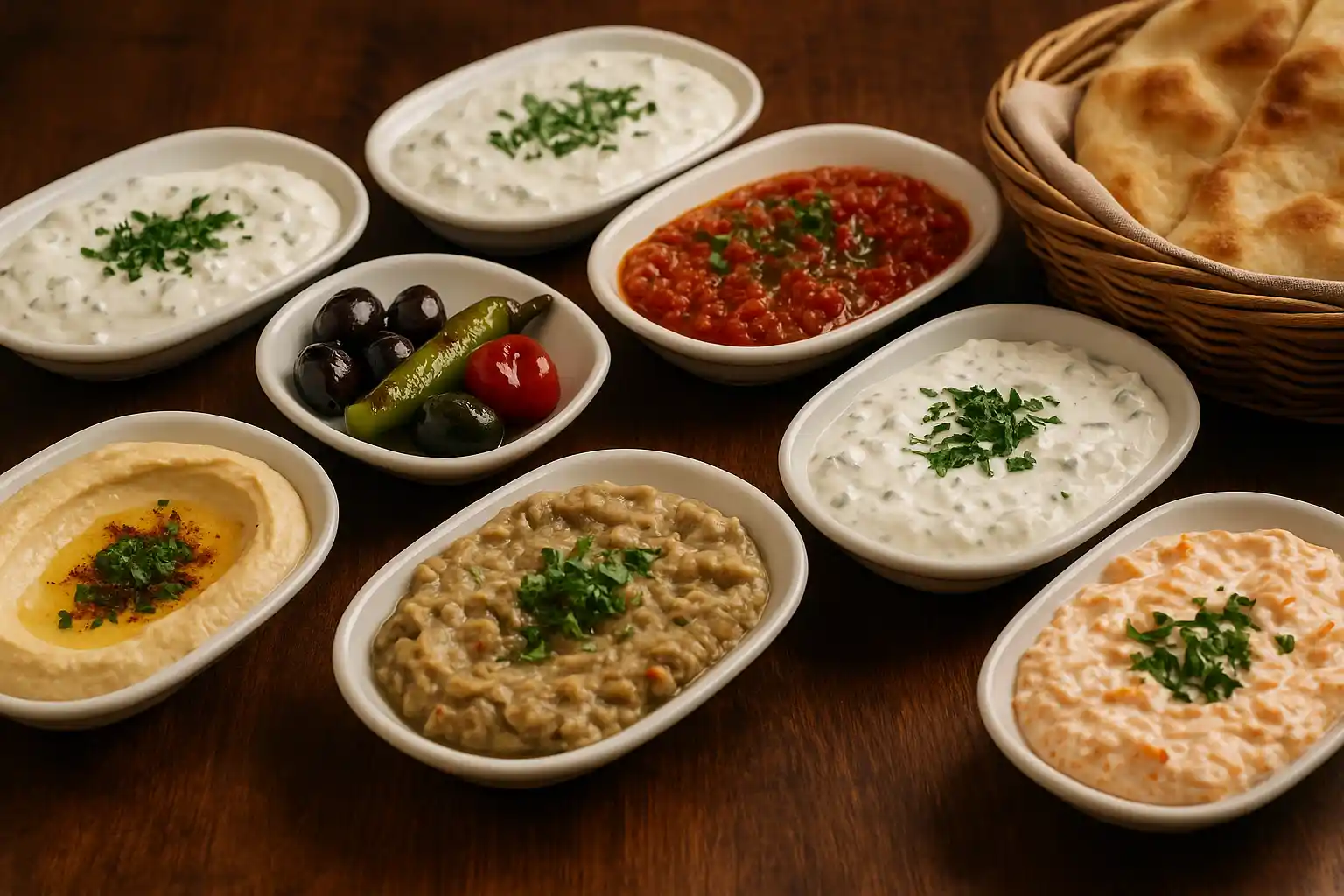
Turkish Meze is an essential part of food culture in Turkey. It refers to a selection of small dishes served before the main course or alongside grilled meats and seafood. These appetizers are known for their fresh Mediterranean flavors and diverse ingredients, combining vegetables, yogurt, olive oil, herbs, and red peppers.
Turkish meze is served in most restaurants, especially in coastal cities such as Istanbul, Izmir, and Antakya, where rich meze selections and unforgettable flavors are a defining feature of local cuisine.
First: What Is Turkish Meze and Why Is It So Popular?
Meze is not a single dish, but a variety of dishes served together.
Turkey is famous for serving meze before grilled meats or alongside seafood. While it resembles Greek and Lebanese appetizers, Turkish meze relies more heavily on yogurt, sweet red peppers, and grilled vegetables.
Meze is an ideal choice for families and guests, as it adds variety, color, and balance to the table.
Second: Most Popular Types of Turkish Meze
Below are some of the most well-known meze dishes that are considered staples of Turkish cuisine:
1) Haydari – Yogurt Dip with Garlic and Herbs
A famous Turkish dish made with thick yogurt, mixed with garlic and dill or mint, and served cold.
It is one of the most popular meze dishes served with grilled meats.
2) Acılı Ezme – Spicy Tomato Pepper Salad
A spicy salad made from tomatoes, onions, hot red peppers, pomegranate molasses, and olive oil.
It has a smooth texture and a bold, intense flavor.
3) Patlıcan Ezmesi – Turkish Baba Ghanoush
Roasted eggplant mashed with garlic and yogurt or tahini.
The Turkish version often uses yogurt to create a creamy consistency.
4) Turkish Hummus (Humus)
A classic hummus dish with a Turkish twist, often enhanced with sweet red pepper or yogurt in some regions.
5) Roka Salatası – Arugula Salad with Lemon
A simple mix of arugula, lemon juice, and olive oil, commonly served with fish dishes.
6) Piyaz – White Bean Salad with Olive Oil
A hearty salad made with white beans, onions, lemon, and cumin, frequently served with Turkish kebabs.
7) Köz Biber Mezesi – Roasted Red Pepper Meze
Roasted red peppers mashed with olive oil, garlic, and salt, served as a refreshing cold appetizer.
Third: How Turkish Meze Is Prepared
Despite the variety of ingredients and dishes, Turkish meze follows a few shared principles:
1) Fresh and Grilled Vegetables
Tomatoes, eggplants, peppers, and cucumbers are core ingredients.
2) Balanced, Tangy Flavors
Lemon juice, pomegranate molasses, and yogurt are used to create freshness and balance.
3) Olive Oil as a Key Ingredient
High-quality olive oil adds shine and a distinctive flavor that is essential to meze.
4) Served Cold or at Room Temperature
Most meze dishes are served cold, with the exception of some warm items like hummus.
Fourth: Serving Turkish Meze the Traditional Way
Turkish meze is typically served:
- In small plates arranged together
- Alongside grilled dishes such as kofta and shish tawook
- With grilled fish
- With fresh Turkish bread, simit, or lavash
In Turkish restaurants, meze plates are often garnished with olives, lemon slices, parsley, and sometimes pistachios.
Fifth: Health Benefits of Turkish Meze
Most Turkish meze dishes are healthy and fresh, as they rely on vegetables, olive oil, and yogurt. Their benefits include:
- High fiber and vitamin content
- Healthy fats that support heart health
- Suitable for balanced diets and weight management
- Filling without being high in calories
Sixth: Tips for the Perfect Turkish Meze
- Use fresh ingredients, especially tomatoes, onions, and herbs
- Balance flavors carefully—avoid excessive salt or acidity
- High-quality olive oil makes a noticeable difference
- Serve immediately after preparation to maintain freshness
Conclusion
Turkish meze is more than just a collection of side dishes—it is a reflection of Turkish culinary identity that has lasted for centuries.
It brings together balanced flavors, fresh herbs, and olive oil, which is considered the soul of Turkish cuisine.
Thanks to its variety and ease of preparation, anyone can create a beautiful Turkish meze table that adds elegance and rich flavor to any meal.