Introduction
Mandi is one of the oldest and most iconic dishes in Gulf and Yemeni cuisine, and today it has become a staple of Saudi cooking, especially at large banquets and special occasions.
What sets mandi apart is its unique cooking method, which relies on smoke, low heat, and suspending the meat above the rice, giving it a distinctive smoky flavor and exceptionally tender meat that melts effortlessly.
Although the traditional underground tandoor method requires time and special equipment, the homemade version has become popular and practical, while still preserving the authentic flavor as much as possible.
The Secret Behind Mandi Flavor – Slow Cooking and Natural Smoke
The key difference between mandi and dishes like kabsa or madhbi lies in the cooking technique.
In mandi:
- The meat is not boiled or fried.
- It is suspended above the rice inside a sealed tandoor or pot.
- The meat’s natural fat drips slowly onto the rice, infusing it with rich, lightly smoky flavor.
- Low, steady heat over a long period ensures extraordinary tenderness.
In home cooking, a large pot, a rack, and a piece of hot charcoal are used to recreate the signature smoky aroma that defines mandi.
Choosing the Right Meat or Chicken – The Foundation of Authentic Taste
Mandi can be prepared using:
- Lamb: The most traditional choice, as it tolerates long cooking and delivers deep flavor.
- Whole chicken: A quicker alternative, preferably cooked whole or halved.
Larger cuts retain moisture better during slow cooking and absorb spices more effectively.
Mandi Marinade – Simple Yet Powerful
Mandi seasoning is known for its balance and ability to enhance the meat without overpowering it. It typically includes:
- Turmeric
- Black pepper
- Cumin
- Cardamom
- Cinnamon
- Cloves
- Ground dried lime
- Paprika
- Salt, garlic, and lemon
The spices are mixed with oil or yogurt and rubbed thoroughly onto the meat, which is then left to marinate for at least two hours, or preferably overnight.
Traditional Tandoor Method – Unmatched Flavor
The original mandi technique follows three essential steps:
1) Heating the Tandoor
The tandoor is fired with wood or charcoal until heat spreads evenly through its clay walls.
2) Placing the Rice at the Bottom
Seasoned rice with water and spices is placed at the base.
3) Suspending the Meat
The meat or chicken is hung above the rice without touching the liquid, allowing:
- Fat to drip gradually onto the rice
- Meat to cook gently
- Slow cooking in a sealed environment
The tandoor is sealed tightly and left for 2–3 hours.
Result:
Fall-apart tender meat and fluffy rice with a subtle smoky aroma that cannot be fully replicated by any other method.
Homemade Mandi Method – A Practical Alternative with Excellent Results
For home kitchens without a tandoor, mandi can be prepared in a large pot:
- Prepare the rice
Rice is cooked with cardamom, cinnamon, turmeric, and bay leaves. - Place a rack above the pot
Marinated meat or chicken is positioned on the rack directly above the steam. - Seal the pot tightly
Aluminum foil and a lid are used to trap steam. - Add smoke
After the rice is cooked, a piece of hot charcoal is placed in a small bowl with oil inside the pot for a few seconds to infuse smoky flavor.
This method produces a result remarkably close to traditional mandi.
Serving Mandi – Elegant Presentation and Irresistible Taste
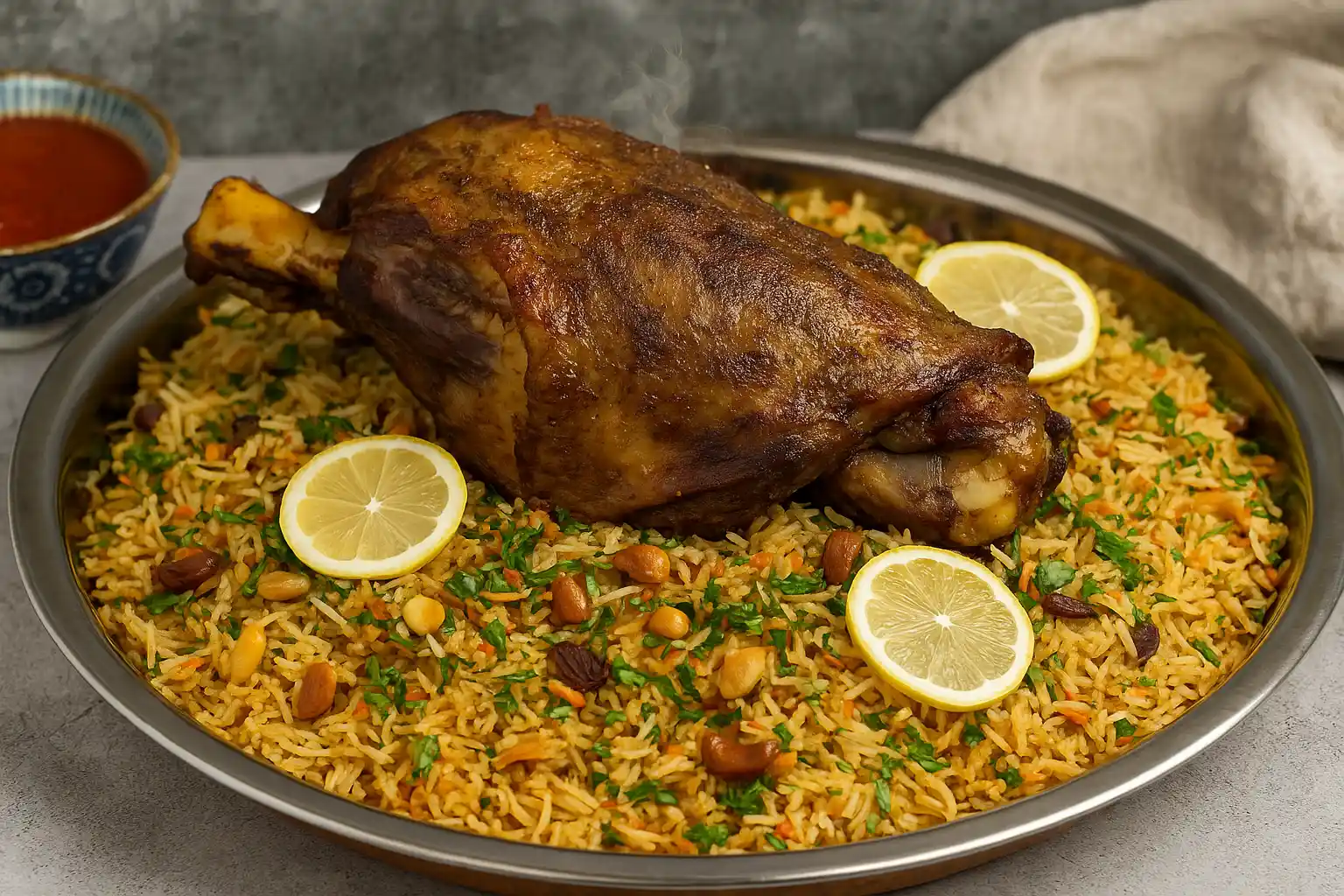
Mandi is served on a wide platter:
- Rice spread as the base
- Meat arranged attractively on top
- Garnished with:
- Raisins
- Toasted almonds
- Lemon slices
It is usually accompanied by:
- Spicy daqqous sauce
- Yogurt and cucumber salad
- Light mint yogurt salad
Nutritional Benefits of Mandi
Mandi is a balanced and nourishing meal because it provides:
- High-quality protein from meat
- Carbohydrates from rice
- Lower fat compared to many other cooking methods
- Antioxidant-rich spices
Slow cooking also reduces the need for excess oil, making mandi a healthier choice when enjoyed in moderation.
Mandi – A Dish That Defines Gulf Hospitality
Today, mandi is one of the most important dishes served at weddings and major celebrations across Saudi Arabia, Yemen, and the Gulf region.
Despite modern adaptations, the traditional method remains the most treasured, as it delivers a flavor that is truly unforgettable.
Conclusion
Saudi mandi is not just a dish—it is a culinary experience that combines heritage, deep flavor, and slow cooking that brings out the very best in meat and rice.
It is a recipe worthy of leading the Saudi cuisine section on Atayeb Kitchen, thanks to its authenticity, elegance, and timeless appeal.