Introduction
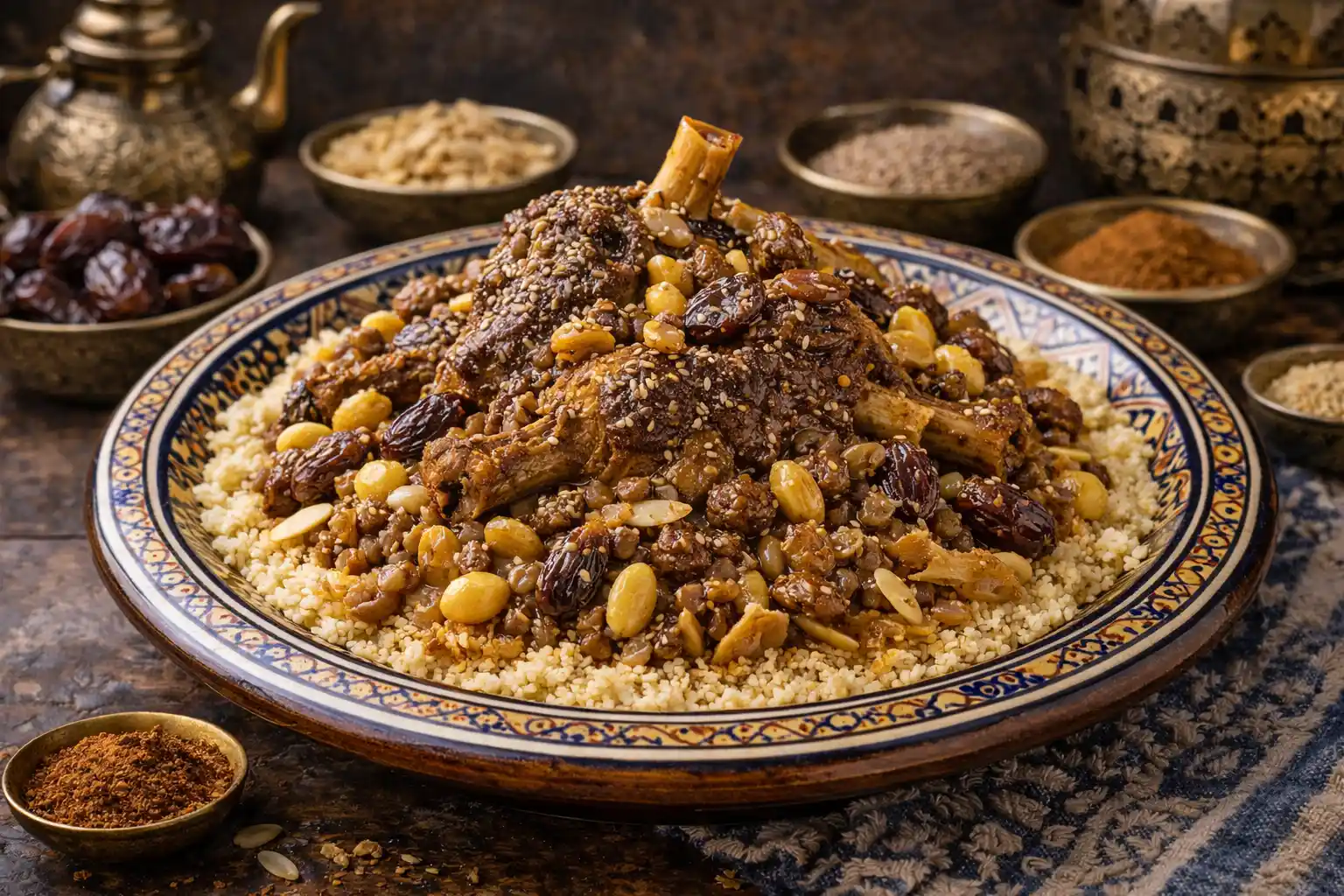
Moroccan Mrouzia is one of the most luxurious and symbolic dishes in Moroccan cuisine. Traditionally prepared during Eid al-Adha, Mrouzia is a slow-cooked lamb tagine that masterfully combines savory spices with natural sweetness from honey and dried fruits. This dish represents abundance, celebration, and culinary heritage, making it a centerpiece of festive Moroccan tables.
Unlike everyday tagines, Mrouzia is reserved for special occasions due to its rich ingredients and lengthy preparation. Its deep flavors, tender meat, and aromatic spices reflect the Moroccan philosophy of patience and balance in cooking. In this article, we explore the origins of Mrouzia, its cultural significance, ingredients, traditional preparation, variations, and why it remains one of Morocco’s most treasured festive dishes.
The Origins of Mrouzia in Moroccan Cuisine
Mrouzia has ancient roots in Moroccan culinary history, developed as a method to preserve meat before refrigeration. The use of honey and warming spices not only enhanced flavor but also extended the shelf life of cooked lamb during Eid celebrations.
Over time, this practical technique evolved into a refined celebratory dish. Mrouzia became strongly associated with Eid al-Adha, prepared several days after the sacrifice, using carefully selected cuts of lamb cooked slowly until infused with spices and sweetness.
Cultural Importance of Mrouzia
In Moroccan culture, Mrouzia symbolizes generosity and festivity. It is often served to honored guests and family members during Eid gatherings. Preparing Mrouzia requires experience and patience, making it a dish associated with culinary mastery.
Serving Mrouzia reflects pride in tradition and respect for guests. Its rich aroma filling the home is a familiar and cherished part of Eid celebrations across Morocco.
Key Ingredients of Moroccan Mrouzia
Main Ingredients:
- Lamb (preferably shoulder or neck)
- Onions
- Garlic
- Olive oil or traditional Moroccan ghee
Signature Spices:
- Ras el Hanout
- Ginger
- Cinnamon
- Black pepper
- Saffron or safflower
- Salt
Sweet Elements:
- Honey
- Raisins
Garnish (Optional):
- Blanched almonds
- Sesame seeds
These ingredients create Mrouzia’s distinctive balance of warmth, sweetness, and depth.
Traditional Preparation Method
1. Marinating the Lamb
Lamb is marinated with spices, garlic, and oil to allow flavors to penetrate the meat before cooking. This step is crucial for depth and aroma.
2. Initial Cooking
The lamb is browned gently with onions and spices, releasing aromatic oils and building the base flavor of the tagine.
3. Slow Simmering
A small amount of water is added, and the tagine is covered and cooked slowly over low heat until the meat becomes exceptionally tender.
4. Adding Honey and Raisins
Once the lamb is nearly cooked, honey and raisins are added. The sauce thickens and caramelizes, coating the meat in a glossy, flavorful glaze.
5. Final Reduction
The tagine is uncovered slightly toward the end to reduce the sauce, intensifying its flavor and texture.
Why Mrouzia Is a Festive Masterpiece
Mrouzia stands out because it:
- Combines sweet and savory elements seamlessly
- Uses slow cooking to achieve deep flavor
- Reflects Moroccan celebratory traditions
- Requires culinary skill and patience
Few dishes embody Moroccan festive cooking as fully as Mrouzia.
Regional Variations of Mrouzia
While the classic recipe is widely shared, regional differences exist:
- Some regions increase honey for extra sweetness
- Others emphasize spices over sweetness
- Almond garnish may vary
Despite these variations, the essence of Mrouzia remains consistent throughout Morocco.
Serving Moroccan Mrouzia
Mrouzia is traditionally served:
- Hot
- In a clay tagine
- With Moroccan bread
- Without heavy side dishes
Its richness allows it to stand alone as the centerpiece of the meal.
Nutritional Profile of Mrouzia
Mrouzia provides:
- High-quality protein from lamb
- Natural sugars for energy
- Healthy fats from olive oil
- Antioxidants from spices
Due to its richness, it is enjoyed in moderation during festive occasions.
Mrouzia in Modern Moroccan Cuisine
Today, Mrouzia remains a cherished dish prepared mostly during Eid, though some restaurants offer it year-round as a luxury specialty. Modern adaptations may adjust sweetness or cooking time, but traditional preparation remains highly respected.
Tips for Authentic Moroccan Mrouzia
- Choose lamb cuts with bone for deeper flavor
- Cook slowly and patiently
- Use real honey, not sugar substitutes
- Balance spices carefully
- Allow the sauce to reduce naturally
Conclusion
Moroccan Mrouzia is a celebration of flavor, tradition, and culinary artistry. Its sweet and savory harmony reflects Morocco’s rich food heritage and festive spirit. Whether served during Eid or on special occasions, Mrouzia remains a timeless dish that embodies generosity, patience, and Moroccan hospitality.