Introduction
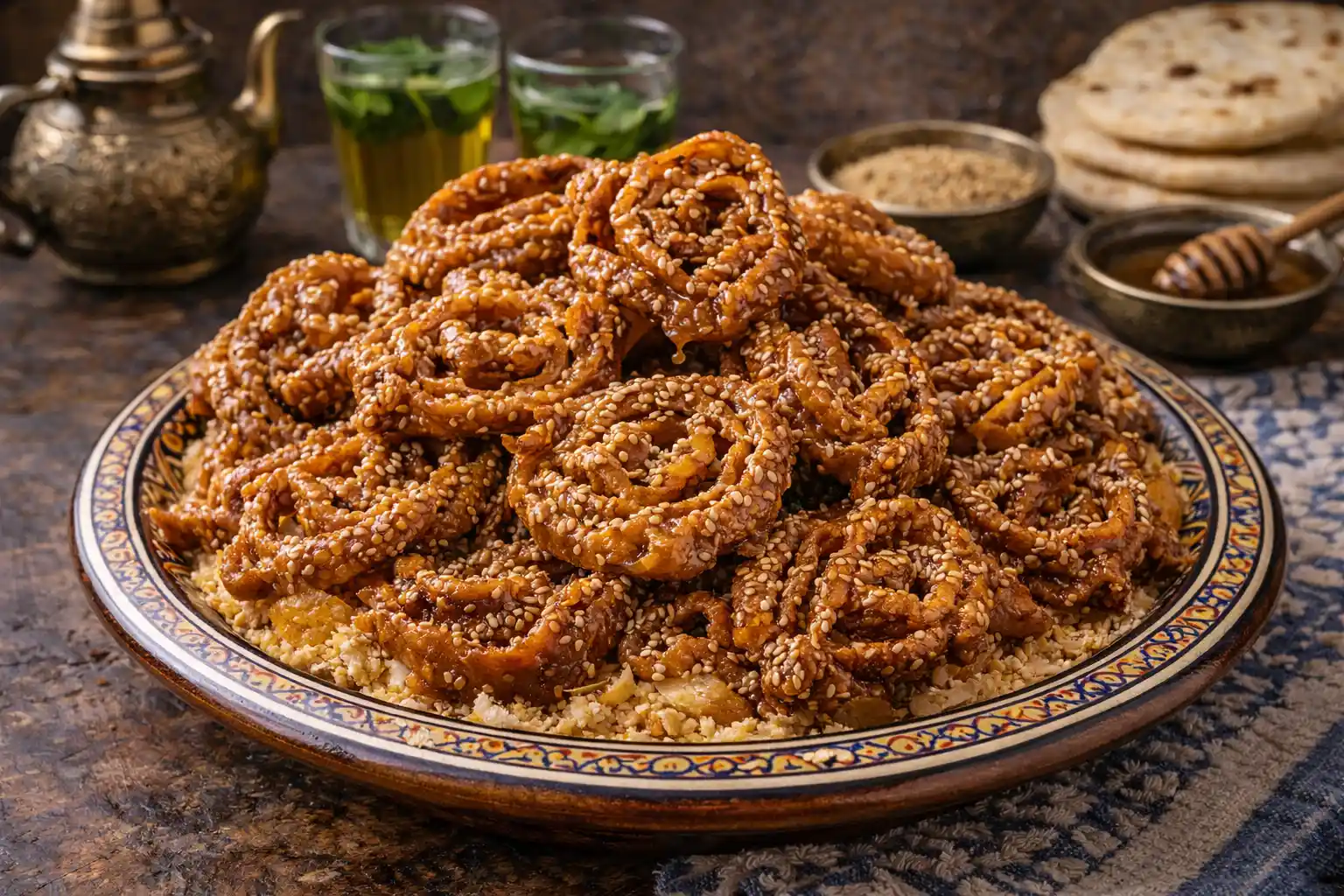
Moroccan Chebakia is one of the most iconic and beloved traditional pastries in Moroccan cuisine, especially during the holy month of Ramadan. Recognized by its intricate flower-like shape, golden color, and glossy honey coating, Chebakia is far more than a sweet treat—it is a cultural symbol closely tied to family traditions, spirituality, and communal cooking.
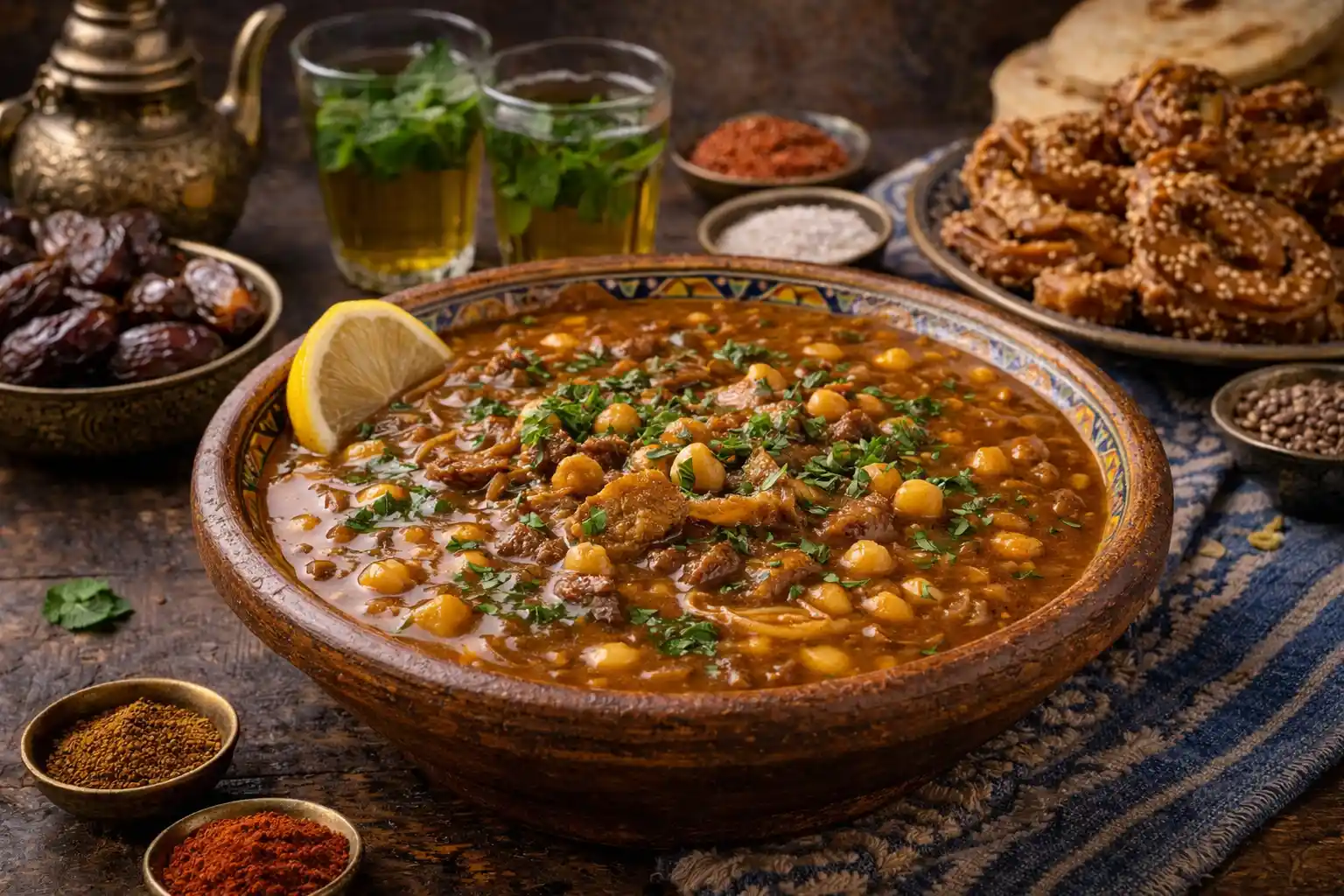
Chebakia is traditionally served alongside Moroccan Harira soup at iftar, creating a perfect balance between savory warmth and sweet crunch. Its preparation is considered an annual ritual in many Moroccan households, often made in large batches before Ramadan begins. In this article, we explore the history of Chebakia, its cultural importance, ingredients, traditional preparation method, regional variations, nutritional value, and why it remains a timeless Ramadan favorite.
The Origins of Chebakia in Moroccan Cuisine
Chebakia traces its roots back to Moroccan-Andalusian culinary traditions, where pastry-making involved spiced dough, decorative shaping, and honey-based finishes. Over centuries, Moroccan cooks refined the recipe, incorporating local ingredients such as sesame seeds, saffron, and aromatic spices.
With time, Chebakia became firmly associated with Ramadan, evolving from a festive pastry into a seasonal staple that signals the arrival of the holy month. Its presence on the table is deeply symbolic, representing generosity, blessing, and togetherness.
Cultural Significance of Chebakia
In Moroccan culture, Chebakia is not simply cooked—it is prepared together. Families often gather to make Chebakia in large quantities, dividing tasks such as dough preparation, shaping, frying, and honey-coating.
This collective process strengthens family bonds and preserves culinary heritage across generations. Offering Chebakia to guests during Ramadan is a sign of hospitality and respect, making it an essential part of Moroccan social customs.
Key Ingredients of Moroccan Chebakia
Dough Ingredients:
- All-purpose flour
- Toasted sesame seeds (ground)
- Almonds (optional, ground)
- Butter or vegetable oil
- Eggs
- Vinegar
- Orange blossom water
Spices:
- Cinnamon
- Anise seed
- Saffron threads or safflower
- Salt
Frying and Coating:
- Vegetable oil for frying
- Natural honey
- Toasted sesame seeds for garnish
Each ingredient contributes to Chebakia’s complex flavor and distinctive aroma.
Traditional Preparation Method
1. Preparing the Dough
Dry ingredients are mixed first, followed by butter, eggs, and orange blossom water. The dough is kneaded until smooth and elastic, then left to rest to improve texture and shaping.
2. Rolling and Cutting
The dough is rolled very thin, as thickness affects crispness. It is cut into rectangles and slit in a specific pattern to allow hand-weaving into the traditional Chebakia shape.
3. Shaping the Pastry
Shaping Chebakia is a skill passed down through generations. The dough is carefully folded through its slits to form a braided, flower-like design.
4. Frying
Chebakia pieces are fried slowly in warm oil until evenly golden. Controlling oil temperature is essential to avoid burning while achieving crisp texture.
5. Honey Coating
Immediately after frying, Chebakia is dipped into warm honey, allowing it to absorb sweetness and develop its glossy finish. It is then sprinkled with sesame seeds.
Why Chebakia’s Shape Matters
The intricate shape of Chebakia is not merely decorative. It allows the pastry to:
- Fry evenly
- Hold honey effectively
- Maintain crunch while absorbing sweetness
This careful balance between structure and flavor is a hallmark of Moroccan pastry craftsmanship.
Regional Variations of Chebakia
Although the classic recipe is widely shared, variations exist across Morocco:
- Some regions increase spice intensity
- Others reduce sweetness
- Shapes and sizes may vary
- Almond content differs by household
Despite these variations, Chebakia’s identity remains unmistakably Moroccan.
Serving Moroccan Chebakia
Chebakia is traditionally served:
- At room temperature
- Alongside Harira soup
- During iftar
- With Moroccan mint tea
It is often stored for days or weeks, making it a practical and cherished Ramadan treat.
Nutritional Profile of Chebakia
Chebakia is an energy-rich pastry, providing:
- Carbohydrates for quick energy
- Healthy fats from sesame seeds
- Natural sugars from honey
- Aromatic compounds from spices
Due to its richness, it is best enjoyed in moderation.
Chebakia in Modern Moroccan Kitchens
Today, Chebakia remains deeply respected, even as modern kitchens adopt tools like pasta rollers and deep fryers. While shortcuts exist, traditional preparation is still considered the gold standard for flavor and texture.
Chebakia is now also found in Moroccan bakeries worldwide, introducing this Ramadan classic to global audiences.
Tips for Authentic Moroccan Chebakia
- Toast sesame seeds before grinding
- Roll dough very thin
- Fry at moderate temperature
- Dip pastries in warm honey immediately
- Store in airtight containers
Conclusion
Moroccan Chebakia is a celebration of tradition, craftsmanship, and community. Its golden color, aromatic spices, and honeyed sweetness make it a beloved symbol of Ramadan. More than a pastry, Chebakia represents shared effort, cultural continuity, and the joy of gathering around the table during the holy month.