Introduction
Moroccan Mint Tea is far more than a simple beverage—it is a symbol of hospitality, tradition, and social connection deeply rooted in Moroccan culture. Known locally as Atay, this iconic drink is present in every Moroccan home and served on countless occasions, from casual family gatherings to formal celebrations.
Prepared with green tea, fresh mint, and sugar, Moroccan mint tea represents generosity, respect, and warmth. The act of preparing and serving tea is itself a ritual, reflecting centuries of cultural heritage. In this article, we explore the history of Moroccan mint tea, its cultural importance, ingredients, traditional preparation method, regional variations, health benefits, and why it remains an enduring symbol of Moroccan identity.
The History of Moroccan Mint Tea
Mint tea was introduced to Morocco in the 18th century through trade with Europe, particularly Britain, which supplied green tea from China. At first, tea was a luxury item consumed by the elite, but over time it became widely accessible.
Moroccans transformed green tea into a unique cultural symbol by adding fresh mint and generous amounts of sugar, creating the distinctive flavor known worldwide today. What began as a foreign product evolved into a national tradition deeply embedded in Moroccan daily life.
Cultural Importance of Mint Tea in Morocco
In Moroccan society, offering mint tea is a gesture of respect and hospitality. Refusing tea is considered impolite, as tea symbolizes welcome and goodwill. It is traditionally served:
- When guests arrive
- During family gatherings
- After meals
- In business or social meetings
Tea brings people together, encouraging conversation, relaxation, and connection.
Mint Tea as a Social Ritual
Moroccan mint tea is often prepared by one person, typically the head of the household or a respected host. This role reflects trust and pride, as preparing good tea is considered an art.
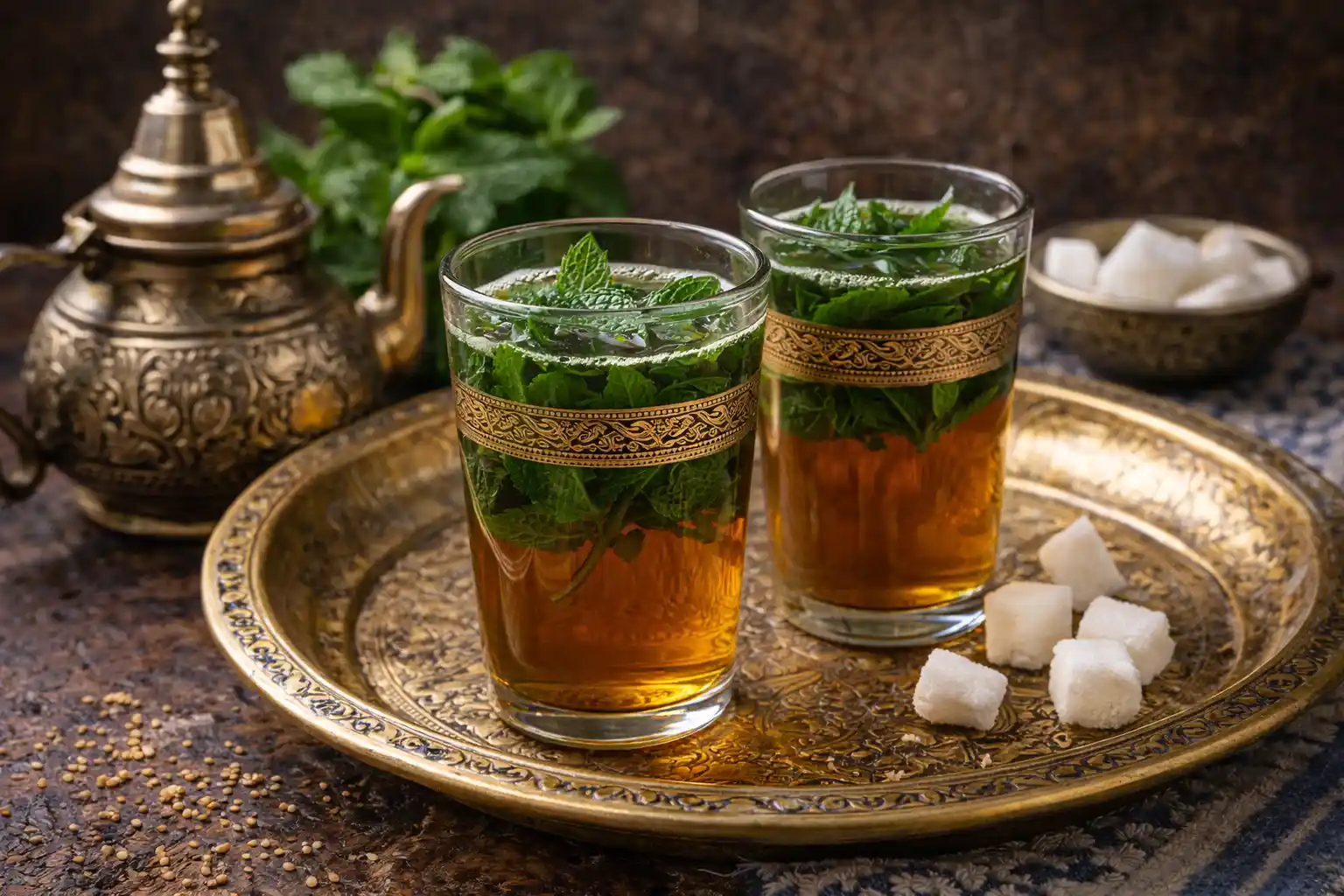
Tea is usually served in small glass cups, poured from a height to create foam on the surface—a sign of skill and quality. This ritualized pouring enhances both flavor and presentation.
Core Ingredients of Moroccan Mint Tea
Essential Ingredients:
- Green tea (Gunpowder tea is most common)
- Fresh mint leaves
- Sugar
- Boiling water
Optional Seasonal Variations:
- Wormwood (Chiba) in winter
- Verbena or thyme
- Basil or lemon verbena
Despite variations, mint remains the defining ingredient.
Traditional Preparation Method
1. Rinsing the Tea
Green tea leaves are placed in a teapot and rinsed briefly with boiling water to remove bitterness.
2. Adding Mint and Sugar
Fresh mint leaves and sugar are added directly to the pot. Sugar quantity varies by taste but is traditionally generous.
3. Brewing
Boiling water is poured over the mixture, and the tea is allowed to steep until flavors blend harmoniously.
4. Mixing the Tea
The tea is poured into a glass and returned to the pot several times to ensure even distribution of sweetness and flavor.
The Art of Pouring Moroccan Tea
Pouring tea from a height serves multiple purposes:
- Creates a light foam
- Aerates the tea
- Enhances aroma
- Demonstrates the server’s skill
This technique is a defining feature of Moroccan tea culture.
Regional Variations of Moroccan Mint Tea
Mint tea varies slightly across regions:
- Southern regions prefer stronger, sweeter tea
- Northern areas favor lighter brews
- Some regions add seasonal herbs
These variations reflect local tastes and traditions while maintaining the essence of Moroccan tea.
Health Benefits of Moroccan Mint Tea
When consumed in moderation, mint tea offers several benefits:
- Aids digestion
- Refreshes the body
- Provides antioxidants
- Promotes relaxation
Reducing sugar enhances its health value while preserving flavor.
Mint Tea in Daily Moroccan Life
Moroccan mint tea is enjoyed throughout the day:
- In the morning for freshness
- After meals for digestion
- In the evening for relaxation
It is a constant presence, reinforcing social bonds and daily routines.
Moroccan Mint Tea in the Modern World
Today, Moroccan mint tea is enjoyed worldwide, served in cafés and homes far beyond Morocco. While modern adaptations exist, traditional preparation remains highly respected and cherished.
Despite globalization, mint tea continues to represent Moroccan identity, hospitality, and cultural continuity.
Tips for Authentic Moroccan Mint Tea
- Use fresh mint
- Avoid over-brewing green tea
- Balance sweetness carefully
- Use boiling water
- Serve immediately
Conclusion
Moroccan mint tea is more than a drink—it is a cultural language of hospitality and connection. Its preparation, presentation, and sharing reflect values of generosity, patience, and respect. Whether served in a Moroccan home or enjoyed abroad, mint tea remains a timeless expression of Morocco’s rich cultural heritage.