Introduction
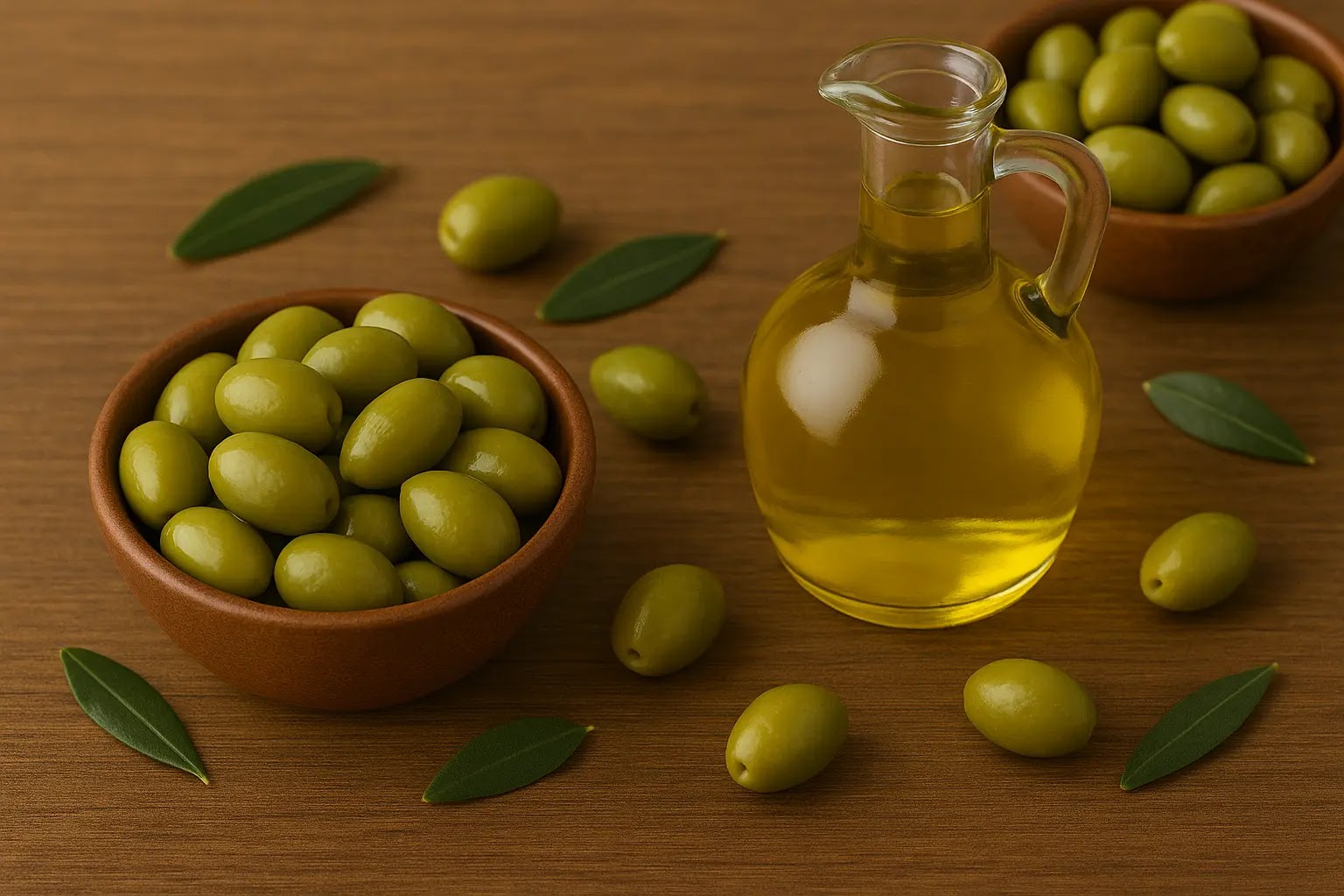
Olives and olive oil are among the most iconic symbols of Mediterranean and Arab cuisine, being essential ingredients in nearly every household. Olives are known for their distinctive flavor, while olive oil is celebrated for its high nutritional value and rich taste that elevates dishes, making them deeper and more delicious. With the growing awareness of healthy eating, olive oil has become the first choice for anyone wanting to prepare nutritious meals without sacrificing flavor. In this article, we will explore the benefits of olives and olive oil in cooking and how they can make every dish more exceptional.
1️⃣ High Nutritional Value of Olives and Olive Oil
Olives and olive oil contain a wonderful array of nutrients that are beneficial for the body and overall health, including:
- Healthy monounsaturated fats
- Natural antioxidants such as polyphenols
- Vitamins: E and K
- Minerals that support heart health and immunity
These properties make olives and olive oil ideal choices for everyday cooking.
2️⃣ How Olives Enhance the Flavor of Dishes
1) Rich flavor and natural saltiness
Olives, whether black or green, add a balanced salty taste that reduces the need for extra salt. They also give dishes a distinct Mediterranean character, enhancing flavor depth.
2) Highlights other ingredients
Olives enhance the taste of vegetables, meats, fish, and cheeses, especially in dishes that use sauces or marinades.
3) Flavor variety based on type
- Black olives: Deep flavor, slightly caramel-like
- Green olives: Fresh, salty taste
- Pickled or stuffed olives: Add a subtle tang, perfect for marinades
3️⃣ How to Use Olive Oil to Enhance Food Flavor
1) Adds luxury and richness
Extra virgin olive oil has a fruity flavor with a subtle peppery finish. Using it in salads or drizzling over cooked dishes provides a unique taste that cannot be replaced.
2) Improves food texture
Olive oil adds smoothness, especially in:
- Sauces
- Hummus
- Meat and chicken marinades
- Pasta
3) Heat tolerance when used properly
While olive oil is best used raw or at low temperatures, it can also be used for light sautéing or medium-heat frying, preserving its flavor and benefits.
4️⃣ Popular Uses of Olives and Olive Oil in Cooking
- In salads
Add slices of olives and a drizzle of extra virgin olive oil to Fattoush, Tabouleh, Greek salad, or simple green salads. - In pasta dishes
Olive oil and garlic pasta is a simple yet delicious recipe, giving the dish a smooth taste and aromatic aroma. - For meat and chicken marinades
Olive oil helps tenderize meat, enhances flavor, and evenly distributes spices. - In casseroles and Arabic dishes
Dishes like vegetable trays, chicken maqluba, zucchini, or stews benefit greatly from just a couple of tablespoons of olive oil. - In seafood
Olive oil complements grilled fish perfectly, both before and after cooking, adding a fresh, luxurious flavor. - With bread and appetizers
Olive oil, sometimes mixed with za’atar, is a perfect dip for Arabic bread, hummus, or mutabbal.
5️⃣ Incredible Health Benefits of Olive Oil
- Heart and artery health
Rich in healthy fats that lower bad cholesterol and raise good cholesterol, supporting heart health. - Powerful antioxidant
Reduces inflammation and protects cells from damage. - Weight management
Olive oil promotes satiety and is a healthier alternative to hydrogenated oils. - Digestive health
Supports smooth bowel movements and prevents constipation.
6️⃣ Tips for Choosing the Right Olive Oil
- Choose extra virgin olive oil with acidity below 0.8%
- Look for a greenish-golden color
- Store in a dark bottle to preserve flavor
- Avoid using for deep frying at high temperatures
7️⃣ Common Mistakes When Using Olive Oil
- Overheating, which reduces benefits
- Using low-quality oil, affecting taste
- Storing in hot places, which spoils flavor
- Using excessive amounts in dishes that only need a little
Conclusion
Olives and olive oil are not just ingredients—they are the soul of Arab and Mediterranean cuisine. Using them correctly enhances the flavor of dishes, adds richness and distinction, and provides high nutritional value. Whether you use olives in salads and casseroles or rely on olive oil in your everyday meals, you are adding a healthy and delicious touch that makes food more enjoyable and beloved.