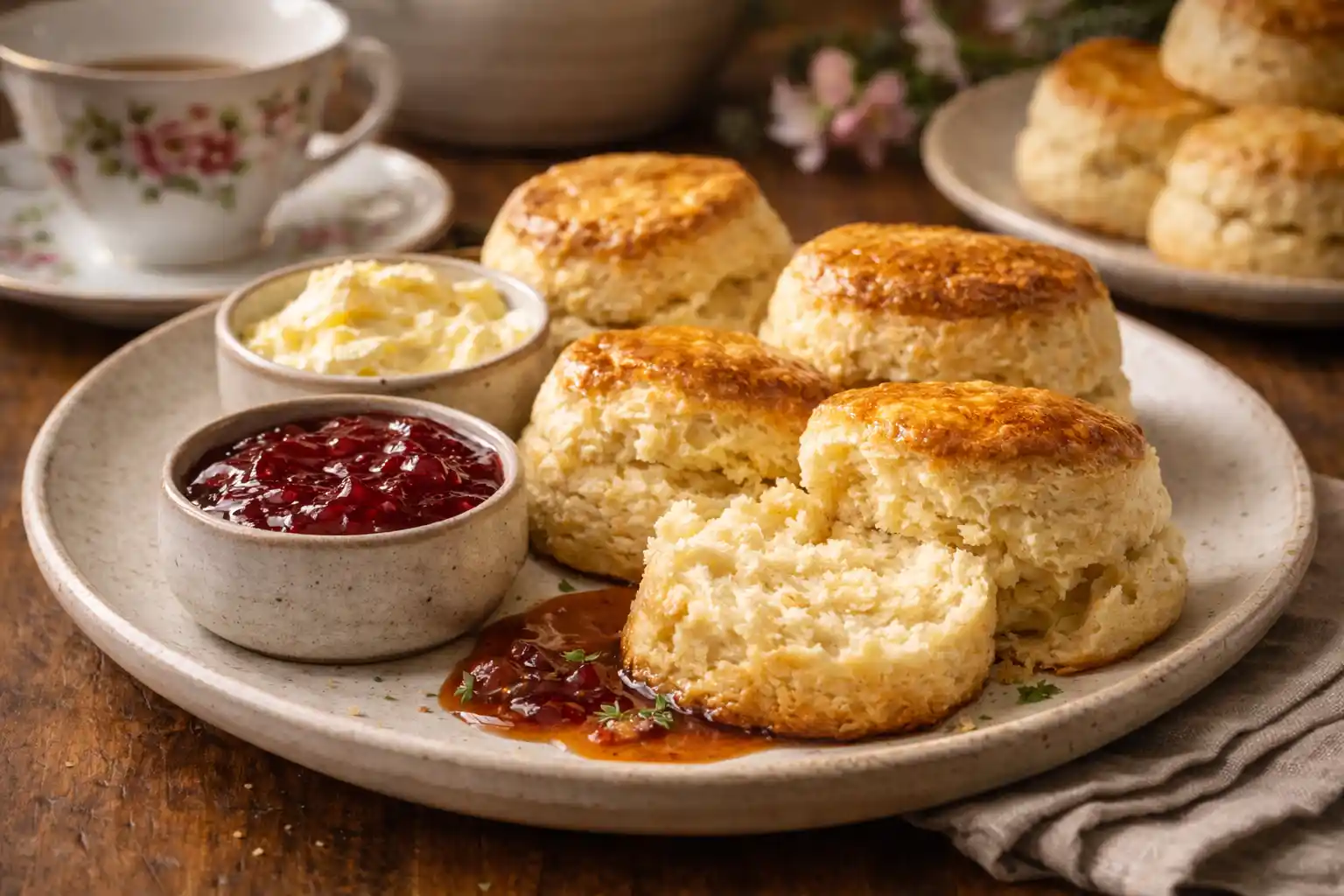
“Afternoon Tea” in Britain is incomplete without a plate of warm Scones, adorned with clotted cream and jam. A scone is not just bread or cake; it is a unique type of pastry that combines a crisp outer shell with a tender, flaky heart that gently crumbles with every bite. At Atayeb, we reveal the professional secrets hidden by historic London bakeries. Achieving a perfectly risen scone depends not just on the ingredients, but on the “art of handling the dough” and knowing when to stop touching it.
The History of Scones: From Humble Beginnings to Royal Palaces
Scones originated in Scotland in the 15th century, where they were originally large, round oatcakes cooked on a griddle and cut into triangles. As English cuisine evolved during the Victorian era—specifically through the Duchess of Bedford, who invented the “Afternoon Tea” tradition to stave off hunger—the scone became the star of the show. Today, baking scones is a true test of a baker’s skill in handling delicate dough that is sensitive to the warmth of one’s hands.
Professional Recipe Card
| Feature | Details |
| Prep Time | 15 Minutes |
| Cook Time | 12 – 15 Minutes |
| Yield | 8 – 10 Medium pieces |
| Category | British Bakery – Sweets |
| Professional Secret | Cold ingredients and a gentle touch |
Ingredients (The Golden Standards for Success)
To ensure your scones rise high and stay fluffy, all liquid and fat components must be very cold:
- 450g Premium Flour (All-purpose, sifted).
- 2 tbsp Baking Powder (A relatively large amount to ensure a high rise).
- 100g Natural Butter (Very cold, cut into small cubes).
- 80g Fine White Sugar (Can be reduced for a less sweet version).
- A pinch of Salt (Essential to balance the butter and sugar).
- 200ml Full-fat Milk (Cold from the fridge).
- 1 tsp High-quality Liquid Vanilla.
- 1 Beaten Egg (For the egg wash only).
- Optional: ½ cup of soaked and dried raisins or sultanas.
Preparation Steps: The Chemistry of Flakiness and Rise
Phase 1: The Rubbing Technique
Sift the flour, baking powder, salt, and sugar into a large bowl. Add the cold butter cubes directly from the fridge. Using only your fingertips (avoid your palms as they are warm), gently rub the butter into the flour until the mixture resembles breadcrumbs or coarse sand.
Atayeb’s Secret: The goal is to coat the flour particles with fat without melting the butter. Those tiny, unmelted bits of butter will create “air pockets” during baking, resulting in a flaky texture.
Phase 2: Adding Liquids “Gently”
Make a well in the center of the flour mixture and pour in the milk mixed with vanilla. Use a flat knife (palette knife) or a wooden spoon to fold the mixture with quick, light strokes until the dough just comes together.
Important Warning: The dough should be soft and slightly sticky. If the dough becomes completely smooth, you have over-worked it, which will result in a tough, bread-like texture.
Phase 3: Shaping and the “No-Twist” Rule
Transfer the dough to a lightly floured surface. Gently pat it down with your hands (do not use a rolling pin) until it is 3 cm thick. A thick dough is what guarantees a high rise. Use a sharp 6 cm circular cutter.
The Chef’s Secret: When pressing the cutter into the dough, push straight down and lift straight up—Do Not Twist. Twisting seals the edges of the dough and prevents it from expanding upward, causing the scone to rise unevenly or stay flat.
Phase 4: The Golden Bake
Arrange the scones on a baking sheet lined with parchment paper, placing them slightly close to each other (this helps them rise up rather than spread out). Carefully brush the tops with egg wash, ensuring it doesn’t drip down the sides; dried egg acts like “glue” that prevents the scone from rising.
Bake in a preheated oven at a very high temperature ($220^{\circ}C$) for 12-15 minutes until golden and puffed.
Atayeb’s Secrets for Success
- Oven Heat: Scones need a strong thermal shock in the first few minutes to activate the baking powder. Ensure the oven is fully preheated.
- No Resting: Do not let the dough rest after shaping. Once cut, they must go straight into the oven to maintain the baking powder’s effectiveness.
- The Butter: Use natural animal butter, not margarine. 90% of the flavor and texture depends on the quality of the butter.
Serving Rituals: The Devon vs. Cornwall Debate
In Britain, there is a historic debate over the “correct” way to eat a scone:
- Devonshire Method: Spread the clotted cream first, then top with jam.
- Cornish Method: Spread the jam first, then top with a thick layer of clotted cream.
Regardless of the method, remember that scones are always eaten warm, broken in half by hand (at the natural horizontal split line), and never cut with a knife.
Nutritional Value (Per Plain Scone)
| Nutrient | Approximate Value |
| Calories | 290 kcal |
| Total Fat | 14g |
| Carbohydrates | 36g |
| Protein | 5g |
| Sugar | 10g |
Conclusion from Atayeb
Making the perfect British Scone is a skill you will be proud to show off during tea time. It may seem simple, but the commitment to a gentle touch and cold butter is what transforms your kitchen into an English countryside nook. Try this recipe from Atayeb and enjoy the softest, flakiest scones you’ve ever tasted.