Cultural and Historical Introduction
There are many foods in this world, but few possess the ability to encapsulate the spirit of an entire nation in a single bite. The American hot dog is one of those rare foods. It is not merely a sausage inside a bun — it is a moving cinematic reel of American memories, images, and emotions: the voice of a baseball stadium announcer shouting “Play ball!”, the laughter of children at amusement parks carrying paper plates overflowing with ketchup, the steam rising from food carts on Manhattan streets on cold winter mornings, fireworks lighting up the sky on the Fourth of July while the scent of grilling wafts from every backyard in every one of the fifty states.
The hot dog occupies a unique position that no other dish shares in American popular culture. It is present in the finest baseball stadiums and the humblest street carts alike. The president and the man on the street eat it with the same motion — holding the bun with one hand, tilting their head slightly to avoid a drop of mustard on their shirt. This dietary democracy is part of the hot dog’s charm — it knows no class distinction or discrimination, and is served with the same love at neighborhood block parties and White House celebrations.
What makes the hot dog a unique experience every time is that exquisite harmony between its components: the softness of the bread that gently cradles the sausage without falling apart, the flavor of the sausage itself with its smoky, seasoned juices that burst at the first bite, and then that symphony of sauces — the sweetness of ketchup, the sharpness of mustard, the creaminess of mayonnaise, and the tang of pickles — that dance together on the tongue in a delightful balance. And every American city has its own signature on this dish: a New York hot dog differs from a Chicago hot dog as much as their accents differ in speech, and a Kansas City hot dog differs from a Los Angeles hot dog as much as the weather of the two cities differs.
According to Atayeb, the American hot dog is considered a classic, quick-to-prepare dish that combines the softness of bread, the distinctive flavor of sausages, and famous sauces, making it a beloved meal in the United States and the entire world — a meal that proves that true genius in cooking does not always lie in complexity but in mastering simplicity.
History and Origins of the Dish
The story of the hot dog is a story of immigration, transformation, and reinvention — just like the story of America itself. The sausage we know today began its journey in Germany and Austria, where it was known as the “Frankfurter” after the German city of Frankfurt, or the “Wiener” after Vienna, the Austrian capital. German and Austrian butchers would make these thin, smoked sausages from pork or a blend of seasoned meats stuffed into natural casings, selling them at markets and folk festivals.
In the second half of the nineteenth century, German immigrants carried these sausages with them across the Atlantic Ocean to America, and many of them settled in East Coast cities like New York, Boston, Philadelphia, and Cincinnati. There they began selling their sausages from small street carts and markets, and Americans quickly discovered that these small German sausages were extremely delicious, practical, and quick to eat.
But the true American innovation was not the sausage itself but placing it inside a bun. There are several competing narratives about who did this first, and each story has its heroes and supporters. One of the most famous accounts attributes the idea to Charles Feltman, a German immigrant who owned a food cart in Coney Island, New York City, in the 1860s. It is said that Feltman was the first to place a grilled sausage inside a long bun to make it easier for customers to eat while walking on the beach without the need for plates, forks, and knives. The idea was a stunning success, and by the 1890s, Feltman was selling thousands of sausages daily from his famous restaurant in Coney Island.
Another account attributes the name “hot dog” itself to a famous caricaturist at a New York newspaper named Tad Dorgan, who reportedly drew a cartoon in 1901 showing a long German sausage (which Americans jokingly called a “dachshund dog” because of its resemblance to the long German dog breed) inside a bun, and wrote “Hot Dog” beneath it because he couldn’t spell the word “Dachshund.” Although historians have never found this original cartoon, the name stuck to the dish and never left.
The association between the hot dog and the sport of baseball began in the early twentieth century, when roaming food vendors started selling hot dogs in the stands of baseball stadiums. Harry M. Stevens — a British-born businessman — was among the first to introduce hot dogs to baseball stadiums in New York around 1900. The hot dog and baseball quickly became an inseparable duo in the American consciousness, to the point that eating a hot dog at the stadium became part of the game-watching ritual no less important than the game itself. Statistics indicate that Americans consume approximately 20 billion sausages annually — equivalent to about 70 sausages per person per year.
From America, the hot dog set out to conquer the world. In Japan, a teriyaki hot dog version appeared with sweet soy sauce, and in Brazil it is served with mashed potatoes, corn, and peas on top in a combination called “Cachorro Quente” that looks like a complete meal rather than just a sandwich. In Sweden and Denmark, hot dog stands (Pølsevogn) became part of the daily urban landscape like cafés and bookstores. In the Middle East, the hot dog adapted to local tastes by using beef or chicken sausages and adding spicy sauces, sumac, and tahini.
Comprehensive Recipe Card
| Dish Feature | Details |
|---|---|
| Preparation Time | 10 minutes |
| Cooking Time | 10 – 15 minutes |
| Total Time | 20 – 25 minutes |
| Servings | 6 people |
| Category | Main dishes / Fast food / American cuisine |
| Difficulty Level | Easy – Intermediate |
Ingredients and Measurements
| Ingredient | Quantity | Role / Notes |
|---|---|---|
| Soft hot dog buns | 6 | The base of the dish — brioche buns or classic flat-top buns are preferred |
| Fresh or smoked sausages (100% beef) | 6 | The main component — choose high-quality sausages without artificial fillers |
| Softened butter | 2 tablespoons | For spreading inside the buns and toasting them on the pan for a golden crunch |
| American Yellow Mustard | 3 tablespoons | The first classic sauce — sharp, tangy, and refreshing |
| Ketchup | 3 tablespoons | A beloved popular sauce — forbidden in Chicago style according to tradition! |
| Mayonnaise (optional) | 2 tablespoons | For adding a rich creamy texture — common in Latin American versions |
| Dill pickle slices | To taste | Adds acidity and freshness that cuts through the richness of the sausage |
| Finely chopped white onion (raw or fried) | 1 medium | Raw for freshness and sharpness, fried for caramelized sweetness |
| Relish — sweet chopped pickle | 3 tablespoons | A classic American addition that is sweet and sour at the same time |
| Shredded cheddar cheese or American cheese slices (optional) | To taste | For upscale American versions — melted over the sausage |
| Sliced jalapeño (optional) | To taste | For lovers of heat and spice |
| Salt and black pepper | A light pinch | For seasoning the sausages before grilling if needed |
Detailed Preparation Steps
Stage One: Preparing the Sausages
Start by choosing a cooking method for the sausages according to your preference — each method has its own character and effect on the final result.
Grilling on a grill or cast iron pan (the preferred method): Heat a ridged grill pan or outdoor grill over medium-high heat. Lightly oil the pan surface using a paper towel with a little vegetable oil. Place the sausages on the pan and leave them without moving for two to three minutes until golden-brown grill marks form on the side touching the heat. Then rotate them a quarter turn and repeat the process until you have crisscrossed grill marks on all sides. The perfect sausage should be browned on the outside with that thin, crispy crust that makes a “snap” sound when you bite into it, while the inside remains tender, juicy, and full of flavor. The total time is approximately 8 to 10 minutes with regular turning.
Boiling in water: This is the traditional method for New York hot dog stands. Heat water in a pot until it approaches boiling without actually boiling — the ideal temperature is about 70 to 80 degrees Celsius. Place the sausages in the hot water and leave them for 5 to 7 minutes. Boiling produces a tender sausage brimming with juices without any outer crispness — a method many prefer because it preserves the sausage’s moisture completely and gives it a uniform texture inside and out.
Pan-frying in butter: This method gives the best of both worlds — rich butter flavor with a beautiful outer crispness. Heat a tablespoon of butter in a pan over medium heat, add the sausages, and turn them until browned on all sides. This method is common in the New England states in the northeastern United States.
Stage Two: Preparing the Bread
The bread in a hot dog is not merely a carrying vessel — it is an active element in the experience that deserves special attention. Open the hot dog buns from the middle without completely separating the halves — leave a connected part that acts as a hinge. Spread a thin layer of softened butter on the exposed inner face of each bun. Heat a flat pan over medium heat and place the buns with their buttered side facing down. Leave them for one to two minutes until the inner surface turns light golden and crispy while the outside remains soft.
This simple step makes an enormous difference — the butter-toasted bread provides a crispy surface that resists the moisture of the sauces and prevents them from turning the bun into a soggy, collapsed mess, while simultaneously adding a subtle butter flavor that enhances the overall experience. It is the touch that separates an ordinary hot dog from an unforgettable one.
Stage Three: Preparing the Sauces and Toppings
Set up your assembly station with all sauces and toppings arranged in front of you. Finely chop the white onion if you prefer it raw, or sauté it in a spoonful of butter over low heat for 15 to 20 minutes until it caramelizes and turns a sweet golden brown. Slice the pickles into thin rounds. If you will be using cheese, shred it or prepare the slices. Arrange the mustard, ketchup, mayonnaise, and relish in small, easy-to-reach bowls.
Stage Four: Assembling the Hot Dog
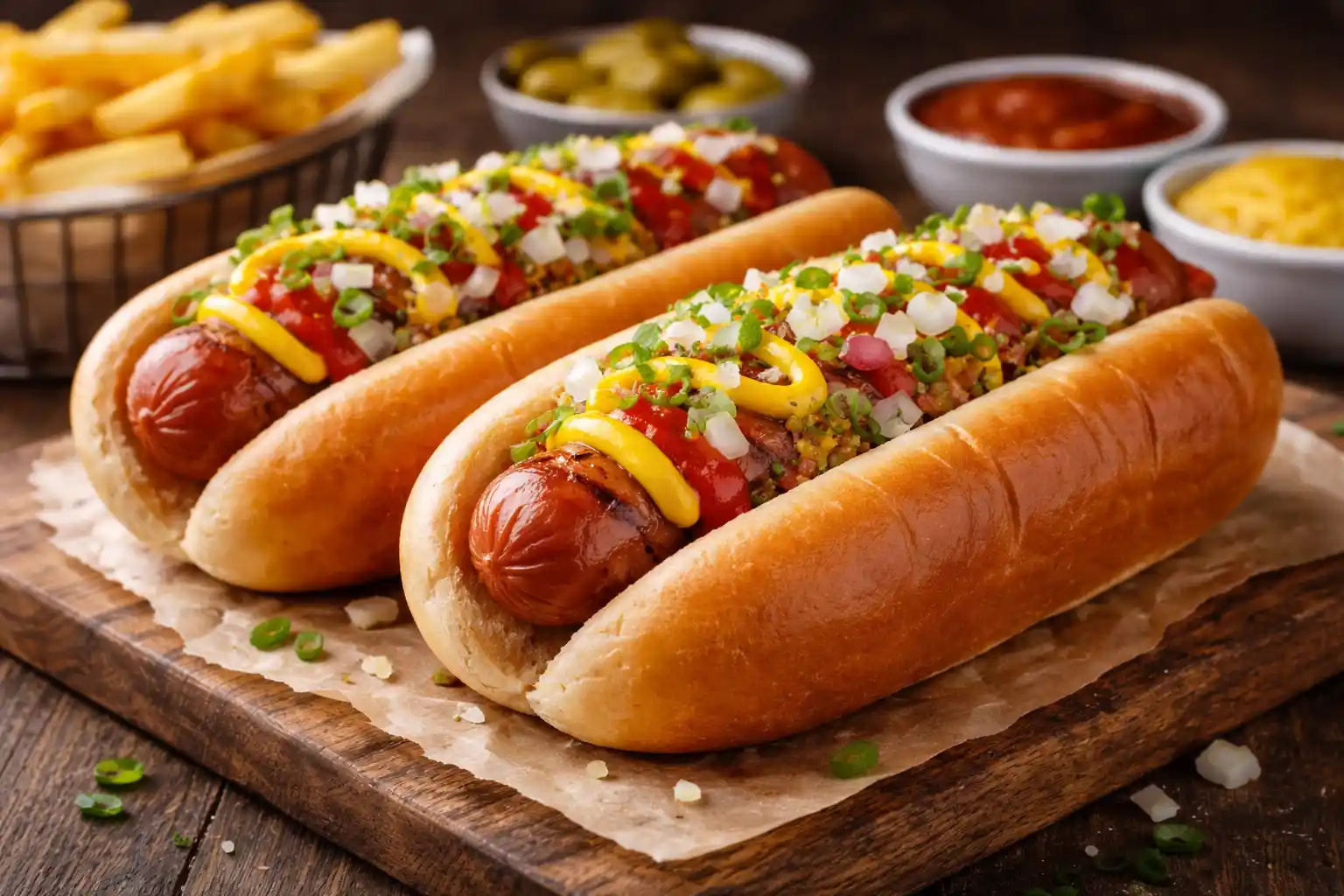
Here comes the art. Place the cooked sausage inside the toasted, open bun. Then begin adding the sauces — and the order matters. Start with mustard in a thin zigzag line along the length of the sausage, then ketchup in the same manner alongside it. Add the relish or chopped pickles, then the onion, then any other additions like cheese or jalapeño. The practical rule is to place liquid sauces first because they adhere directly to the sausage, then solid toppings on top where they remain visible and easy to eat.
Stage Five: Serving
Serve the hot dog immediately while it is hot — a cold hot dog loses half its magic. Place it on a plate lined with a paper towel to absorb any excess oils. Serve alongside a portion of crispy French fries or potato chips, or a creamy coleslaw to balance the richness of the sausage with the freshness of vegetables. A cold can of soda or homemade lemonade can be added to complete the classic American experience.
A tip from Atayeb: experimenting with mixing different sauces and adding classic American seasonings like garlic salt, smoked paprika, and chili pepper gives the dish a unique and distinctive flavor that will make you prepare it again and again.
Most Famous American Hot Dog Styles
The hot dog in America is not a single dish but an entire family of dishes — each city and region has its own style that it takes pride in and defends passionately.
New York Style: This is the iconic style that comes to most people’s minds when the hot dog is mentioned. A boiled or steamed sausage inside a soft white bun with onions cooked in a sweet, seasoned tomato sauce (called Onion Sauce) and a generous line of sharp yellow mustard. No ketchup, no mayonnaise, no complications — absolute simplicity that relies on the quality of the sausage and the balance of flavors. It is sold from street carts spread across every corner of Manhattan and is the favorite quick lunch for millions of New Yorkers.
Chicago Style: This is the stark opposite of New York’s simplicity. A Chicago hot dog is a multi-layered culinary epic served on a poppy seed bun. The sausage is boiled or steamed, then topped with yellow mustard, fresh chopped white onion, bright green relish, fresh tomato slices, a lengthwise-cut dill pickle spear, sport peppers, and a sprinkle of celery salt. The golden rule in Chicago — which residents take with the utmost seriousness — is that ketchup must never be put on a Chicago hot dog. If you ask for ketchup at a hot dog restaurant in Chicago, expect genuine looks of disapproval.
Coney Island Style: This is not from Coney Island in New York as the name might suggest, but from the city of Detroit in the state of Michigan. It is distinguished by a thick, seasoned beef chili sauce poured over the sausage along with yellow mustard and finely chopped onion. This style transforms the hot dog from a light snack into a hearty, filling meal.
California Style: This reflects the health-conscious and innovative spirit of the West Coast. A grilled sausage wrapped with slices of fresh avocado or guacamole along with fresh vegetables like tomato and lettuce and a sprinkle of shredded Monterey Jack cheese. Some versions add Mexican salsa, influenced by the proximity to Mexico.
Classic Plain: For those who believe that less is more — a soft bun, a hot sausage, and just a line of ketchup and a line of mustard. No toppings, no complications. This is the hot dog that children eat at birthday parties and remember with nostalgia when they grow up.
Secrets of Success and Scientific Tips
Choosing soft bread with a cohesive structure is half the battle. The ideal hot dog bread should be soft enough to mold around the sausage and hold the sauces, yet strong enough not to collapse or crumble when held with one hand. Brioche bread with its light buttery flavor is an excellent choice for those looking to elevate the experience, while classic white bread remains the authentic and time-tested option.
Cooking the sausages over medium heat rather than high heat is the most important secret for preserving their juiciness. Sudden high heat causes the outer casing to shrink rapidly and burst, leading to the juices and fats leaking out and the sausage drying out from the inside. Patient medium heat allows the heat to penetrate evenly and produces a beautiful browned outer crust while the core remains moist and full of flavor.
Using natural, fresh sauces makes a vast difference in the result. Mustard made from natural mustard seeds surpasses commercial mustard loaded with preservatives, and homemade or organic ketchup with less sugar provides a balanced sweetness without overpowering the flavor of the sausage.
The order in which components are added affects the dish’s appearance and ease of eating. Liquid sauces go first directly on the sausage, then soft additions like onion and pickles, then larger additions like tomato slices or peppers. This order prevents the components from sliding off and gives a neat, appetizing appearance.
Frequently Asked Questions About the Recipe
Can plant-based sausages be used?
Absolutely. Excellent plant-based sausages made from pea protein, soy, or mushrooms are available in markets today that convincingly mimic the taste and texture of traditional sausages. Grill them in the same way to achieve a crispy outer crust. This version is ideal for vegetarians and for those who wish to reduce their red meat consumption without giving up the pleasure of a hot dog.
Can the hot dog be grilled instead of boiled?
Yes, and grilling is the preferred method for millions of Americans, especially at outdoor parties and summer barbecues. Grilling gives the sausage a distinctive smoky flavor and a light crispness on the outer surface that adds a new dimension to the experience. The key is regular turning for even browning on all sides.
How do I keep the hot dog buns soft?
If you are preparing several hot dogs and do not want the bread to dry out while waiting, warm it slightly then place it in a container covered with a clean kitchen towel — the towel traps the steam and maintains the bread’s moisture. You can also steam the bread in a steamer pot for just 30 seconds to achieve ideal softness without drying.
Approximate Nutritional Value
| Nutrient | Value per Serving (one hot dog with sauces) | Additional Notes |
|---|---|---|
| Calories | 300 – 450 calories | Depends on the type of sausage and the amount of sauces and cheese |
| Protein | 12 – 18 grams | Primarily from the sausage and from cheese if added |
| Fat | 16 – 25 grams | Mostly from the sausage — varies depending on fat content |
| Carbohydrates | 25 – 35 grams | Primarily from the bread with a small amount of sugar from the sauces |
| Sodium | 700 – 1200 mg | Relatively high due to the salted sausage, pickles, and sauces |
The hot dog is classified as a quick meal rich in energy and protein, but relatively high in sodium and saturated fats. To lighten the nutritional values, you can choose low-fat sausages or chicken or turkey sausages, use whole wheat bread, reduce the amount of high-sodium sauces like ketchup and mustard, and increase fresh toppings like tomato, lettuce, and fresh onion.
Motivational Conclusion
The American hot dog is more than just a fast food meal — it is a living piece of American history that you hold in your hand and eat in five minutes. It is the dish that crossed the ocean with German immigrants and found in America a fertile land that reshaped it and gave it a new identity that became known in every corner of the globe. From New York street carts to baseball stadiums to family barbecues in suburban backyards to summer festival stands — the hot dog remains the companion of joy, celebration, and simplicity.
Its genius lies in the fact that it accepts all tastes and accommodates all experiences — you can eat it in its simplest form with just a line of mustard and a line of ketchup, or transform it into a work of art piled high with layers of sauces, toppings, and flavors. You can boil it, grill it, or fry it, and you can make it purely American or dress it in Japanese, Mexican, or Middle Eastern attire. This limitless flexibility is the secret behind its reign over the throne of fast food for more than a century.
Try preparing the American hot dog following the steps from Atayeb for an enjoyable cooking experience, an authentic flavor, and a perfect texture that attracts every member of the family. Heat up the grill, open the buns, and prepare the sauces — because hot dog season is open all year round! 🌭