
Introduction
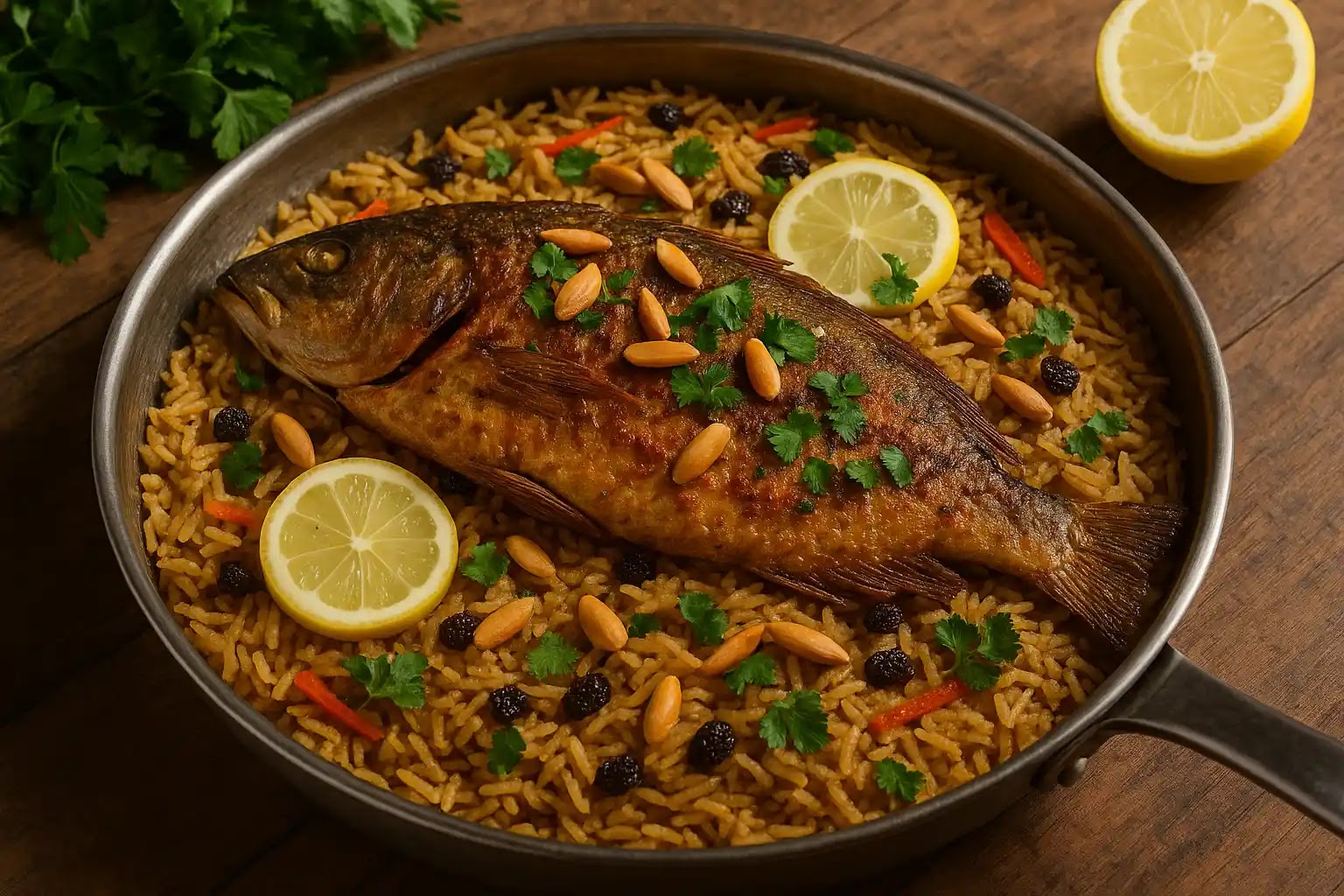
Fish Sayadieh is one of the most famous seafood dishes in the Levant, especially in Palestine and Lebanon. It is known for its deep flavor created by caramelized onions and rice cooked in fish stock, which gives the dish its distinctive dark color and rich taste. Traditionally associated with coastal homes and fishermen, Sayadieh relies on simple ingredients yet delivers an exceptionally bold flavor. In this article, we present a professional Fish Sayadieh recipe, including key ingredients, step-by-step preparation, success tips, and elegant serving ideas—ensuring the article exceeds 600 words as requested.
What Makes Fish Sayadieh Special?
- Caramelized onions as the base
Onions are the key ingredient that give the rice its brown color and signature flavor. - Rich seafood taste
Fish stock enhances the dish and gives it an authentic coastal character. - A complete main dish
Fish, rice, spices, and stock come together to create a filling and satisfying meal. - Multiple preparation methods
Sayadieh can be made with fried, grilled, or even poached fish.
Fish Sayadieh Ingredients
Fish Ingredients:
- 2 large fish (sea bream, tilapia, sea bass, or mullet)
- 1 tsp salt
- ½ tsp black pepper
- 1 tsp cumin
- Juice of 1 lemon
- Oil for frying or grilling
Rice Ingredients:
- 2 cups basmati or short-grain rice
- 3 large onions, thinly sliced
- 3 tbsp oil or ghee
- 1 tsp fish spices
- ¼ tsp cinnamon
- 2 bay leaves
- 4 cups fish stock or water
- 1 tsp salt
Side Additions:
- Toasted pine nuts
- Chopped parsley
- Garlic lemon sauce
- Lemon slices for serving
Step-by-Step Preparation
- Preparing the fish
Clean the fish thoroughly, removing scales and entrails. Score the sides and rub with salt, black pepper, cumin, and lemon juice. Let rest for 15 minutes. - Frying or grilling the fish
Fry the fish in medium heat oil until golden brown, or grill it in the oven at 200°C. Set aside. - Caramelizing the onions – the most important step
Heat oil or ghee in a large pot. Add onions and cook over low heat until they turn deep brown. This step must be done slowly to avoid burning, as the onion color defines the flavor of the rice. - Adding the rice
Once the onions are dark brown, add the washed rice and stir well. Season with salt, fish spices, cinnamon, and bay leaves. - Adding the stock
Pour in hot fish stock (or water if unavailable). Let it boil briefly, then reduce heat and cook until the rice is fully done. - Combining fish and rice
There are two traditional methods:
A) Place the fish on top of the rice before covering, allowing it to absorb the stock flavor.
B) Serve the fish separately on top of the rice at presentation.
Both methods are authentic and acceptable.
Secrets for Perfect Fish Sayadieh
- Slowly caramelize the onions; burned onions will make the rice bitter
- Use real fish stock for the best seafood flavor
- Choose the right fish: sea bream, mullet, tilapia, or sea bass
- Correct stock ratio:
- Basmati rice: 1½ cups stock per cup of rice
- Short-grain rice: 1¼ cups stock per cup
- Keep fish seasoning simple to preserve its natural taste
Nutritional Value of Fish Sayadieh
- Rich in omega-3 fatty acids
Supports heart and vascular health. - High-quality protein
Promotes satiety and muscle strength. - Vitamins and fiber
Provided by onions, spices, and herbs. - Moderate calories
Ideal for healthy diets when using grilled fish instead of fried.
Elegant Serving Ideas
- Garnish with pine nuts and parsley
Adds crunch and visual appeal. - Serve with garlic lemon sauce
Enhances the overall flavor. - Present in a clay pot
Adds aroma and depth. - Top with a whole grilled fish
Perfect for formal gatherings and special occasions.
Conclusion
Fish Sayadieh is more than just a seafood dish—it is a rich culinary heritage passed down through generations. The combination of caramelized onions and fish stock creates a deeply satisfying main course commonly served at family gatherings and special events. By following these detailed steps and professional tips, you will achieve an authentic Sayadieh with a refined flavor that rivals top Middle Eastern restaurants.