Introduction
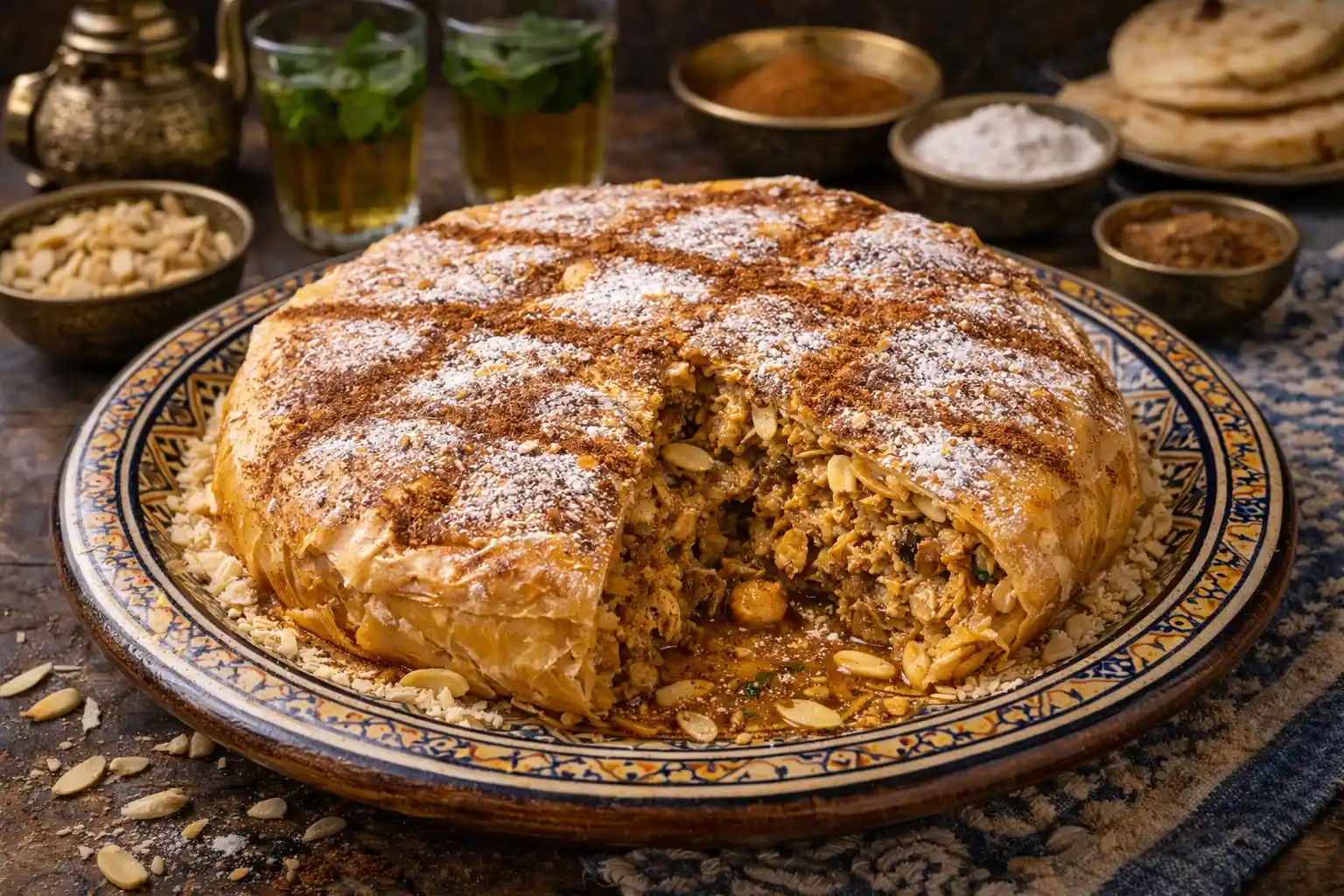
Moroccan Chicken Pastilla (also known as Bastilla or B’stilla) is one of the most luxurious and distinctive dishes in Moroccan cuisine. Renowned for its delicate layers, rich filling, and unique combination of sweet and savory flavors, pastilla represents the artistic side of Moroccan cooking.
Traditionally prepared for weddings, celebrations, and honored guests, chicken pastilla reflects generosity, patience, and culinary mastery. It combines tender spiced chicken, creamy egg sauce, crunchy almonds, and crisp pastry sheets, finished with powdered sugar and cinnamon. In this article, we explore the origins of Moroccan pastilla, its cultural importance, ingredients, preparation method, variations, and why it remains a symbol of refinement.
The Origins of Moroccan Pastilla
Moroccan pastilla has strong Andalusian roots, influenced by the cuisine brought to Morocco after the fall of Al-Andalus. The dish evolved in Moroccan kitchens, where cooks perfected the balance between sweet spices and savory fillings.
Over time, pastilla became uniquely Moroccan, adapting local spices, traditional pastry techniques, and presentation styles. Today, it is considered one of Morocco’s most iconic celebratory dishes.
Cultural Significance of Pastilla in Morocco
Pastilla is not an everyday meal. Its preparation requires time, skill, and attention to detail, which is why it is reserved for special occasions. Serving pastilla is a sign of deep respect and hospitality, often presented as the first dish in formal meals.
In Moroccan culture, offering pastilla to guests reflects honor, celebration, and pride in culinary heritage.
Key Ingredients of Moroccan Chicken Pastilla
Main Filling:
- Chicken (slow-cooked and shredded)
- Onions
- Garlic
- Olive oil and butter
Spices:
- Ginger
- White or black pepper
- Cinnamon
- Saffron or safflower
- Salt
Egg Sauce:
- Eggs cooked gently in the chicken broth
Nut Layer:
- Blanched almonds, toasted and crushed
- Sugar
- Cinnamon
Pastry and Topping:
- Thin pastry sheets (warqa or phyllo)
- Melted butter
- Powdered sugar
- Ground cinnamon
Each layer contributes to pastilla’s complex flavor and texture.
Traditional Preparation Method
1. Cooking the Chicken
Chicken is slowly cooked with onions, spices, butter, and herbs until tender. Once cooked, the meat is shredded and set aside, while the broth is reserved.
2. Preparing the Egg Sauce
Eggs are gently stirred into the reduced chicken broth, forming a creamy, savory layer that adds richness to the filling.
3. Preparing the Almond Mixture
Almonds are toasted or fried, then crushed and mixed with sugar and cinnamon, creating the sweet, crunchy contrast.
4. Assembling the Pastilla
Butter-brushed pastry sheets are layered in a round pan, with edges hanging over the sides. The fillings are added in layers: chicken, egg sauce, then almond mixture. The pastry edges are folded over to seal the pastilla.
5. Baking
The pastilla is baked until golden and crisp, ensuring a flaky exterior and rich interior.
6. Final Decoration
Once baked, pastilla is dusted with powdered sugar and decorated with cinnamon in traditional patterns.
Why Pastilla Is a Culinary Masterpiece
Pastilla stands out because it:
- Blends sweet and savory flavors seamlessly
- Combines multiple textures in one dish
- Requires precise timing and technique
- Represents Moroccan culinary artistry
Few dishes achieve such harmony between contrast and balance.
Variations of Moroccan Pastilla
While chicken pastilla is the most popular, other variations exist:
- Seafood pastilla – common in coastal regions
- Meat pastilla – prepared with beef or pigeon
- Mini pastillas – served as individual portions
Each version maintains the same philosophy of layered flavors.
Serving Moroccan Chicken Pastilla
Pastilla is traditionally served:
- Warm, not piping hot
- Cut into wedges
- As a starter in formal meals
- With Moroccan mint tea
Its elegant presentation enhances the dining experience.
Nutritional Profile of Pastilla
Pastilla is a rich dish that provides:
- Protein from chicken and eggs
- Healthy fats from almonds
- Carbohydrates from pastry
- Energy suitable for celebrations
Due to its richness, it is best enjoyed in moderation.
Pastilla in Modern Moroccan Cuisine
Modern kitchens may simplify pastilla using phyllo dough or lighter fillings, but the essence remains unchanged. Chefs worldwide now feature pastilla as a signature Moroccan dish, showcasing its elegance on global menus.
Tips for Authentic Moroccan Pastilla
- Use high-quality butter
- Do not rush the cooking process
- Balance sugar and cinnamon carefully
- Keep pastry covered to prevent drying
- Allow the pastilla to rest before slicing
Conclusion
Moroccan chicken pastilla is a true celebration of flavor, texture, and tradition. Its delicate layers and bold contrasts make it one of Morocco’s most admired dishes. Whether served at a grand celebration or recreated at home, pastilla offers a taste of Moroccan elegance that leaves a lasting impression.