Introduction
Couscous is not just a traditional dish in Morocco—it is a symbol of heritage, family gatherings, and cultural identity. Known as the heart of Moroccan cuisine, couscous is prepared in homes across the country, especially on Fridays and special occasions. Its delicate grains, aromatic spices, and slow-cooked vegetables reflect the deep culinary philosophy of Morocco: patience, balance, and respect for ingredients.
Unlike quick meals, couscous is a dish that brings people together, requiring time, care, and tradition to prepare correctly. In this article, we explore the origins of Moroccan couscous, its cultural significance, ingredients, preparation methods, regional variations, and why it remains one of the most celebrated dishes worldwide.
The Origins of Moroccan Couscous
Couscous has ancient roots in North Africa, dating back hundreds of years. Archaeological findings suggest that couscous-like grains were prepared by Amazigh (Berber) communities long before modern kitchens existed. Over time, the dish evolved, influenced by Arab, Andalusian, and Mediterranean cultures.
Morocco refined couscous into an art form, introducing complex spice blends, slow steaming techniques, and carefully layered flavors. Today, Moroccan couscous is globally recognized as one of the most refined versions of this traditional dish.
Cultural Importance of Couscous in Morocco
In Moroccan society, couscous represents unity and generosity. It is traditionally served in a large communal dish, with family members gathered around the table. Friday couscous is a sacred ritual in many households, symbolizing gratitude and togetherness.
Couscous is also prepared for weddings, religious celebrations, and major family events, often customized with luxurious ingredients such as lamb, chicken, or dried fruits.
Key Ingredients of Moroccan Couscous
Core Components:
- Semolina couscous grains
- Meat (lamb, chicken, or beef)
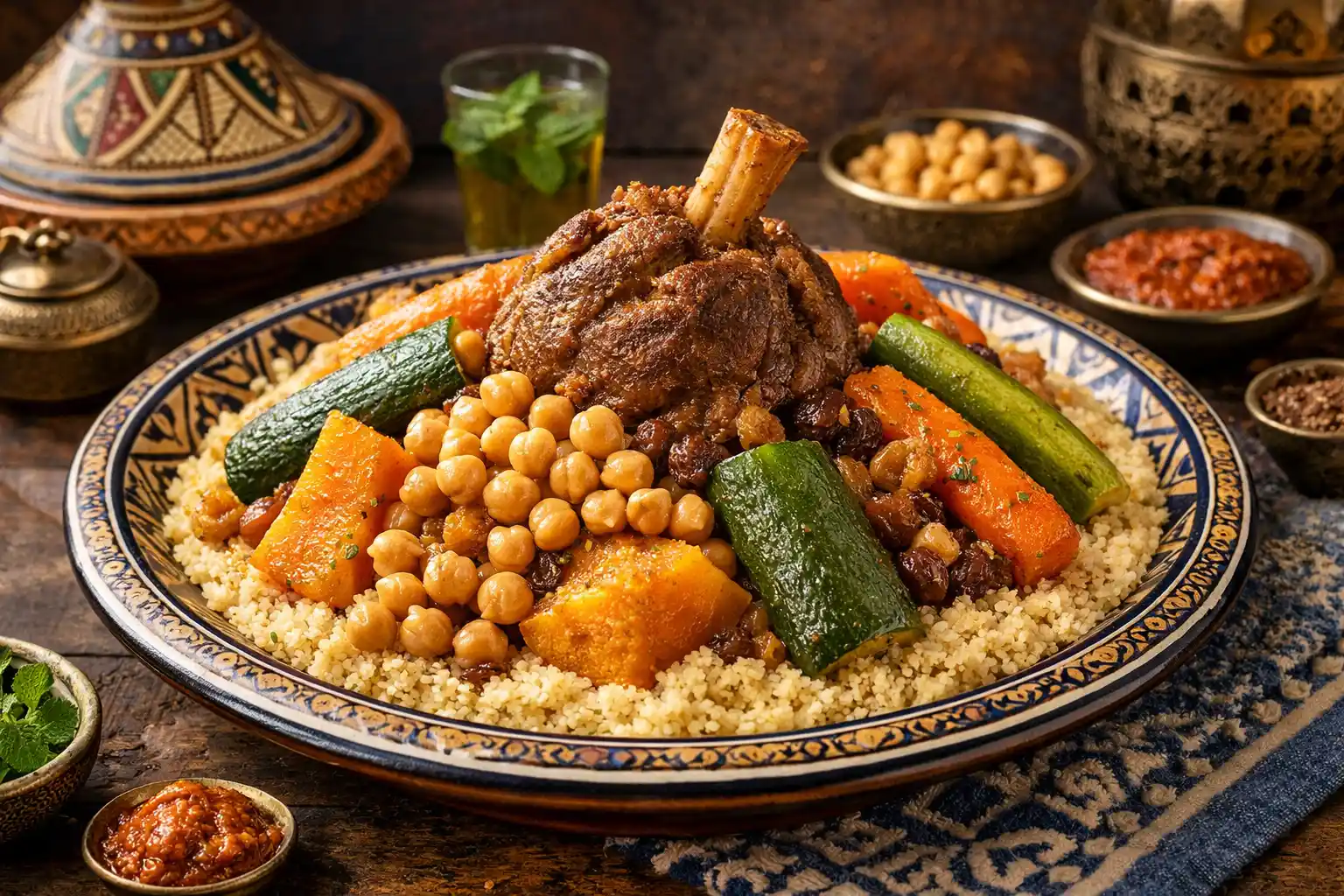
- Seasonal vegetables (carrots, zucchini, pumpkin, turnips)
- Chickpeas
- Olive oil
Essential Spices:
- Ginger
- Turmeric
- Black pepper
- Saffron or safflower
- Ras el Hanout (optional)
Each ingredient plays a specific role in building the layered flavor profile that defines authentic Moroccan couscous.
Traditional Couscous Preparation Method
1. Steaming the Couscous
Unlike boiling, Moroccan couscous is steamed multiple times using a special pot called a couscoussier. This method ensures light, fluffy grains that absorb flavor without becoming sticky.
2. Preparing the Broth
Meat is slow-cooked with onions, spices, and chickpeas, creating a deeply aromatic broth. Vegetables are added gradually to preserve texture and flavor.
3. Layering the Dish
Once steamed, couscous grains are placed on a serving platter, topped with vegetables and meat, and finished with ladles of rich broth.
Regional Variations of Moroccan Couscous
Morocco offers numerous couscous variations depending on region:
- Seven-Vegetable Couscous – the most classic version
- Sweet Couscous (Tfaya) – topped with caramelized onions and raisins
- Couscous with Dried Fruits – popular in festive meals
- Berber Couscous – simpler and rustic
Each variation reflects local ingredients and traditions.
Couscous as a Symbol of Balance
Moroccan couscous embodies nutritional harmony:
- Complex carbohydrates from semolina
- Protein from meat and chickpeas
- Vitamins from vegetables
- Healthy fats from olive oil
This balance makes couscous both satisfying and nourishing.
Modern Couscous in Contemporary Kitchens
Today, couscous has adapted to modern lifestyles while maintaining its traditional soul. Many households experiment with vegetarian versions or lighter broths, yet the essence of Moroccan couscous remains unchanged.
Restaurants worldwide now serve couscous as a signature dish, introducing Moroccan culinary culture to global audiences.
Tips for Authentic Moroccan Couscous
- Steam couscous, never boil it
- Use fresh seasonal vegetables
- Allow time for slow cooking
- Balance spices carefully
- Serve communally for authenticity
Conclusion
Moroccan couscous is far more than a meal—it is a cultural experience passed down through generations. Its preparation teaches patience, respect for tradition, and appreciation for shared moments around the table. Whether enjoyed in a Moroccan home or abroad, couscous remains a timeless symbol of Moroccan hospitality and culinary excellence.