Introduction
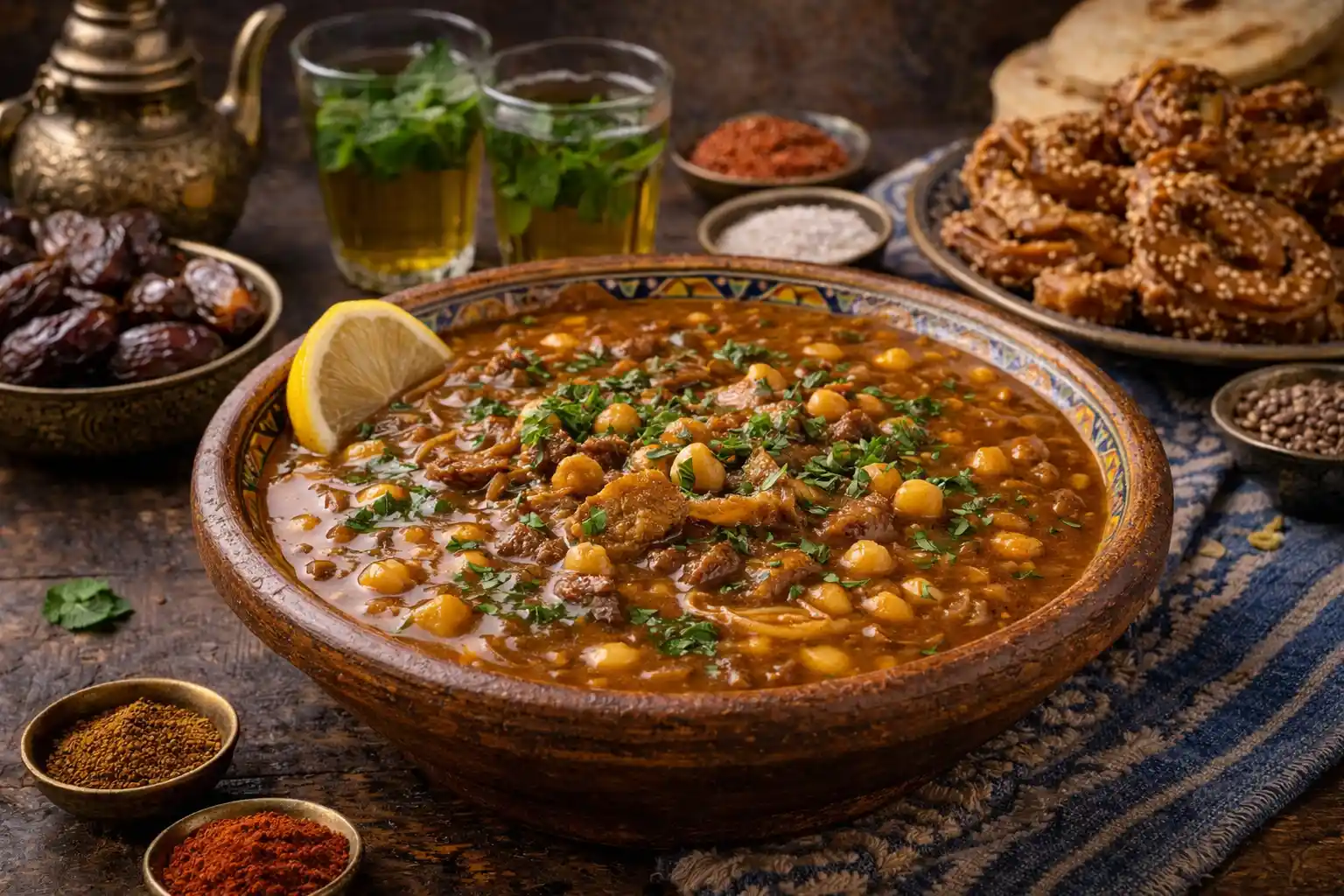
Moroccan Harira soup is one of the most iconic and beloved dishes in Moroccan cuisine, deeply associated with the holy month of Ramadan. More than just a soup, Harira represents warmth, nourishment, and togetherness. It is traditionally served at sunset to break the fast, providing comfort and energy after long hours of fasting.
With its rich texture, aromatic spices, legumes, and fresh herbs, Harira is considered a complete meal rather than a simple starter. In this article, we explore the origins of Harira, its cultural significance, ingredients, traditional preparation method, regional variations, and why it continues to hold a special place in Moroccan households.
The Origins of Harira in Moroccan Cuisine
Harira has deep roots in Moroccan culinary history and is believed to have originated centuries ago as a nourishing dish designed to sustain families during fasting periods. Over time, it became closely linked to Ramadan, evolving into a staple served daily throughout the holy month.
While Harira is enjoyed year-round, its spiritual and cultural significance peaks during Ramadan, where it symbolizes renewal, patience, and family unity.
Cultural Significance of Harira
In Moroccan culture, Harira is much more than food. It is a ritual that marks the moment of breaking the fast. The sound of spoons stirring Harira just before sunset is familiar in Moroccan neighborhoods, signaling preparation for iftar.
Harira is often served alongside dates, traditional sweets like chebakia, and bread, creating a balanced and comforting meal. Its presence on the table reflects tradition, care, and hospitality.
Key Ingredients of Moroccan Harira
Main Ingredients:
- Tomatoes (fresh or blended)
- Lentils
- Chickpeas
- Onion
- Celery
Optional Protein:
- Lamb or beef (small diced pieces)
Herbs:
- Fresh cilantro
- Fresh parsley
Spices:
- Ginger
- Turmeric
- Black pepper
- Cinnamon (used lightly)
- Salt
Thickening Elements:
- Flour mixed with water (known as tedouira)
- Fine vermicelli noodles or rice
These ingredients work together to create Harira’s signature thick, hearty texture.
Traditional Preparation Method
1. Preparing the Base
Onions, celery, and meat (if used) are sautéed gently with olive oil and spices to build a fragrant foundation.
2. Adding Tomatoes and Legumes
Blended tomatoes, lentils, and soaked chickpeas are added along with water, then simmered slowly to allow flavors to develop.
3. Slow Simmering
Harira is cooked over low heat to soften legumes and blend spices thoroughly, creating depth and richness.
4. Thickening the Soup
The flour-and-water mixture is added gradually while stirring to prevent lumps, giving Harira its characteristic velvety consistency.
5. Final Touch
Vermicelli noodles and fresh herbs are added near the end, enhancing both texture and aroma.
Why Harira Is a Complete Meal
Harira is nutritionally balanced, making it ideal for breaking the fast:
- Protein from legumes and meat
- Fiber that aids digestion
- Carbohydrates for energy
- Vitamins from vegetables and herbs
This balance explains why Harira can stand alone as a satisfying meal.
Regional Variations of Harira
Harira varies slightly across Moroccan regions:
- Some areas prefer rice instead of vermicelli
- Others prepare it vegetarian
- Thickness and spice intensity vary
- Meat may be omitted or emphasized
Despite these differences, the essence of Harira remains consistent nationwide.
Serving Harira the Moroccan Way
Harira is traditionally served:
- Hot, immediately after sunset
- With dates and chebakia
- Alongside Moroccan bread
- As the first dish of iftar
This serving style highlights both its nutritional and symbolic importance.
Health Benefits of Harira
Harira offers several health benefits:
- Helps restore energy after fasting
- Supports digestion
- Provides hydration
- Rich in antioxidants from herbs and spices
When prepared with moderate flour and oil, it remains a healthy and nourishing option.
Harira Beyond Ramadan
While Ramadan is Harira’s peak season, many Moroccans enjoy it during colder months as a warming comfort dish. Its hearty nature makes it suitable for family dinners and gatherings year-round.
Modern kitchens may adapt Harira by reducing thickening agents or adding new ingredients, but its traditional soul remains intact.
Tips for Perfect Moroccan Harira
- Use fresh tomatoes for better flavor
- Cook slowly to deepen taste
- Add thickener gradually
- Balance spices carefully
- Finish with fresh herbs
These tips ensure a smooth, flavorful soup every time.
Conclusion
Moroccan Harira soup is a timeless expression of tradition, nourishment, and family connection. Its comforting warmth, rich texture, and cultural symbolism make it an essential part of Moroccan identity. Whether enjoyed during Ramadan or on a cool evening, Harira continues to bring comfort and meaning to Moroccan tables around the world.