Introduction
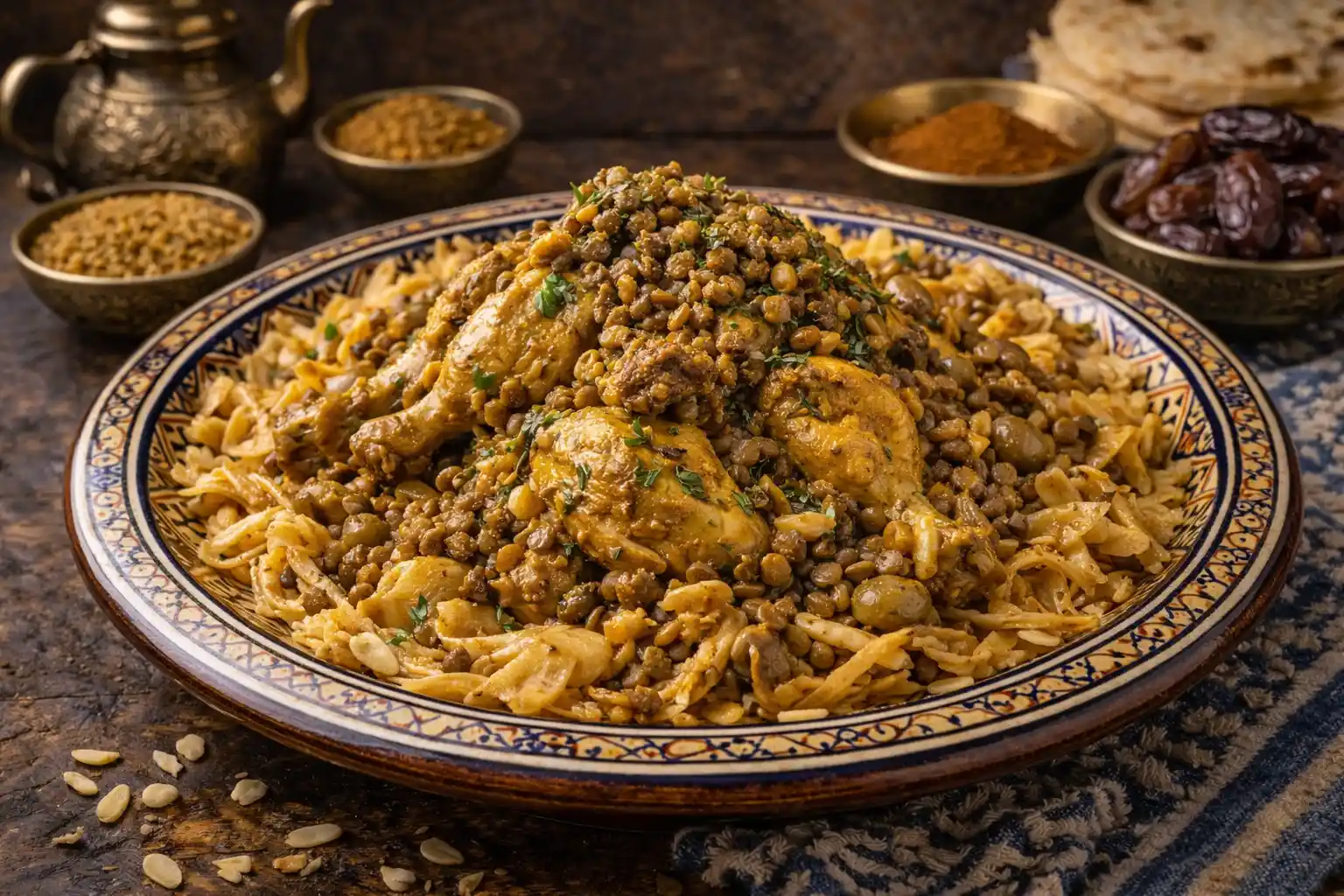
Moroccan Rfissa is one of the most traditional and meaningful dishes in Moroccan cuisine. It is deeply connected to cultural customs, family traditions, and nutritional wisdom passed down through generations. Unlike everyday meals, Rfissa is often prepared for special moments—most notably for women after childbirth—due to its nourishing ingredients and warming spices.
Rfissa is more than a dish; it is a symbol of care, healing, and generosity. Made with slow-cooked chicken, aromatic spices, fenugreek seeds, and shredded flatbread, Rfissa reflects Morocco’s culinary philosophy of transforming simple ingredients into deeply comforting food. In this article, we explore the origins of Rfissa, its cultural role, ingredients, preparation method, health benefits, and why it remains a treasured Moroccan specialty.
The Origins of Rfissa in Moroccan Cuisine
Rfissa has roots in both Amazigh (Berber) and Arab culinary traditions. Historically, it was created as a nourishing meal using ingredients readily available in rural Moroccan households—chicken, bread, spices, and herbs.
Over time, Rfissa became closely associated with postpartum care, weddings, and family gatherings. Its preparation reflects Morocco’s long-standing belief in food as both nourishment and medicine.
Cultural Significance of Rfissa
In Moroccan culture, Rfissa is traditionally prepared to support recovery and strength, especially for women after childbirth. Family members often gather to prepare the dish together, reinforcing its social and emotional importance.
Serving Rfissa is a gesture of compassion and respect. It represents warmth, hospitality, and the deep connection between food and well-being in Moroccan society.
Key Ingredients of Moroccan Rfissa
Main Ingredients:
- Whole chicken, cut into pieces
- Onions
- Garlic
- Olive oil
Essential Spices:
- Ginger
- Turmeric
- Black pepper
- Saffron or safflower
- Salt
Signature Ingredient:
- Fenugreek seeds (soaked and rinsed)
Bread Base:
- Msemen or traditional Moroccan flatbread, shredded
Fenugreek gives Rfissa its distinctive aroma and nutritional value, making it unlike any other Moroccan dish.
Traditional Preparation Method
1. Cooking the Chicken
Chicken is slowly cooked with onions, garlic, olive oil, and spices until tender. The long cooking process allows the flavors to fully develop and infuse the broth.
2. Adding Fenugreek
Soaked fenugreek seeds are added to the pot, releasing their earthy aroma and enriching the sauce. This step is essential to achieving authentic Rfissa flavor.
3. Slow Simmering
The dish is simmered gently until the broth thickens and becomes deeply aromatic. Patience is key—Rfissa is never rushed.
4. Preparing the Bread
Msemen or flatbread is cooked separately, then shredded into bite-sized pieces and arranged in a large serving dish.
5. Final Assembly
The chicken and rich sauce are poured over the bread, allowing it to absorb the flavors before serving.
Why Rfissa Is Considered a Healing Dish
Rfissa is known for its restorative qualities:
- Fenugreek supports digestion and recovery
- Warm spices stimulate circulation
- Chicken provides protein and strength
- Bread offers sustained energy
These qualities explain why Rfissa is often served during recovery periods.
Regional Variations of Rfissa
While the core recipe remains consistent, variations exist:
- Some regions increase the amount of fenugreek
- Others adjust spice intensity
- Bread types may vary slightly
Despite these differences, Rfissa’s identity remains unmistakably Moroccan.
Serving Moroccan Rfissa
Rfissa is traditionally served:
- Hot
- In a large communal dish
- Without side dishes
- Followed by Moroccan mint tea
The focus remains entirely on the dish itself.
Nutritional Value of Rfissa
Rfissa offers:
- High protein content
- Warming spices beneficial to digestion
- Healthy fats from olive oil
- Sustained energy from bread
It is a filling and deeply satisfying meal.
Rfissa in Modern Moroccan Kitchens
Today, Rfissa continues to be prepared with reverence, even as modern kitchens adapt cooking tools. While some simplify the recipe, traditional preparation remains the gold standard for flavor and authenticity.
Tips for Authentic Moroccan Rfissa
- Soak fenugreek well to reduce bitterness
- Use slow, gentle heat
- Avoid excess liquid
- Use fresh spices
- Allow the dish to rest before serving
Conclusion
Moroccan Rfissa is a dish rooted in tradition, care, and nourishment. Its rich flavors and cultural significance make it one of Morocco’s most meaningful culinary creations. Whether prepared for healing, celebration, or family gatherings, Rfissa remains a timeless expression of Moroccan culinary wisdom.