Introduction
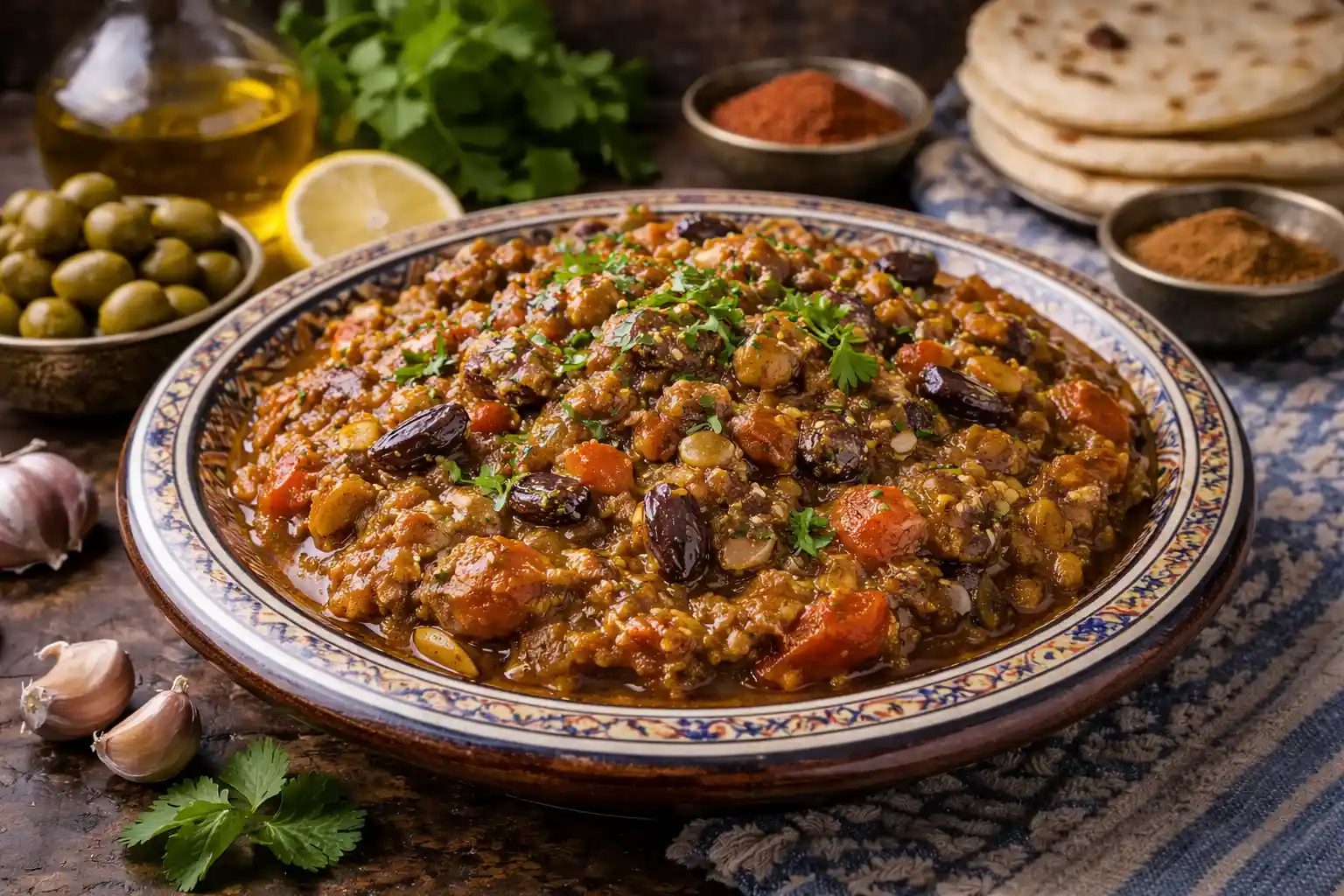
Moroccan Zaalouk is one of the most beloved traditional salads in Moroccan cuisine. Simple in ingredients yet rich in flavor, Zaalouk reflects the essence of Moroccan cooking—transforming humble vegetables into deeply satisfying dishes through careful seasoning and technique.
Made primarily from eggplant and tomatoes, Zaalouk is known for its smoky aroma, smooth yet textured consistency, and bold use of spices. It is commonly served as a side dish, appetizer, or mezze, accompanying tagines, grilled meats, or fresh Moroccan bread. In this article, we explore the origins of Zaalouk, its cultural role, ingredients, traditional preparation, regional variations, nutritional value, and why it remains a staple on Moroccan tables.
Origins of Zaalouk in Moroccan Cuisine
Zaalouk has its roots in Morocco’s rural and coastal regions, where eggplants and tomatoes are abundant seasonal vegetables. Historically, Moroccan households relied on simple produce and pantry spices to create flavorful meals, and Zaalouk emerged as a practical yet delicious solution.
Over generations, this dish became a core element of Moroccan cuisine, appearing on everyday tables as well as festive spreads. Its popularity spread beyond Morocco, earning recognition across North Africa and Mediterranean-inspired kitchens.
Cultural Significance of Zaalouk
In Moroccan culture, Zaalouk represents simplicity, sharing, and balance. It is typically served in a communal dish, allowing everyone at the table to enjoy it together using bread instead of utensils.
Zaalouk is especially popular during warmer months due to its light texture and refreshing acidity, yet it remains comforting enough to accompany heavier dishes year-round.
Key Ingredients of Moroccan Zaalouk
Main Ingredients:
- Eggplants
- Fresh tomatoes or crushed tomatoes
- Garlic
- Olive oil
Essential Spices:
- Cumin
- Paprika
- Black pepper
- Salt
Optional Enhancements:
- Chili pepper (for heat)
- Lemon juice
- Fresh parsley or cilantro
Each ingredient plays a role in achieving Zaalouk’s signature depth and balance.
Traditional Preparation Method
1. Preparing the Eggplant
Eggplants are traditionally roasted over an open flame or baked until the skin is charred and the flesh becomes soft. This step is crucial for achieving the smoky flavor that defines authentic Zaalouk.
Once cooled, the eggplant flesh is peeled and mashed, leaving some texture for body.
2. Cooking the Tomato Base
Tomatoes are sautéed gently in olive oil with garlic and spices until they break down and form a thick, aromatic sauce.
3. Combining the Ingredients
The mashed eggplant is added to the tomato mixture and cooked slowly, allowing the flavors to meld together while excess moisture evaporates.
4. Final Adjustment
Seasoning is adjusted, olive oil is drizzled generously, and herbs are added before serving.
Why Zaalouk’s Texture Matters
Zaalouk should never be watery. Its ideal texture is soft, thick, and slightly chunky. Achieving this consistency requires patience and slow cooking, ensuring a rich and concentrated flavor.
Regional Variations of Zaalouk
While the classic recipe is widely loved, regional variations exist:
- Some regions add extra cumin for warmth
- Others emphasize smokiness by roasting eggplants longer
- Coastal areas may add lemon juice for brightness
- Some households prefer a smoother or chunkier texture
Despite these variations, the identity of Zaalouk remains unmistakably Moroccan.
Serving Moroccan Zaalouk
Zaalouk is traditionally served:
- At room temperature or slightly warm
- Drizzled with olive oil
- Garnished with fresh herbs
- With Moroccan bread
It pairs beautifully with tagines, grilled fish, or as part of a mezze-style spread.
Nutritional Benefits of Zaalouk
Zaalouk is both flavorful and nutritious:
- Low in calories
- High in fiber
- Rich in antioxidants from tomatoes and eggplants
- Contains healthy fats from olive oil
It is suitable for vegetarian and vegan diets.
Zaalouk in Modern Moroccan Kitchens
Today, Zaalouk continues to be a household favorite while also appearing on restaurant menus worldwide. Modern adaptations may use ovens or stovetops instead of open flames, but the traditional smoky essence remains essential.
Zaalouk is also appreciated for its versatility—it can be served as a dip, spread, or side dish.
Tips for Authentic Moroccan Zaalouk
- Roast eggplants thoroughly for smokiness
- Use ripe tomatoes
- Cook slowly to remove excess moisture
- Balance cumin and paprika carefully
- Finish with high-quality olive oil
Conclusion
Moroccan Zaalouk is a celebration of simplicity and flavor. With minimal ingredients and thoughtful preparation, it delivers a deeply satisfying experience that reflects Moroccan culinary wisdom. Whether enjoyed as a side dish or centerpiece, Zaalouk remains a timeless classic that continues to define Moroccan home cooking.