Introduction
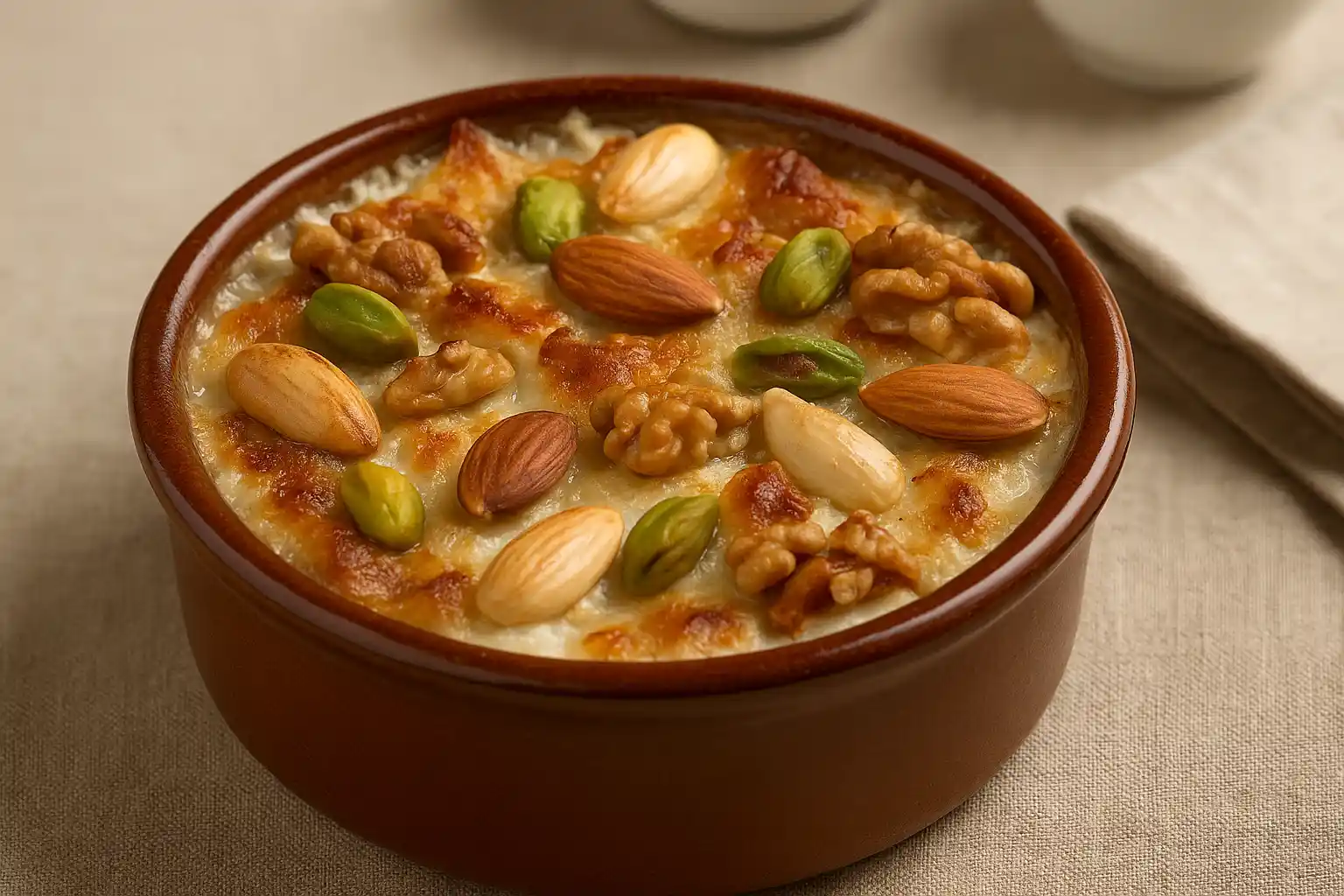
Umm Ali is one of the most famous Egyptian desserts, closely associated with generosity, hospitality, and joyful occasions. Despite its simplicity, it carries a rich flavor and a long history that allowed it to travel from the Egyptian kitchen to Arab and international cuisines.
Umm Ali is known for its warm, creamy texture, fragrant cinnamon aroma, and toasted nuts that add a delightful crunch. It is a dessert that combines heritage flavor with emotional comfort, often served in winter or after large banquets due to its ease of preparation and irresistible taste.
First: The Origin and History of Umm Ali
1) An Old Story with a Royal Touch
The story of Umm Ali dates back to the Ayyubid era and is linked to the wife of Sultan Izz al-Din Aybak. According to popular legend, she prepared a special dish made from bread, milk, and nuts to celebrate a royal event. People admired its taste, and it soon spread throughout Egypt, then across the Arab world.
2) A Traditional Dessert with a Popular Spirit
Over time, Umm Ali became an essential part of Egyptian folk heritage. It is sold in markets and festivals and prepared at home during holidays and family gatherings. Despite the emergence of modern dessert recipes, Umm Ali has maintained its status thanks to its simplicity, warmth, and universal appeal.
Second: Traditional Ingredients of Umm Ali
1) Bread or Pastry Sheets
Dried bread, phyllo dough (goulash), or even croissants can be used. The main idea is a crispy base that absorbs milk and sugar.
2) Milk and Cream
Milk provides the core creamy flavor, while cream adds richness and a luxurious, smooth texture.
3) Mixed Nuts
Almonds, pistachios, walnuts, and hazelnuts are among the most common additions. Nuts enhance flavor, nutritional value, and create a balance between softness and crunch.
4) Sugar and Cinnamon
The combination of sugar and cinnamon gives Umm Ali its distinctive aroma and flavor, strongly associated with warmth and comfort.
Third: How to Prepare Umm Ali Perfectly
1) Toasting the Bread or Pastry
Break the bread or pastry into pieces and toast in the oven until golden.
This step ensures a firm texture and helps the base absorb the milk without becoming soggy.
2) Heating the Milk with Cream
Heat the milk with sugar and cream until the sugar is fully dissolved.
Avoid boiling vigorously to preserve the natural flavor of the milk.
3) Assembling the Layers
Place the toasted bread in a baking dish and sprinkle a generous amount of mixed nuts on top.
Gradually pour the hot milk mixture until all ingredients are fully covered.
4) Baking in the Oven
Bake in a moderate oven for 15–20 minutes until the bread absorbs the milk well.
Finish by browning the top to achieve a tempting golden color.
5) Final Touch Before Serving
Add extra cream or toasted nuts on top if desired.
A sprinkle of cinnamon or a touch of vanilla can be added for enhanced aroma.
Fourth: Why Umm Ali Is One of Egypt’s Most Famous Desserts
1) Quick and Easy to Prepare
Umm Ali is commonly served at gatherings because it requires minimal effort and simple ingredients.
2) Loved by All Tastes
Its balanced sweetness and creamy texture make it appealing to both children and adults.
3) Flexible with Additions
It can be customized with coconut, raisins, chocolate, or even given a Western twist using croissants.
4) High Nutritional Value
Containing milk, nuts, and carbohydrates, Umm Ali is a filling dessert rich in energy.
Conclusion
Umm Ali is more than just an Egyptian dessert—it is part of the Arab collective memory, combining family warmth and shared joy in a single dish.
Its simplicity, rich flavor, and flexibility in ingredients have allowed it to reach almost every Arab home.
Whether served at celebrations or during a quiet winter evening, Umm Ali remains a dessert that warms the heart and adds an authentic Egyptian touch to the table.