Introduction
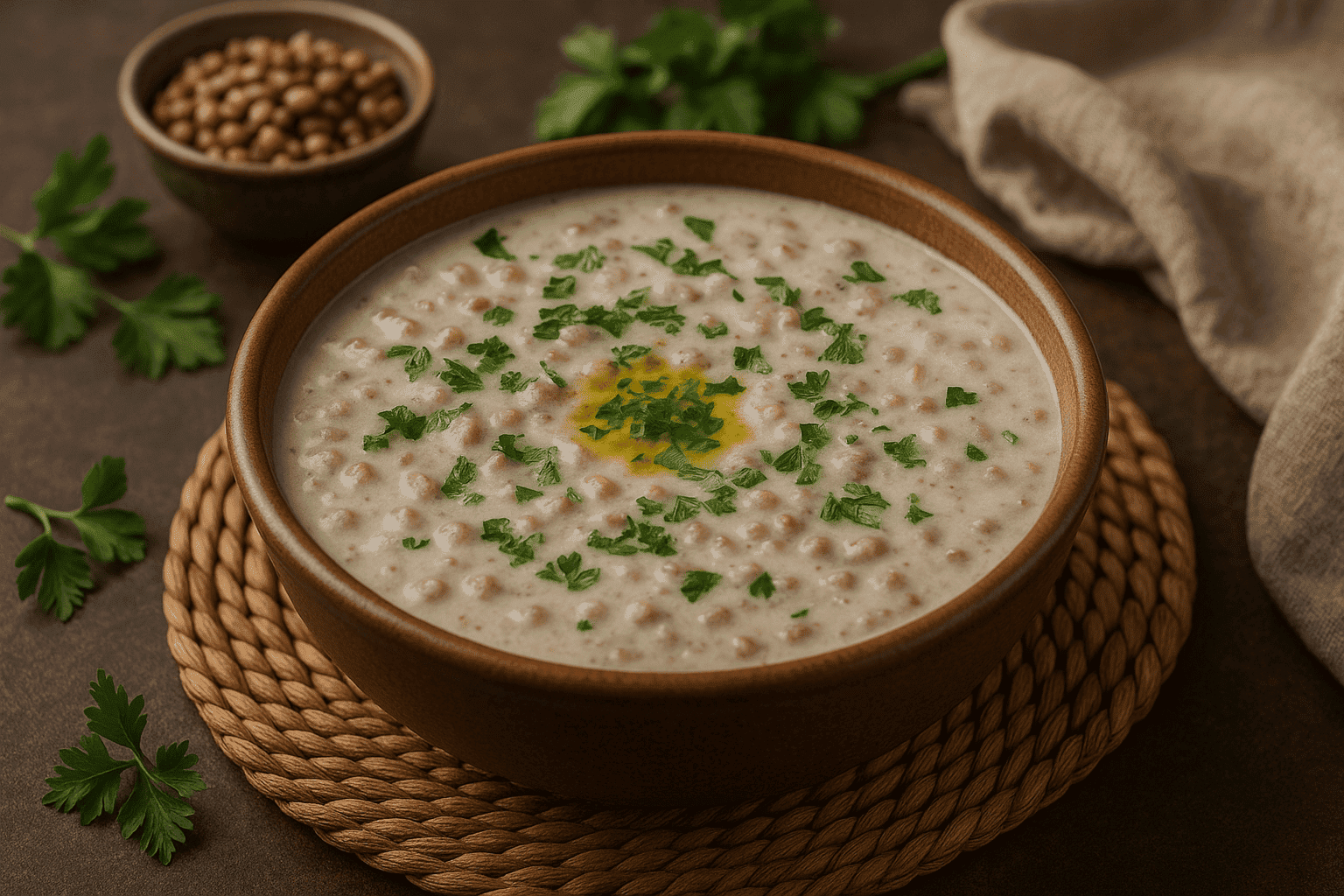
Palestinian Rashoof is one of the most famous winter dishes in Palestinian and Jordanian villages and towns. It is a traditional meal that combines simplicity with authentic flavor.
Rashoof is known for its thick texture and warming taste, which relies on cooked yogurt, bulgur, and lentils, making it an ideal dish for cold winter days.
Thanks to its nourishing and filling ingredients, rashoof is considered a complete meal that brings together high nutritional value and a rustic flavor that evokes warm and cherished memories.
First: What Is Rashoof and the Origin of Its Name?
1) A Traditional Bedouin Dish
Rashoof originated in the Bedouin lifestyle and rural villages, where people depended on yogurt, wheat, and lentils as staple foods during the winter season.
2) Meaning of the Name “Rashoof”
The name comes from the Arabic word “rashf”, meaning to sip slowly, referring to the thick consistency of the soup, which is enjoyed hot and eaten gradually.
3) The Ultimate Winter Food
Rashoof has long been associated with cold weather, as it helps warm the body and provides high energy needed for agricultural work.
Second: Authentic Ingredients of Palestinian Rashoof
1) Cooked Yogurt (Shaneeneh or Yogurt):
- 1 liter of yogurt or shaneeneh
- 1 tablespoon cornstarch (optional, for thickening)
- Garlic cloves
- Salt
2) Grains:
- ½ cup fine or coarse bulgur
- ½ cup crushed lentils or red lentils
3) Flavor Additions:
- 1 small onion, finely chopped
- 1 tablespoon traditional ghee or olive oil
- Broth or water as needed
- A pinch of black pepper
- A pinch of cumin (optional)
Third: Step-by-Step Preparation of Palestinian Rashoof
1) Preparing the Cooked Yogurt
The yogurt is mixed with cornstarch and stirred well to prevent curdling.
It is placed over medium heat with continuous stirring until it begins to boil.
Mashed garlic and salt are added.
2) Preparing the Grains
The bulgur is washed and soaked for 10 minutes.
The crushed lentils are washed thoroughly.
3) Adding the Grains to the Yogurt
Once the yogurt boils, the bulgur and lentils are added.
The heat is reduced, and the mixture is left to cook slowly for 20–30 minutes.
4) Sautéing the Onion
In a small pan, the ghee or olive oil is heated.
The onion is added and sautéed until golden.
Half of the onion is added to the pot, and the remaining half is reserved for garnish.
5) Adjusting the Consistency
If the soup becomes too thick, a small amount of water or broth may be added.
The texture should be medium — neither too thin nor overly thick.
6) Serving
Rashoof is poured into deep bowls.
It is garnished with sautéed onions and a drizzle of olive oil.
Served hot with bread or toasted bread.
Fourth: Secrets to Perfect Palestinian Rashoof
✔ Stir the yogurt continuously to prevent curdling.
✔ Cook slowly over low heat for a smooth texture and deep flavor.
✔ Add sautéed onions for an authentic aroma and traditional taste.
✔ Avoid adding too much water to maintain the desired thickness.
✔ Serve very hot, as rashoof loses part of its flavor when it cools.
Fifth: Nutritional Value of Rashoof
1) Rich in Plant-Based Protein
From lentils, which promote satiety.
2) Contains Calcium and Probiotics
From cooked yogurt, supporting bone and digestive health.
3) Excellent Source of Fiber
From bulgur and lentils, aiding digestion.
4) High Energy Content
Ideal for cold winter days.
5) Low in Fat
Especially when prepared with olive oil instead of ghee.
Conclusion
Palestinian rashoof remains one of the most beloved winter dishes that combines authentic flavor with exceptional nutritional value.
The blend of cooked yogurt, bulgur, lentils, and sautéed onions creates a hearty soup that can easily replace a full meal.
With simple preparation steps and precise cooking techniques, you can prepare a warm, homemade rashoof that fills your table with the comforting aroma of Palestinian heritage.