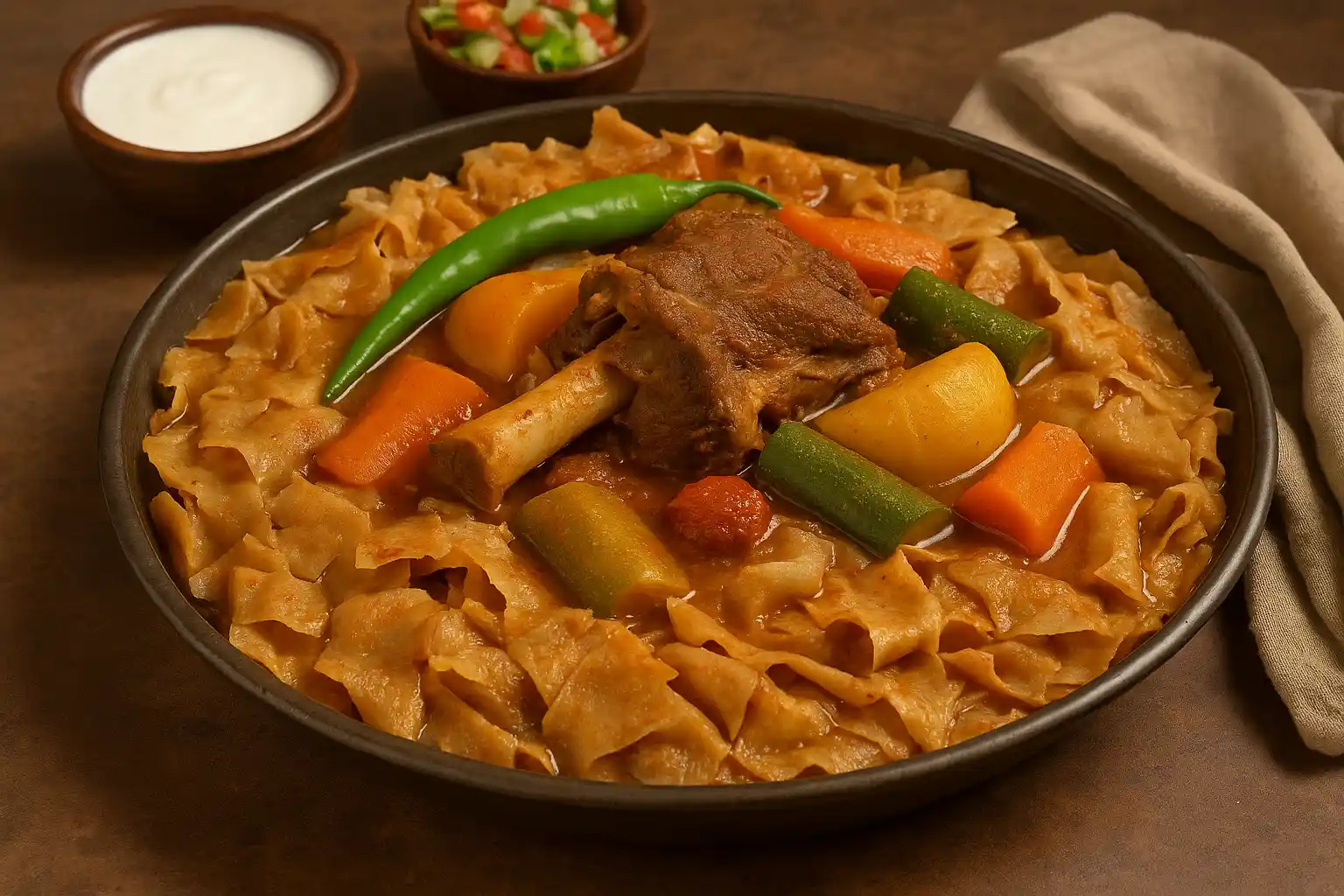
Saudi cuisine, particularly the culinary traditions of the Najd region, is a treasure trove of authentic heritage. It embodies the values of generosity and hospitality through dishes that masterfully blend simple ingredients with profound flavors. Among these, Saudi Qursan holds a royal place on the dining table, standing proudly alongside other classics like Jareesh and Margoug as a dish that tells the story of desert life.
The philosophy behind Qursan is not merely about bread; it is a unique culinary art form. It revolves around transforming simple, dry bread discs into a hearty, satisfying meal by cooking them in a rich meat and vegetable broth. This dish is a symbol of resourcefulness and community in Najd, reflecting the simplicity and richness of local traditions. In an era where culinary preservation is key, documenting these recipes is vital, and sources like the Atayeb Website help ensure anyone can recreate this authentic dish at home, preserving its legacy for future generations.
Origin and History of Qursan
Qursan’s roots are deeply embedded in the heart of Najd, the central region of Saudi Arabia. The desert environment shaped a diet based on sustainable ingredients like whole wheat (Burr), dates, dairy, and meat. The dish emerged as an ingenious solution for food preservation; the thin, dry bread could be stored for long periods without spoiling, making it ideal for nomads and travelers.
Upon settling or during special occasions, this dry bread was brought back to life by simmering it with a broth made from lamb and seasonal vegetables like pumpkin and zucchini. Over time, Qursan transitioned from a daily staple to a celebratory centerpiece, essential for weddings, Ramadan Iftars, and Eid feasts. It is traditionally served on large communal platters, symbolizing warmth, generosity, and the strong social bonds of family and community.
Recipe Card
Here is a quick overview of what to expect when preparing this heritage dish:
| Item | Details |
|---|---|
| Preparation Time | 45 minutes |
| Cooking Time | 90 – 120 minutes |
| Servings | 6 – 8 people |
| Difficulty Level | Medium |
| Category | Main Course |
| Cuisine | Saudi – Najdi |
Main Ingredients
The success of Qursan hinges on the quality of its components, especially the flour and the freshness of the vegetables.
| Ingredient | Quantity | Notes |
|---|---|---|
| Whole wheat flour (Burr) | 3 cups | Essential for the authentic flavor and texture. |
| Water | As needed | For a soft, pliable dough. |
| Salt | 1 tsp | For the dough and broth. |
| Lamb (with bone) | 1 kg | Chicken can be used, but lamb provides a richer broth. |
| Mixed Vegetables | ~1 kg | Pumpkin, green beans, zucchini, carrots, eggplant. |
| Onion | 3 large, chopped | For the broth and a final garnish (Kishna). |
| Garlic | 3-4 cloves, minced | |
| Tomatoes | 4, blended | |
| Tomato Paste | 2 tbsp | For color and depth. |
| Dried Limes (Loomi) | 2-3 | Punctured to release their tangy flavor. |
| Spices | 2 tbsp | A mix of cumin, black pepper, coriander, and cinnamon. |
| Ghee or Oil | 3 tbsp | For cooking. |
The Secrets to Perfect Qursan Flavor and Texture
While Qursan may resemble other bread-based stews, its unique identity comes from a few key techniques:
- Extremely Thin Bread: The ultimate secret is rolling the dough until it is paper-thin and almost translucent. The thinner the bread, the better it will absorb the broth without becoming heavy.
- Saj Cooking: The bread discs are cooked briefly on a very hot, convex metal griddle called a Saj. This process cooks the bread quickly and imparts a subtle, smoky flavor without over-browning it.
- Gradual Soaking: The bread is not simply dumped into the stew. It is layered and gradually soaked in the hot broth, allowing each piece to become tender and flavorful without turning into a mushy pulp.
- The Flavor Base: The combination of sweet pumpkin and the tangy, earthy notes of dried lime (Loomi) is the signature flavor profile of authentic Najdi Qursan.
Detailed Preparation Steps
To achieve an authentic Qursan, the process is divided into preparing the bread, making the stew, and assembling the final dish.
1. Preparing the Qursan Bread
- Knead the Dough: Combine the whole wheat flour, salt, and water. Knead for about 10 minutes until you have a smooth, soft dough that isn’t sticky.
- Rest the Dough: Cover the dough and let it rest for at least 30 minutes. This relaxes the gluten, making it easier to roll out thinly.
- Roll and Cook: Divide the dough into small balls. On a floured surface, roll each ball as thinly as possible. Cook on a hot Saj or a large non-stick pan for a few seconds on each side until cooked but still pale. The bread can be used fresh or dried for later use.
2. Preparing the Broth (Marag)
- Sauté the Meat: In a large pot, heat the ghee or oil. Add chopped onions and cook until soft and translucent. Add the lamb pieces and brown them on all sides.
- Add Aromatics: Stir in the minced garlic, spices, and pierced dried limes. Cook for a minute until fragrant.
- Create the Sauce: Add the blended tomatoes and tomato paste, and let the mixture simmer for about 10 minutes to develop its flavor.
- Cook the Broth: Pour enough boiling water to cover the meat generously. Bring to a boil, then reduce the heat, cover, and simmer for 60-90 minutes, or until the meat is tender.
3. Assembling the Qursan
- Add Vegetables: Add the tougher vegetables like carrots to the pot first. After 10 minutes, add the softer vegetables like zucchini, pumpkin, and eggplant. Cook until all vegetables are tender.
- Break the Bread: Break the Qursan bread into medium-sized pieces.
- Soak the Bread: Place a layer of bread in a large, wide serving platter. Ladle a generous amount of the hot broth and some vegetables over it. Repeat the layers, gently pressing down to ensure the bread absorbs the liquid.
- Final Assembly: Arrange the tender pieces of meat and the remaining vegetables on top of the soaked bread.
- Garnish and Serve: For an extra layer of flavor, you can prepare a Kishna by frying chopped onions in ghee with a sprinkle of ground dried lime. Spoon this over the top before serving.
Common Mistakes to Avoid
- Thick Bread: If the bread is too thick, it will not absorb the broth properly and will result in a heavy, doughy dish.
- Broth Consistency: A broth that is too thin will be bland, while one that is too thick will not soak into the bread effectively. Aim for a balanced, flavorful consistency.
- Over-soaking: Drowning the bread in too much liquid will turn it into a mushy, porridge-like texture. The goal is for the bread to be moist and tender, not swimming in broth.
Approximate Nutritional Information
Qursan is a well-rounded, complete meal, offering a balance of all major food groups.
| Nutrient | Amount per Serving (Approximate) |
|---|---|
| Calories | 450 – 550 |
| Protein | 25 – 30 g |
| Carbohydrates | 60 – 70 g |
| Fat | 15 – 20 g |
| Fiber | High |
Conclusion
Saudi Qursan is far more than a simple meal; it is a culinary document that tells a story of history, environment, and culture. The dish perfectly marries the rustic flavor of whole wheat bread with the richness of slow-cooked meat and the sweetness of fresh vegetables, creating an unforgettable symphony of flavors. Preserving authentic recipes like this on platforms such as the Atayeb Website is crucial for safeguarding Saudi Arabia’s rich culinary heritage, ensuring that these traditions continue to grace our tables for generations to come.