
Introduction
Spices and seasonings are among the most essential elements in the world of cooking. They give food its fragrant aroma, distinctive flavor, and unique personality.
Although their use is primarily associated with taste, spices also offer numerous health benefits, making them an important part of any balanced diet.
In this article, we explore the key benefits of spices and seasonings and how they can transform even the simplest dish into an impressive meal with high nutritional value.
First: What Are Spices and Seasonings?
1) Spices
Spices come from various parts of plants, such as:
- Seeds
- Roots
- Peels
- Bark
They are usually dried and ground, such as cumin, black pepper, cinnamon, and ginger.
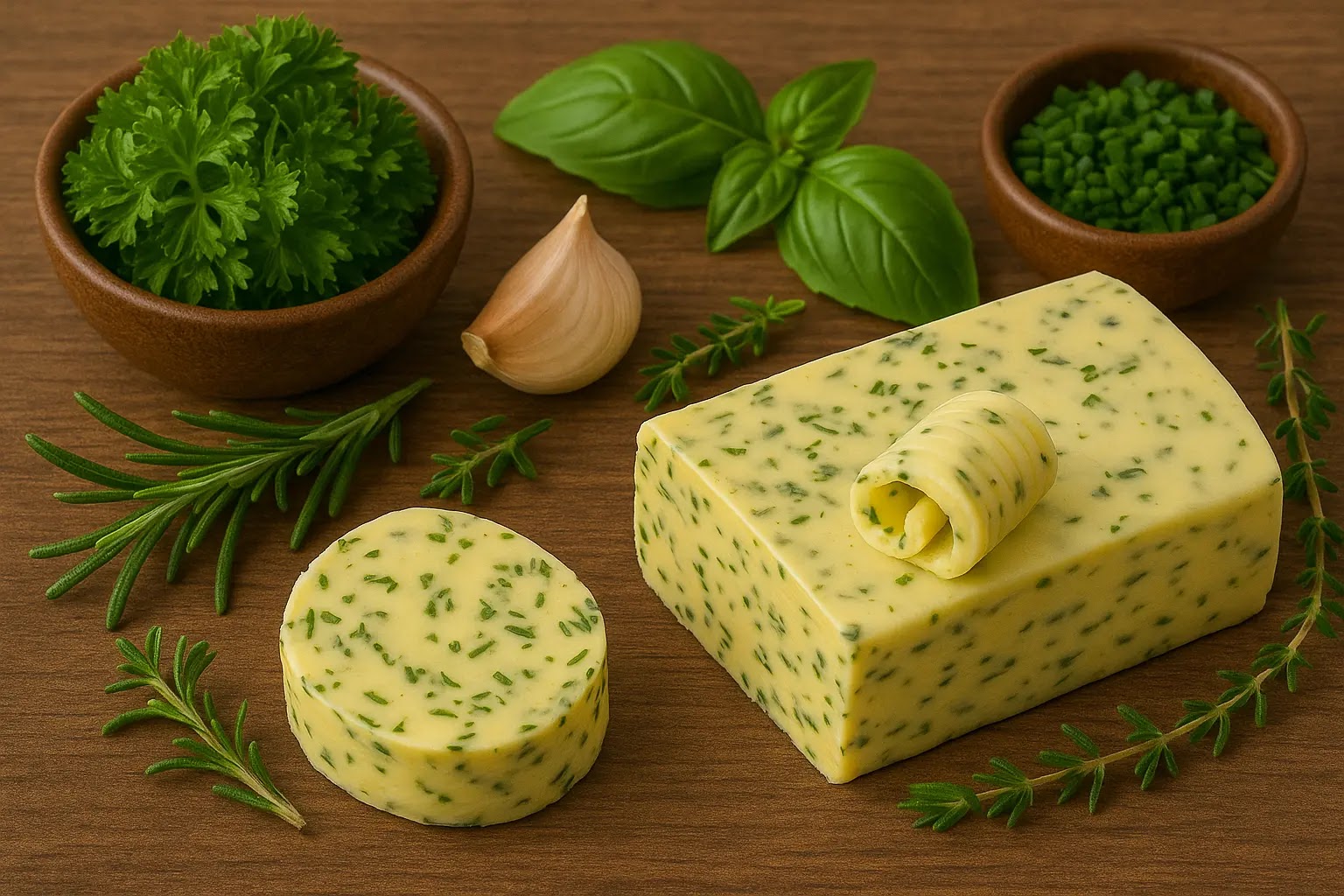
2) Herbs (Green Seasonings)
These include the aromatic leaves of plants, such as:
- Basil
- Mint
- Parsley
- Thyme
They are often used fresh or dried.
3) The Primary Role of Spices and Seasonings
Their main role is to enhance flavor, deepen taste, and give each dish its own distinctive identity.
Second: Benefits of Spices and Seasonings in Cooking
1) Enhancing Flavor and Developing Taste
Spices help highlight and intensify the flavor of food.
Cinnamon adds warm sweetness, cumin provides a deep earthy taste, and black pepper enhances the main flavor without overpowering it.
2) Adding a Distinctive Aroma
Seasonings give food an appealing aroma that stimulates the appetite, as smell is the first sense engaged when eating.
3) Improving Digestion
Spices such as ginger, cumin, and fennel help soothe the stomach and reduce bloating.
4) Reducing the Need for Fats and Salt
Well-seasoned food requires less salt and oil to achieve a satisfying flavor.
5) Supporting the Immune System
Some spices, such as turmeric, dried garlic, and ginger, contain antioxidants that strengthen immunity.
6) Improving Nutrient Absorption
Black pepper contains piperine, a compound that helps the body absorb more vitamins and minerals.
Third: Health Benefits of Spices and Seasonings
1) Anti-Inflammatory Properties
Turmeric, ginger, and dried garlic are effective in reducing inflammation and relieving pain.
2) Powerful Antioxidants
Spices such as cinnamon and cloves contain compounds that fight free radicals and protect the body from chronic diseases.
3) Improving Heart Health
Some spices, such as cumin and cardamom, help lower harmful cholesterol levels and improve blood circulation.
4) Regulating Blood Sugar Levels
Cinnamon, in particular, helps improve the body’s sensitivity to insulin.
5) Boosting Energy and Fat Burning
Hot chili peppers contain capsaicin, which increases metabolic rate and enhances fat burning.
Fourth: How to Use Spices and Seasonings to Improve Flavor
1) Pre-Seasoning
Adding spices to meat and chicken before cooking allows flavors to be absorbed more effectively.
2) Toasting Spices
Toasting whole spices such as cumin and coriander enhances their aroma and deepens their flavor.
3) Gradual Addition
It is best to start with a small amount and increase gradually to maintain flavor balance.
4) Combining Dry Spices with Fresh Herbs
For example, thyme with cumin or parsley with paprika to achieve a rich, layered flavor.
5) Choosing the Right Spices for Each Dish
- Turmeric for rice and chicken
- Black pepper for soups and sauces
- Cinnamon for desserts and meat dishes
- Thyme and oregano for baked goods
- Sumac for salads and grilled meats
Fifth: Popular Spices and Their Role in Cooking
✔ Cumin – Enhances the flavor of lentils, chickpeas, and sauces.
✔ Cinnamon – Adds warm sweetness to desserts and meats.
✔ Turmeric – Provides a golden color and earthy flavor.
✔ Black Pepper – Elevates the base flavor of any dish.
✔ Sumac – Adds refreshing acidity to salads and grilled foods.
✔ Cloves – Strong aroma, used sparingly in desserts and meats.
✔ Ginger – Balanced heat with a refreshing taste.
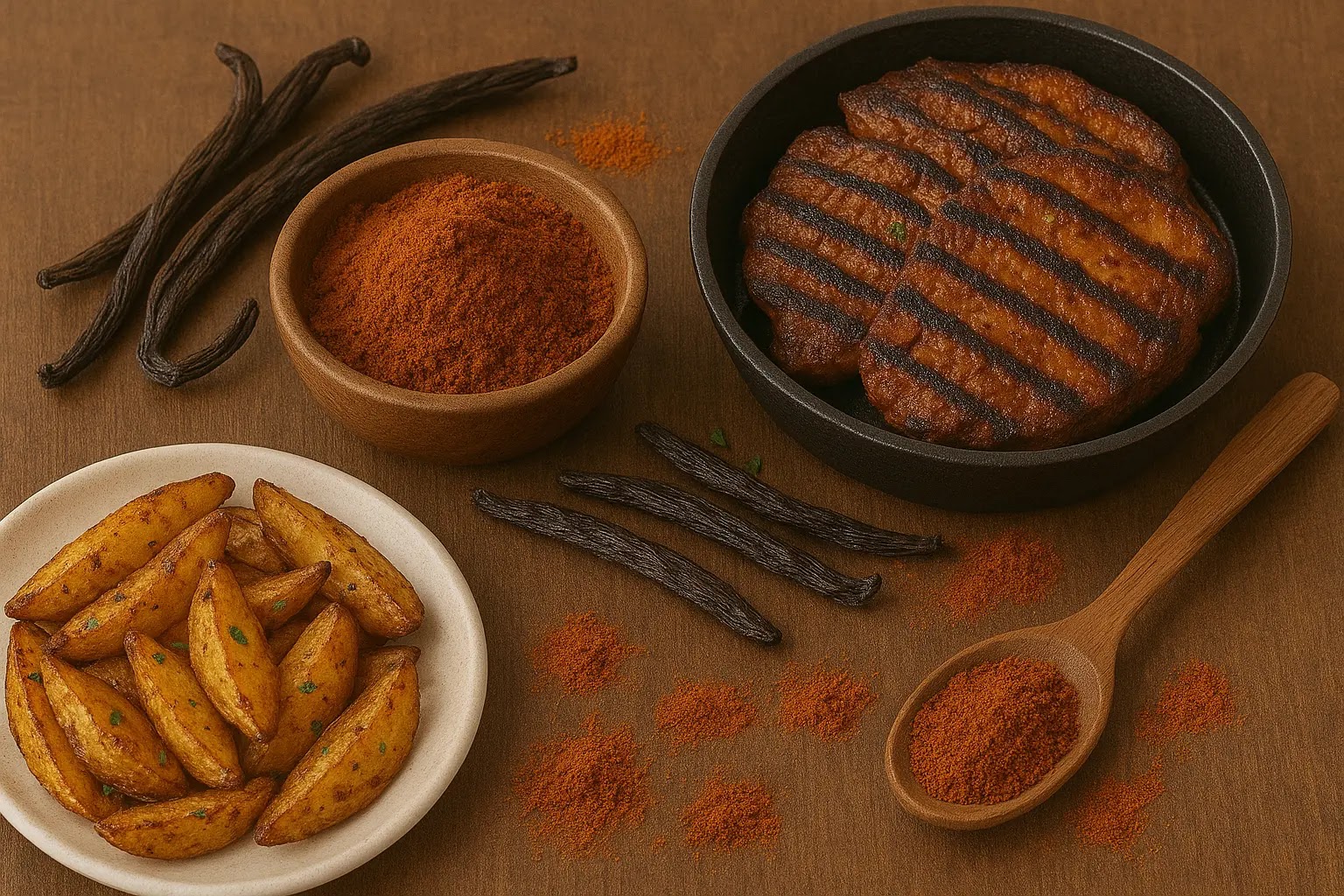
✔ Paprika – Rich red color and mild smoky flavor.
Sixth: Nutritional Value of Spices
1) Low in Calories
They add flavor without significantly increasing calorie content.
2) Rich in Vitamins and Minerals
Such as iron, calcium, and magnesium.
3) Contain Beneficial Natural Compounds
That support immunity and overall health.
Conclusion
Spices and seasonings play a fundamental role in cooking—not only in enhancing flavor, but also in adding nutritional and health value to dishes.
With proper balance and skillful use, anyone can transform a simple meal into a professional-quality dish rich in aroma, depth, and unique taste.
With the wide variety of spices available, the secret to delicious cooking lies in choosing the right spices for each dish and using them in the right amount.