Introduction
Traditional ghee is one of the most important heritage ingredients that has accompanied Arabic cuisine throughout the ages. It is not merely a fat used for cooking, but a key element that adds an authentic Arabic flavor that cannot be replaced by any other type of oil or fat. With its distinctive aroma and rich taste, traditional ghee is considered the secret behind many classic Middle Eastern recipes closely tied to childhood memories and family occasions.
In this article, we explore the importance of traditional ghee in cooking and how it enhances the flavor of dishes, giving them an irresistible authentic character.
What Is Traditional Ghee?
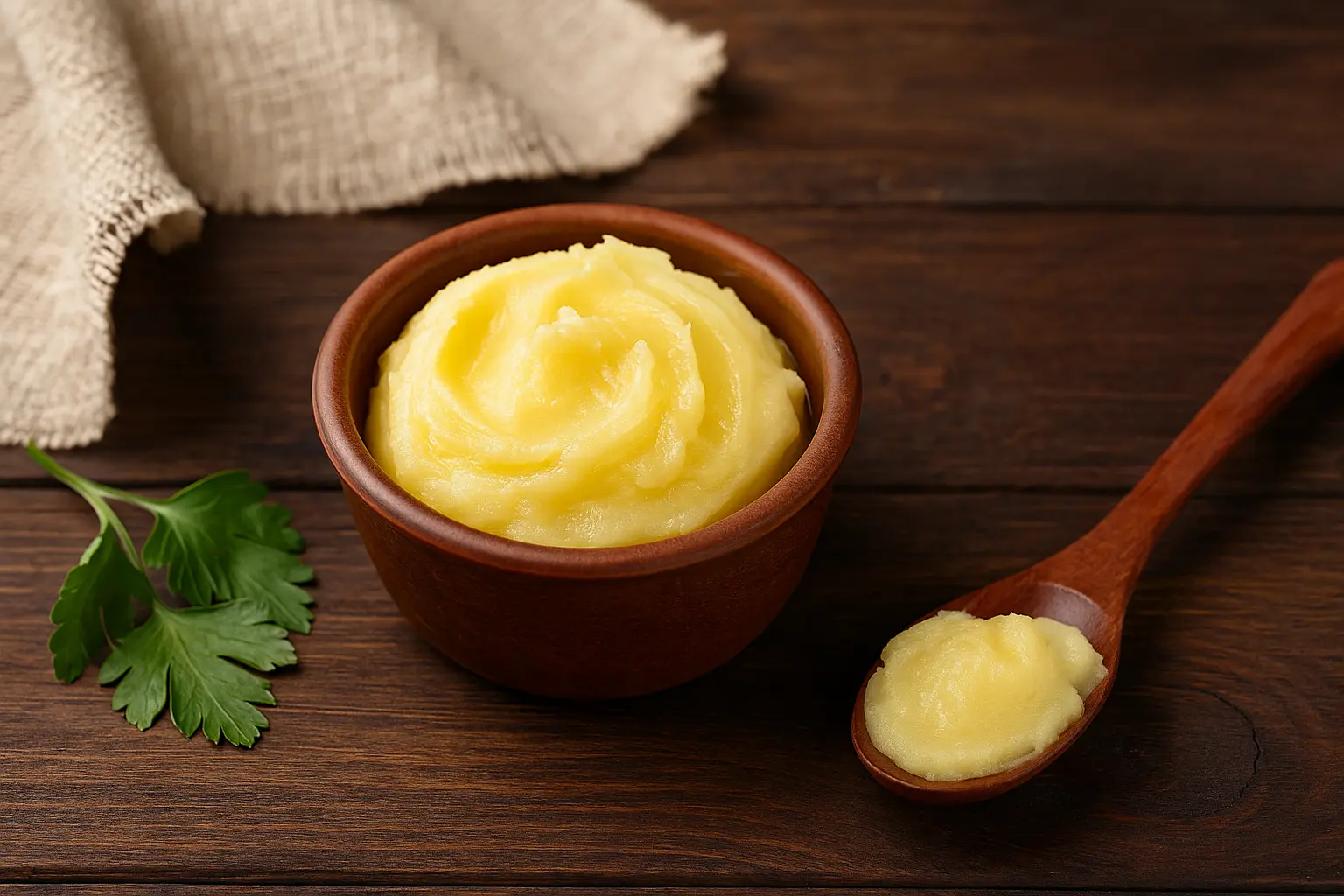
Traditional ghee is a natural fat produced by gently heating butter to remove water and impurities, then straining it to obtain pure ghee with a strong flavor and unique properties.
It is characterized by:
- A light golden color
- A strong, distinctive aroma
- A smooth texture
- A rich, authentic taste
Why Does Traditional Ghee Hold a Special Place in Arabic Cuisine?
1) A Unique Flavor Unlike Any Other Fat
When used in cooking, traditional ghee gives dishes a distinctive aroma and taste that elevates recipes and makes them more appealing, whether used in:
- Arabic rice dishes
- Maqluba
- Kabsa
- Freekeh
- Stuffed vegetables
- Kibbeh
- Manakish
It adds what many describe as the “soul of Arabic cooking,” a quality often lost when using vegetable oils.
2) High Heat Resistance
Unlike butter, which burns quickly, traditional ghee can withstand:
- Frying temperatures
- Long cooking times
- Sautéing and roasting
This makes it ideal for recipes that require deep, balanced richness and slow cooking.
3) Enhances the Flavor of Spices and Herbs
Traditional ghee acts as an excellent flavor carrier, enhancing the aroma and taste of spices such as:
- Cardamom
- Turmeric
- Cumin
- Thyme
- Garlic
Spices release stronger and warmer aromas when cooked with ghee compared to regular oil.
4) Adds a Rich Texture and Appealing Appearance
Whether used in rice, bread, or pastries, traditional ghee helps to:
- Add a beautiful shine
- Soften textures
- Create a delicious finishing layer
This gives dishes the look and feel of high-end restaurant meals.
Uses of Traditional Ghee in Arabic Recipes
1) Rice Dishes
Used in kabsa, maqluba, and biryani to provide deep flavor.
The result is fluffy rice with a truly authentic Arabic aroma.
2) Pastries and Baked Goods
Such as:
- Manakish
- Kaak
- Savory and sweet pastries
Traditional ghee adds softness and a rich flavor that vegetable oils cannot achieve.
3) Traditional Arabic Desserts
Including:
- Baklava
- Kunafa
- Harissa
- Semolina-based sweets
Traditional ghee is the secret behind the luxurious, authentic taste of these desserts.
4) Frying and Sautéing
Used to sauté onions or fry almonds and pine nuts, adding deeper flavor to many dishes.
Health Benefits of Traditional Ghee When Used in Moderation
Although ghee is a source of fat, moderate use offers several benefits:
- Supports digestion when added to traditional foods
- Rich in fat-soluble vitamins such as A, D, and E
- Contains natural saturated fats, which are better than hydrogenated industrial fats
- Provides sustained energy and promotes a feeling of fullness
How to Use Traditional Ghee in a Healthy and Balanced Way
- Use moderate amounts (from one teaspoon to one tablespoon depending on the dish).
- Avoid excessive use in desserts.
- Combine it with olive oil to reduce heaviness while preserving flavor.
- Choose natural, homemade ghee rather than commercial products.
- Store it in an airtight container in a cool, dark place.
Dishes That Are Incomplete Without Traditional Ghee
- Kabsa
- Maqluba
- Freekeh
- Maftoul
- Mujaddara
- Fried kibbeh
- Bedouin dishes
- Maamoul and kaak
These recipes rely heavily on traditional ghee to reveal their true flavor.
Conclusion
Traditional ghee is more than just a cooking fat—it is an essential part of Arabic heritage and the soul of authentic cuisine. Its use adds irreplaceable depth and character to dishes, reflecting the roots and richness of Arabic cooking. When used in moderation, traditional ghee perfectly balances flavor, tradition, and health benefits.
Make traditional ghee a part of your daily recipes, and you will notice how simple dishes transform into authentic Arabic meals with a refined, heritage-inspired touch.