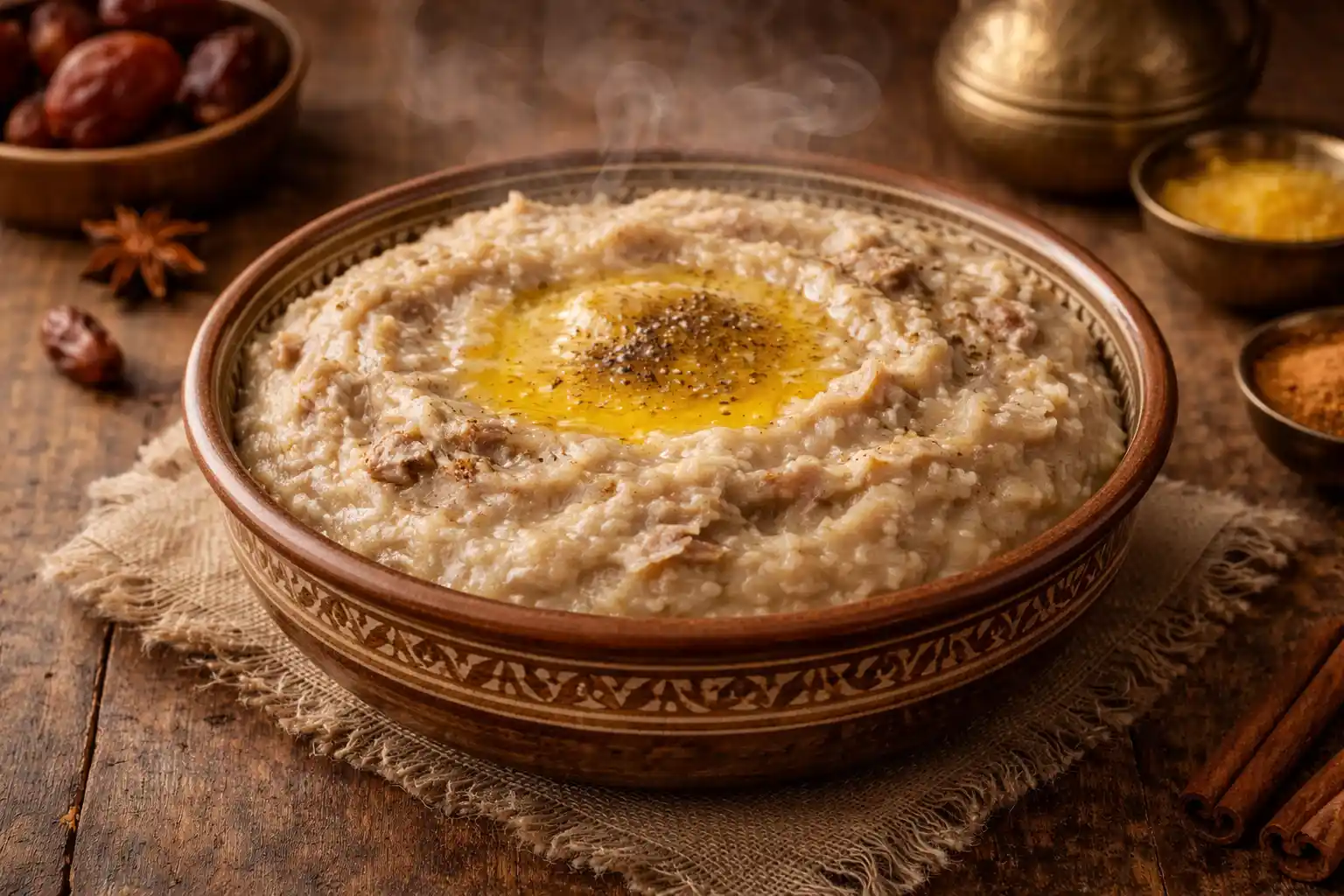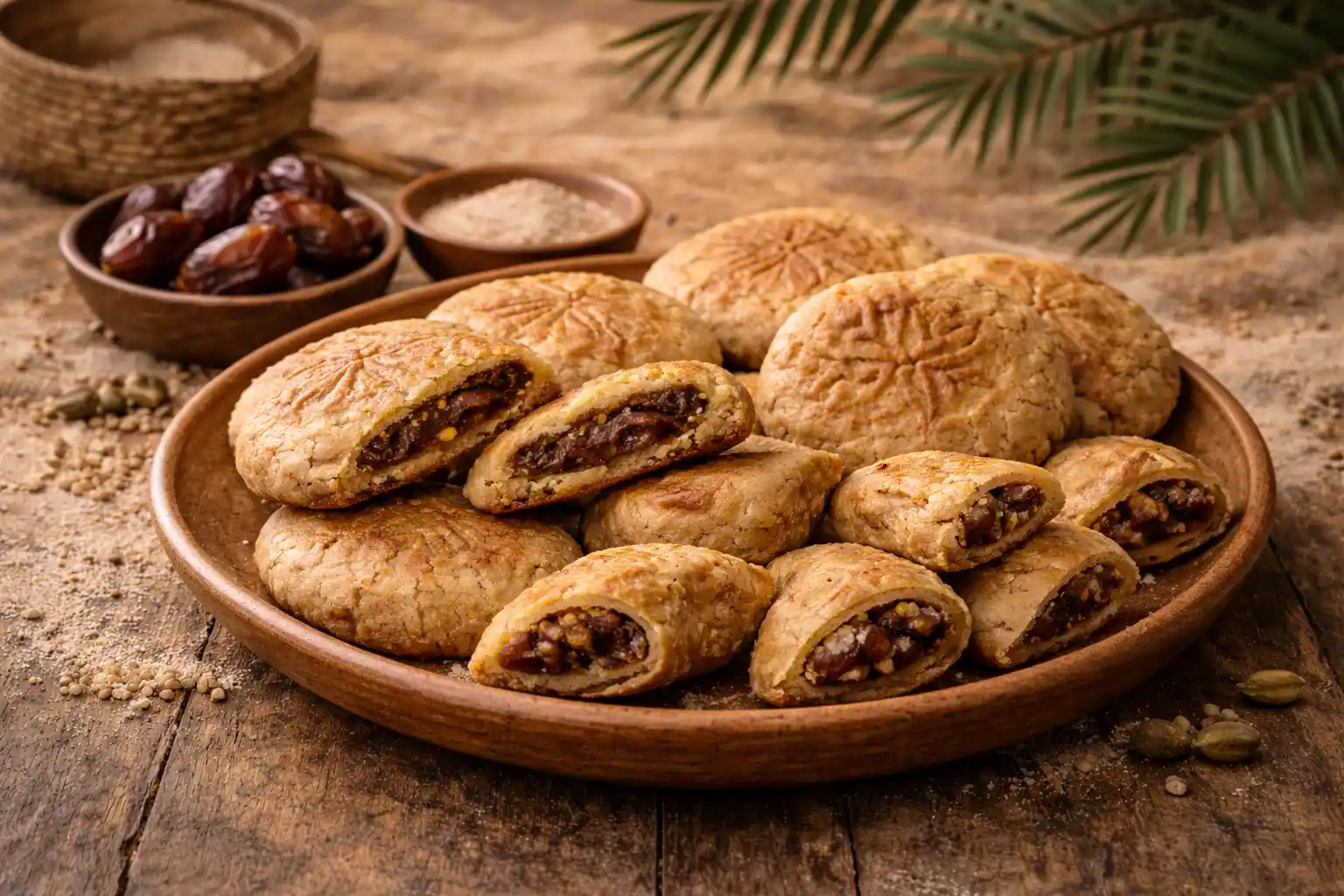
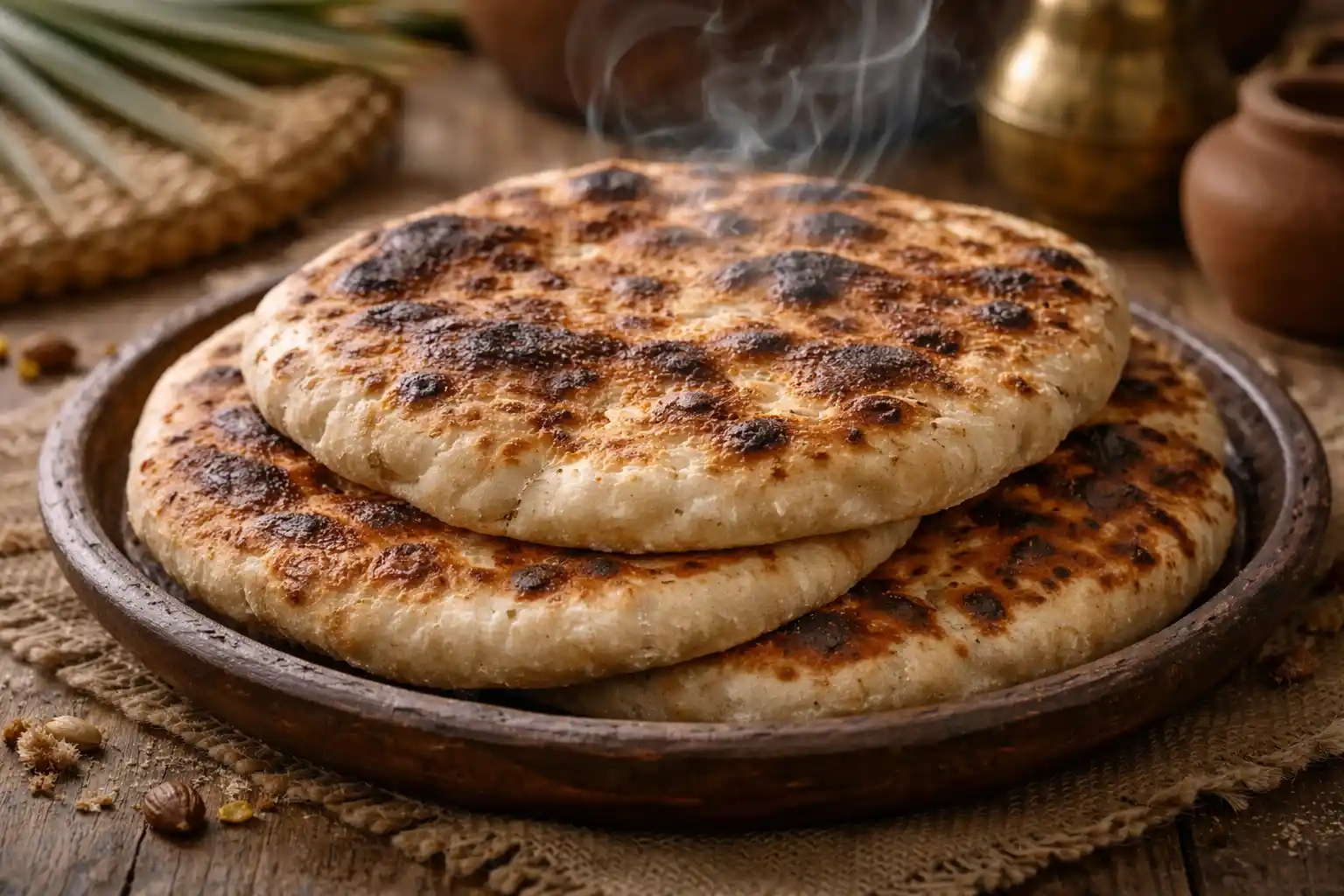
No table in the Southern region of Saudi Arabia—whether serving Haneeth, broth, or honey and ghee—is complete without Mifa Bread. It is the bread that carries the scent of woodfire and the ancient mountain heritage of Asir, Jazan, and Najran in its very DNA. Mifa Bread (or Tannour bread) is not just flour and water; it is an art of managing fire and the technique of sticking dough to clay walls to produce a loaf with a charred crust and a soft, melt-in-your-mouth interior. At Atayeb, we take you to the Southern “Mifa” to reveal the secrets of this historic bread and show you how to recreate its smoky flavor in your own home.
The Story of Mifa: A Companion of Fire and Neighbors
“Mifa” is the Southern name for the clay oven (Tannour) that is either partially buried in the ground or built from fired clay. In the past, lighting the Mifa was a daily social event that gathered the women of the neighborhood. Hardwoods like Samar or Qarad were used to achieve intense embers, giving the bread a smoky flavor impossible to replicate in electric ovens. Mifa Bread reflects the Southern culinary philosophy of relying on pure ingredients and direct-heat cooking (Bashra), making it a favorite for those seeking health, authenticity, and stamina.
Professional Recipe Card
| Feature | Details |
| Prep Time | 15 Minutes (plus proofing time) |
| Cook Time | 5 – 10 Minutes per loaf |
| Famous Regions | Asir, Jazan, Najran, Al-Baha |
| Category | Traditional Breads – Southern Heritage |
| Pro Secret | “Slapping” the dough firmly onto the hot Mifa wall |
Ingredients (The Golden Standards)
To achieve authentic Mifa bread, it is best to mix different types of flour as Southern experts do:
1. The Flour Blend (The Secret in Diversity):
- 2 Cups Brown Flour (Whole wheat).
- 1 Cup White Flour (To provide elasticity and structure).
- Optional: ½ Cup Corn or Barley flour (for a slightly sour, traditional tang).
2. Liquids and Leavening:
- 1 ½ Cups Warm Water (Adjust based on flour absorption).
- 1 Teaspoon Salt.
- 1 Teaspoon Instant Yeast (In the past, natural “Khamir” starter was used).
3. Aromatics (To taste):
- Black seed (Nigella) or sesame seeds for topping.
Preparation Steps: The Alchemy of Kneading and Baking
Step 1: Kneading and Proofing (The Elastic Texture)
Mix the flours with the salt and yeast. Add water gradually and knead vigorously for at least 10 minutes.
Atayeb Tip: Mifa dough should be slightly softer than regular pastry dough—it must be elastic (stretchable) so it can be easily spread by hand and stuck to the Tannour wall without falling. Let it rise in a warm place for an hour until doubled in size.
Step 2: Shaping the “Woslat”
Divide the dough into large balls (known in the South as Woslat). Wet your hands with a little water or oil, and flatten the ball by hand into a medium-thick oval or circular loaf.
Step 3: The “Slap” and Bake
In a traditional Mifa, the bread is “slapped” onto the hot clay wall.
In a modern kitchen: You can use a heavy “Saj” or a cast-iron skillet turned upside down over a gas flame, or a home pizza oven.
- Place the loaf on the very hot surface.
- Once bubbles appear, flip it to brown the other side.
- To get that smoky flavor, you can briefly expose the bread directly to the gas flame for a few seconds after it is cooked.
Pro Secrets from Atayeb’s Kitchen
- The Softness Secret: As soon as the bread comes off the heat, place it in a cloth-lined container and lightly brush it with local ghee (Samen). This traps the moisture and prevents the bread from drying out.
- Surface Temperature: Never place the dough on a lukewarm surface; the Saj or Mifa must be “screaming” hot to ensure the dough sticks and cooks quickly before it toughens.
- Aromatics: Sprinkle the black seed and sesame onto the dough while it is still damp before baking so they stick well and release their aroma with the heat.
Southern Serving Rituals
Mifa Bread is the “Joker” of the Southern kitchen and is served in multiple ways:
- Savory: With Haneeth, meat broth, or hot Muqalqal.
- Sweet: Cut while hot and dipped in a mixture of local ghee and mountain honey, served alongside Qishr coffee (coffee made from coffee husks).
Nutritional Value (Per average loaf)
| Nutrient | Approximate Value |
| Calories | 280 kcal |
| Fiber | 5 g (thanks to whole wheat) |
| Carbohydrates | 55 g |
| Fats | 2 g (excluding added ghee) |
Conclusion from Atayeb
Mifa Bread is the heartbeat of Southern homes; it is the loaf that tells stories of grandmothers and their patience before the Tannour to provide the best for their families. By making it at home, you aren’t just serving bread; you are invoking a traditional spirit that fills the room with warmth. Try this recipe from Atayeb and enjoy the most delicious Mifa loaf with a cup of Adeni tea or Saudi coffee.