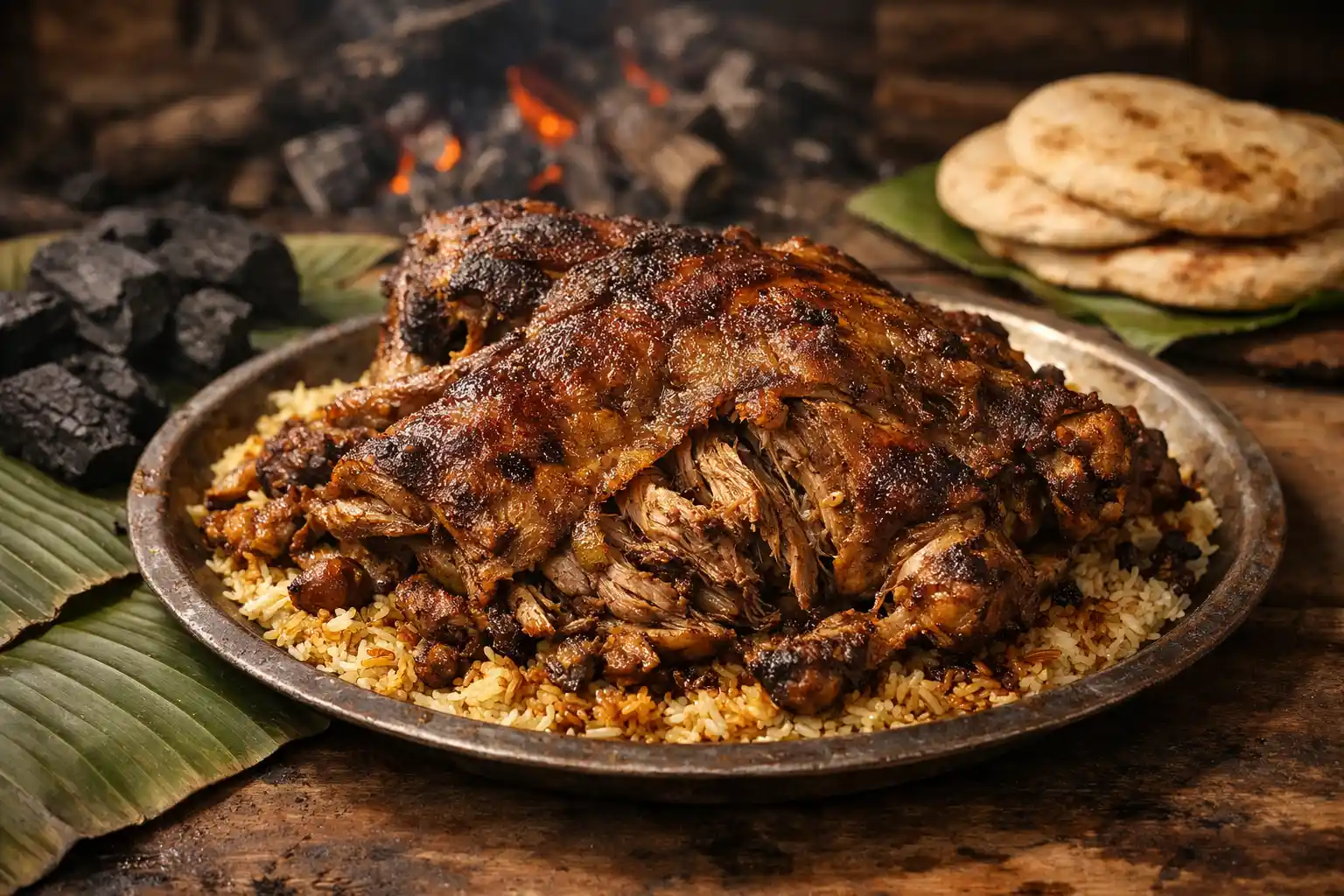
Haneeth is considered the undisputed king of the table in Southern Saudi Arabia. It is not merely a method of cooking meat; it is an ancient cultural ritual that embodies the relationship between the Arab people, the land, fire, and trees. Haneeth is distinguished by a smoky aroma that transports you to the mountains of Asir and the valleys of Jazan, featuring a texture so tender that the meat separates from the bone at the slightest touch. At Atayeb, we reveal the secrets of this traditional craft and show you how to skillfully bring the flavor of the subterranean “Mahnadh” into your modern kitchen.
The Origin of Haneeth: The Philosophy of Fire and Stone
The roots of Haneeth trace back to the mountainous and coastal (Tihama) regions of the South (Asir, Jazan, and Al-Baha). The name is derived from “Tahneeth,” which means roasting meat with intense heat underground. The secret of authentic Haneeth lies not in an abundance of spices, but in the use of “Al-Markh” or “Al-Sala'” leaves placed between the meat pieces. These leaves impart a unique herbal flavor, soften the fibers, and facilitate the “Rardm” (burying) technique, which traps steam and heat inside the meat for hours.
Professional Recipe Card
| Feature | Details |
| Prep Time | 30 Minutes |
| Cook Time | 3 – 5 Hours (Depending on the size of the carcass) |
| Servings | 6 – 8 Persons |
| Category | Main Course – Authentic Southern Heritage |
| Pro Secret | Ultra-slow cooking and the specific type of leaves used |
Ingredients (The Golden Standards)
Real Haneeth relies primarily on the quality of the meat; therefore, choose your ingredients carefully:
1. The Meat (The Foundation):
- 2-3 kg Fresh Lamb (Small local “Teis” or young goat is preferred for maximum tenderness).
- The meat must contain a good amount of fat (tail fat/suet), as it will melt and cook the meat in the absence of water.
2. Seasoning (Simplicity is Secret):
- Coarse Sea Salt (Qasab).
- A tiny pinch of Cumin (Optional, to enhance flavor without masking the meat’s natural taste).
3. The Environment (Earth-Pit Alternatives):
- Twigs of the “Markh” plant (If unavailable, palm fronds, banana leaves, or parchment paper and foil can be used in modern kitchens).
- Clean stones (If using the stovetop method).
Preparation Steps: Engineering Steam-Pressure Cooking
Step 1: Preparing the Meat (The Salt Massage)
Wash the meat and dry it completely. Sprinkle coarse salt and cumin over the pieces, distributing it well. Remember: salt in Haneeth is added before cooking—unlike other recipes—as it helps the heat penetrate the meat.
Step 2: Layering (Thermal Insulation)
If you are using a pressure cooker or a heavy pot at home:
- Place several clean Markh stones or a raised metal rack at the bottom of the pot.
- Place a thick layer of Markh twigs over the stones.
- Arrange the meat pieces over the twigs, ensuring the meat does not touch the bottom of the pot or any water.
- Cover the meat with another layer of twigs, then seal the pot extremely tightly (ensure no steam escapes).
Step 3: Patient Simmering (The Rendering)
- First 10 Minutes: Medium heat until the pot heats up and steam begins to form.
- Remaining Time (2.5 – 3 Hours): Extremely low heat (candle-like flame). This low temperature will transform the fats into hot oil that slow-cooks the meat, resulting in a “buttery” texture.
Step 4: The Smoky Touch (Home Kitchen Hack)
Once the meat is cooked, you can light a piece of charcoal and place it in an onion skin with a drop of oil inside the pot for two minutes. This mimics the authentic woodfire scent of a traditional earth pit.
Pro Secrets from Atayeb’s Kitchen
- Preventing Dryness: Never add water to the pot if the meat is fresh and fatty; the steam generated from the juices and fat is sufficient to cook it.
- The Golden Rule: Never open the pot before at least 2.5 hours have passed; every release of steam toughens the meat and extends cooking time.
- Salt Type: Coarse salt is superior to fine salt because it melts slowly and preserves the meat’s internal moisture.
Southern Serving Rituals
Haneeth is traditionally served over white rice (cooked with meat broth or ghee) and garnished with fried onions (Kashna) and raisins. The experience is incomplete without:
- Mifa Bread (Southern Tandoor bread).
- Sidr Mountain Honey (Which some dip the meat into for a surprisingly delicious sweet-and-savory contrast).
- Clear Broth extracted from the pot.
Nutritional Value (Per 200g of Meat)
| Nutrient | Approximate Value |
| Calories | 420 kcal |
| Protein | 38 g |
| Fats | 24 g |
| Iron | 25% of Daily Value |
Conclusion from Atayeb
Saudi Southern Haneeth is a poem written with fire and meat. It is the dish that teaches us that patience in the kitchen bears fruits of unforgettable flavor. Follow these steps from Atayeb and let your home overflow with the scent of authentic Southern hospitality.